

When Taylor Swift’s promotional clips for The Life of a Showgirl appeared across social media and QR-linked portals in October 2025, the internet erupted — not with praise, but suspicion. Something about those short, surreal videos didn’t look quite right.
The colors shimmered unnaturally, the camera angles felt oddly static, and tiny details — warped reflections, flickering light sources, mismatched objects — hinted that perhaps these weren’t handcrafted visuals at all. Within hours, the conversation had shifted from decoding hidden album “Easter eggs” to a new and divisive question:
Had one of the most famous artists on the planet used AI to create her promotional content?
The Spark: A Campaign that Outsmarted Itself
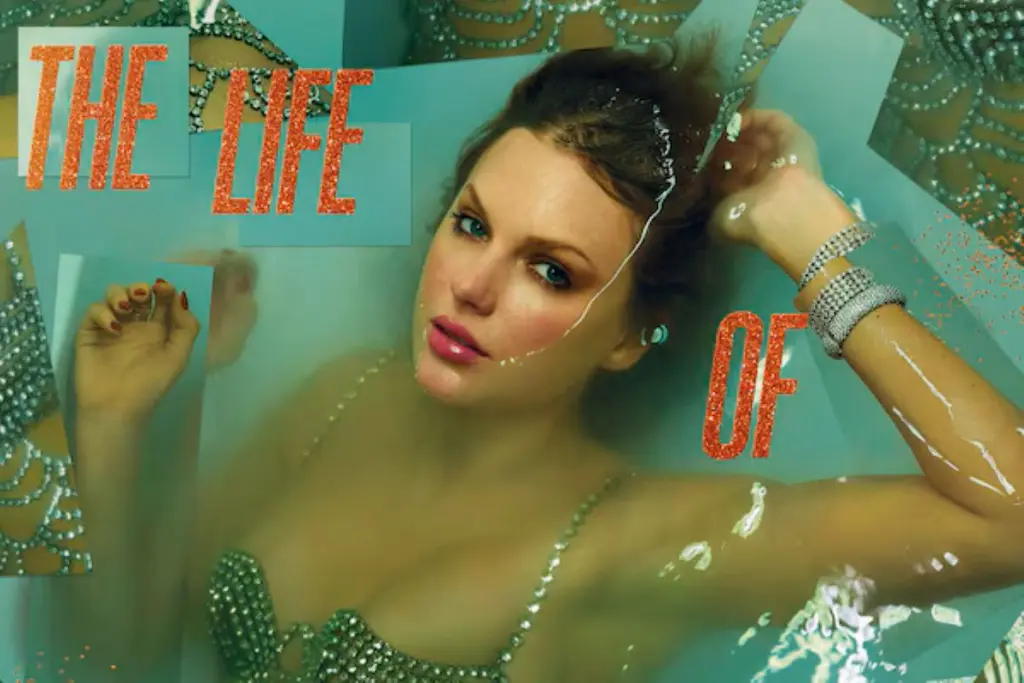
The campaign was brilliant in concept. Swift’s team collaborated with Google to place QR codes on orange-painted doors across twelve cities. Fans who scanned the codes unlocked cryptic teaser clips that hinted at the album’s themes — fame, performance, identity, and illusion.
But those same fans — the famously detail-obsessed “Swifties” — noticed peculiar inconsistencies. The more they watched, the more they saw. Shadows that didn’t align. Background elements flickering in and out. Textures that appeared plastic or stretched. The lighting was cinematic yet synthetic.
As one Reddit user wrote:
“It feels like watching a dream where the world looks real until you look too closely — then it glitches.”
It was precisely that uncanny realism that triggered the theory that the visuals were AI-generated. And the evidence, though circumstantial, was compelling.
The Alleged AI Fingerprints
While no official confirmation has been made, many digital artists and AI researchers agreed that the videos displayed several hallmarks of early-stage generative video synthesis:
- Static camera work — smooth zooms and simple pans, rather than complex handheld motion.
- Repetitive six-second cuts, likely a byproduct of model limitations.
- Soft focus and glowing effects that mimic diffusion artifacts from AI frame interpolation.
- Inconsistent object morphology, where shapes subtly morph between frames.
Perhaps the biggest giveaway was stylistic. The visuals shared that now-familiar AI “aesthetic”: photorealistic, yet sterile. Emotional in tone, but missing something intangible — what many call the human touch.
It was as if the machine had perfectly mimicked artistry, but not the artist.
The Irony: Swift vs. Synthetic
The irony wasn’t lost on anyone. Swift has long been outspoken about protecting her image, her likeness, and her intellectual property — especially from misuse in the digital space. Earlier in 2025, she had condemned AI-generated deepfakes featuring her, calling them “a violation of human dignity and artistic agency.”
So when fans suspected her team of using AI to fabricate visuals for a major release, the backlash was swift (no pun intended).
Social media polarized overnight. On one side were those who saw it as hypocrisy; on the other, those who saw it as evolution.
“If even Taylor Swift is using AI, it’s not cheating — it’s the new paintbrush,” one fan posted on X (formerly Twitter).
Others weren’t as forgiving. “You can’t champion artistic authenticity one day and outsource your visuals to algorithms the next,” wrote a user on Threads.
Silence Speaks Volumes
As the debate raged, Swift’s camp remained silent. The videos were quietly made private on YouTube, with no statement or clarification. Whether that was an act of crisis control or quiet acknowledgment is still unclear.
But the absence of denial only fueled curiosity — and a larger cultural question:
If art looks and feels beautiful, does it matter who — or what — made it?
This question has lingered in music and media since the rise of AI image generators, song composers, and virtual influencers. But with Swift — a symbol of human artistry and storytelling — it hit differently.
The Creative Shift: When AI Becomes the Medium
If the videos were indeed AI-generated, the implications are profound. It would mean that Swift — directly or indirectly — participated in a seismic creative shift where AI is not merely a tool but a co-creator.
Generative models like Runway Gen-2, Pika Labs, and Stability Video have evolved dramatically, now capable of producing realistic short clips from text prompts. They allow directors to “describe” a scene rather than film it.
The technology removes logistical constraints: no camera rigs, no sets, no extras — just imagination rendered instantly.
And while traditionalists view that as inauthentic, innovators see it as liberation.
Consider it from an artistic lens: If a songwriter can imagine a world and manifest it visually using words alone, is that any less creative than painting with a brush or composing with chords?
In that sense, AI becomes an extension of human intention, not a replacement for it.
The Human Factor: Emotion vs. Efficiency
Here’s where the philosophical tension lies.
Human artists, by nature, strive for expression through imperfection — brushstrokes, texture, spontaneity. Machines, on the other hand, strive for precision. AI art feels clean, calculated, and frictionless — and that’s exactly what unnerves us.
When you watch something AI-made, your brain senses the difference. It’s beautiful, yet emotionally distant — like seeing a hologram perform your favorite song.
So the question isn’t whether AI can create art. It’s whether we can feel something real from it.
That’s the paradox Swift’s campaign inadvertently spotlighted. By possibly embracing AI, she may have proven both its power and its limits: it can imitate her aesthetic but not her soul.
A Cultural Mirror: Why This Matters Beyond Taylor Swift
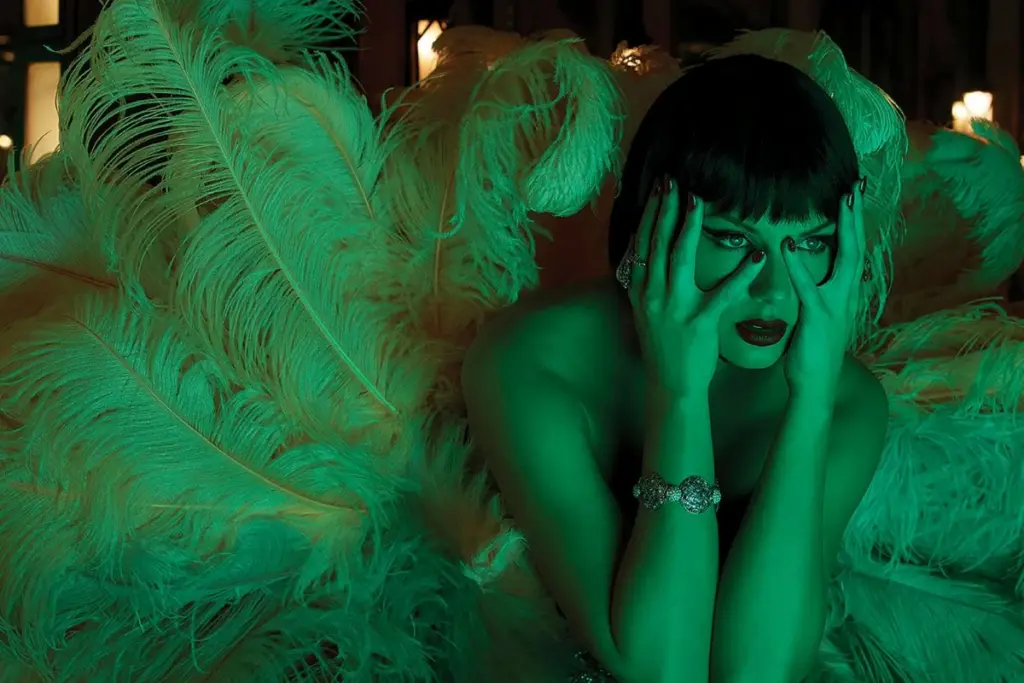
Taylor Swift’s alleged use of AI isn’t just gossip; it’s a case study in our evolving relationship with creativity.
We’ve entered an era where technology democratizes production but blurs authenticity. Anyone with access to AI tools can create cinematic content, yet the line between genuine and generated becomes harder to define.
Swift’s controversy captures that perfectly. It forces us to confront uncomfortable truths:
- That human creativity is no longer exclusive.
- That artistry might soon be judged by intent, not by handcraft.
- That audiences value authenticity, but consume convenience.
If this campaign was indeed an AI experiment, Swift may have unintentionally proven something profound — that we’ve reached a tipping point where technology doesn’t just assist art; it becomes it.
The Future: Artists as Curators, Not Creators
Looking forward, this may become the new norm. Artists won’t just perform — they’ll curate AI systems that express their vision algorithmically.
A musician might feed lyrical prompts into a model that visualizes emotions in color. A filmmaker could generate entire dream sequences without leaving their laptop. A pop icon like Swift could storyboard an entire era through natural language alone.
But even then, the essence of artistry won’t vanish. Instead, it’ll shift from manual creation to conceptual direction — from crafting to commanding.
That’s not the death of art. It’s the birth of a new kind of authorship.
Final Thoughts: Between Genius and Ghost in the Machine
Whether the Showgirl videos were AI-made or not, they reflect a truth larger than any one artist: creativity is evolving faster than our comfort with it.
Swift’s possible experiment shows both courage and contradiction — courage to explore new mediums, and contradiction in doing so while championing human artistry. But maybe that’s the point.
Art has always thrived on contradiction. It’s a reflection of who we are — and now, of what we’ve created.
In the end, what defines art isn’t whether it’s human or machine-made, but whether it makes us feel something. If AI can do that, maybe the algorithm deserves a standing ovation, too.



Reader perspectives, questions, and reactions.
No comments yet. Start the conversation.
Comments are closed for this article.