

When Your Digital Twin Speaks Back
The first time I sat across from my own digital twin, I felt a mixture of pride and unease. A slender avatar on a laptop screen mirrored my head movements and smiled back at me. It had been trained on a decade’s worth of interviews, podcasts and email exchanges. It could answer colleagues with my voice, draft proposals in my style and even correct phrases I no longer use. A startup founder I met recently described a similar experience. After compiling twelve years of his writing and speech, he watched his virtual self churn out investor updates and respond to clients. “I built it to save time,” he admitted, “but now I’m not sure if it’s replacing something.” The seduction of a digital twin lies in its promise of scale – the ability to clone our presence so we can be in several places at once. Yet that seduction also exposes uncomfortable questions about authenticity and responsibility.
Another early adopter, Dara Ladjevardian, co‑founder of a company called Delphi, trained a digital clone to hold meetings on his behalf. In a 2025 interview, his avatar greeted visitors with a smile and said, “I’m a digital clone … if you’re curious about how this all works or have any questions, feel free to ask”. The real Ladjevardian admitted that his virtual double could take calls when he was busy and that clients found the gimmick charming. But the technology still glitched, sometimes repeating phrases or offering canned responses. Even so, companies like Meta have begun offering “Creator AI” tools that let influencers train clones with realistic faces and voices. Don Allen Stevenson III, a Los Angeles–based creator, told a crowd at a Meta event that he had trained it on how he responds and engages with his audience. He enjoys the control it gives him over his digital presence. That corporate enthusiasm hints at a coming wave of personal replicas.
This article explores what it really means to build a digital twin of yourself. It begins by defining the concept and differentiating it from the industrial digital twins that inspired the term. It then dives into the technical architecture that makes personal twins possible – from knowledge bases and personality modelling to voice and visual replication. Real‑world examples illustrate how these technologies are already being used in business, education and health. But convenience comes at a cost. The piece therefore examines privacy, consent, bias, regulation and the broader ethical implications of cloning ourselves. Finally, it looks ahead to possible futures, calling on readers to reflect on what we gain and what we risk when we invite a digital twin into our lives.
Table of Contents
What Is a Digital Twin?
The term “digital twin” originated in engineering. Manufacturers used it to describe virtual replicas of physical objects – turbines, cars, buildings – that mirror real‑world performance and help diagnose problems. In 2026 the concept has expanded to people. A personal digital twin is an AI‑driven system that emulates aspects of a person’s identity, often in real time. According to an overview by OpenAPIHub, AI cloning involves replicating “voice, face, personality or decision‑making patterns” using machine‑learning models trained on an individual’s data. Unlike generic chatbots or avatars, these clones are personalised digital representations built from real text, audio and video.
Understanding the difference between a digital twin and an AI clone is helpful. In industrial contexts, digital twins simulate the state of a machine to predict failures or optimise maintenance. They are linked to sensors and real‑time data flows from physical equipment. Personal digital twins, by contrast, seek to emulate subjective qualities: how you write emails, the tone you use when reassuring a friend, your preferences and values. They can write, speak and, increasingly, make decisions in ways that feel like you. This is why some experts prefer the term “behavioral twin” when discussing human clones, emphasising that such systems model patterns rather than reproducing consciousness.
Building Blocks of a Digital Twin
Creating a digital twin is not a single tool but a layered process. Like any complex system, a convincing personal replica relies on multiple components working together. Below are five key layers that developers assemble when building a digital twin of a person.
1. Knowledge Layer
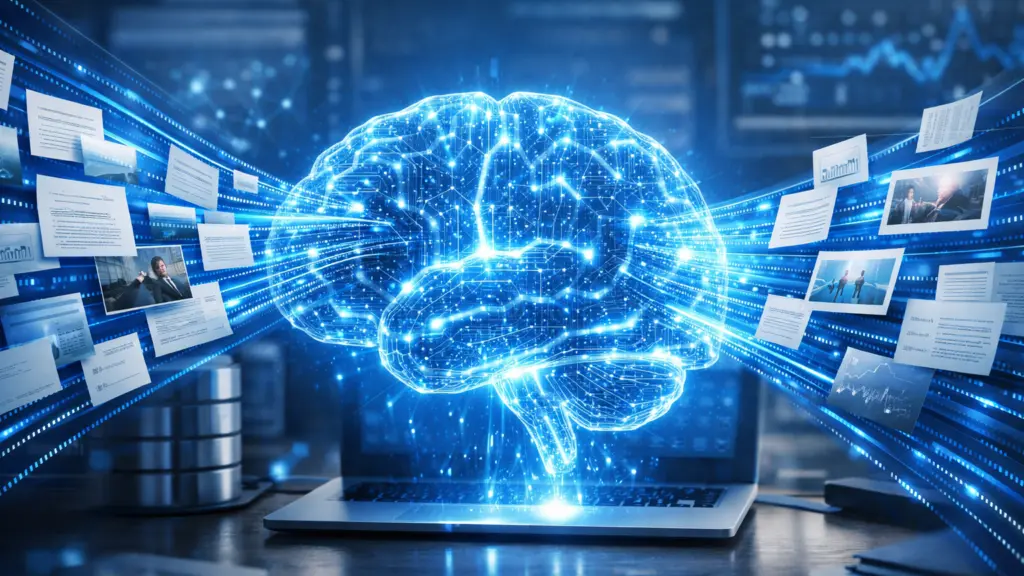
At the core of a digital twin lies a knowledge base. Modern large language models (LLMs) excel at generating text, but they often hallucinate or forget details. To make a twin grounded in facts about you, developers increasingly use retrieval‑augmented generation (RAG). This technique converts documents into numerical vectors, stores them in databases such as Pinecone, and retrieves relevant passages whenever the model generates a response. Personal data can include years of emails, articles, social media posts, transcripts of interviews, meeting notes and diaries. The more curated the dataset, the more accurately the twin can answer questions about your work history or preferences. This knowledge layer functions like an external memory and is often hosted on private servers to reduce the risk of leaks.
2. Personality Layer
Data alone does not create personality. To sound convincingly like you, a digital twin needs explicit instructions that shape tone and values. Developers craft a “system prompt” that outlines how the twin should behave, including which phrases to use, which topics to avoid and how to handle ambiguity. They may also embed examples of your responses to various scenarios, how you deal with conflict, how you apologise or celebrate successes. This layer encodes a persona and can reflect your moral compass. Computational linguists have long shown that writing style is strongly identifiable; a 2023 stylometric study found authorship models could identify individuals from short texts with over 80 percent accuracy. A digital twin leverages that predictability to emulate your voice in writing.
3. Voice Layer
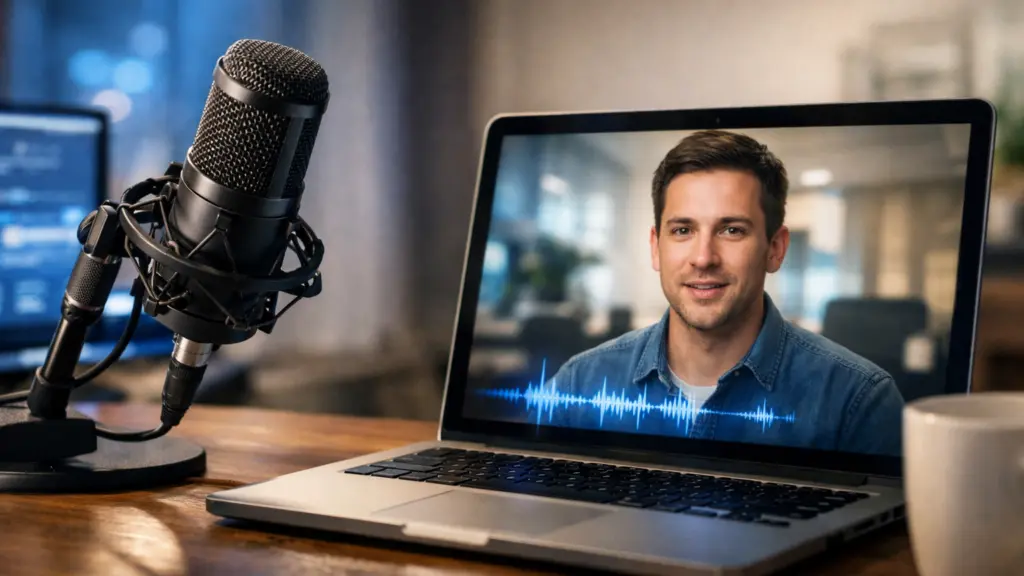
Voice cloning has progressed rapidly. Services such as ElevenLabs and OpenAI’s voice engine can generate speech that sounds nearly indistinguishable from the original speaker after training on just a few minutes of audio. Startups like Delphi and Meta’s Creator AI enable users to clone their voices and pair them with visual avatars. The Science News account of Ladjevardian’s clone noted that his digital replica greeted visitors with a realistic voice and face. Voice adds emotional weight; a message delivered by your twin carries different authority than text. But voice cloning also opens the door to misuse. A McAfee security report in 2024 found that 25 percent of 7,000 surveyed individuals had experienced or knew someone affected by an AI voice cloning scam. In those scams, criminals cloned voices from short audio samples and sent urgent messages asking for money; 70 percent of respondents admitted they could not tell the difference between a clone and a real voice. The cost was real: one in ten victims lost money, with some losing thousands of dollars.
4. Visual Layer
If hearing your clone is uncanny, seeing it is more so. Video avatar platforms like Synthesia allow users to create lifelike talking‑head videos by recording themselves for as little as three minutes. The company describes these products as “avatars” rather than clones, but the effect is similar. Once trained, the avatar can read any script, expressing appropriate emotions and even translating the user’s speech into other languages. Full‑body avatars that can walk through a virtual environment are expected by the end of 2025. While such tools are used for marketing and training videos, they also raise questions about authenticity. When Meta introduced Creator AI in 2025, its clones had faces that smiled and blinked convincingly, making it harder for viewers to discern whether they were interacting with a human or a digital facsimile.
5. Decision Layer
The final frontier is autonomy. Some developers envision digital twins that can act on your behalf, answering routine emails, scheduling meetings and even making decisions aligned with your values. A 2026 study from MIT explored “AI‑generated future selves” that simulate how a person might feel and reason thirty years in the future. Using facial age progression, neural voice cloning and LLM dialogue, researchers created personalised avatars representing participants decades ahead. Participants facing decisions like whether to attend graduate school were randomly assigned to talk to one or more future avatars. The study found that single‑option avatars nudged people toward the advocated choice, while presenting multiple options encouraged more balanced reflection. Introducing a system‑generated third option increased adoption of that novel choice. The experiment demonstrates how digital twins can influence decision‑making. Importantly, the authors cautioned that these simulations simplify life’s complexity and should serve as prompts for reflection rather than oracles.
Real‑World Examples and Applications
Personal digital twins are moving from research prototypes to mainstream products. They are appearing in business, education, health care and media. Understanding how they are used today can illuminate both their potential and their pitfalls.
Influencer Clones and Customer Service
In the fall of 2025, Meta announced Creator AI, a tool that allows influencers to create digital clones of themselves complete with realistic faces and voices. Content creator Don Allen Stevenson III showcased his clone at a launch event, noting that he trained it on how he responds to engage with his audience. The clone can record personalised messages, answer fan questions and appear in videos without Stevenson being present. Similarly, Ladjevardian’s clone, mentioned earlier, allows busy executives to attend meetings virtually. Synthesia’s avatars are widely used by companies to produce training videos and customer‑service messages. Recording just three minutes of footage is sufficient to generate a basic avatar; an hour of studio time yields more lifelike expressions. These examples show how digital twins can free up human time while scaling communication.
However, not everyone embraces this trend. A television station in Warsaw replaced its human hosts with AI characters as an experiment. Public backlash was so strong that the station reinstated the human presenters within a week. The experiment suggests that audiences still value authentic human interaction, at least in certain contexts. Even when clones are used as simple talking heads, questions arise: Are we willing to watch news delivered by a synthetic anchor? What happens when clones start to talk to each other on our behalf? Technology entrepreneur Eric Yuan, founder of Zoom, predicted in 2024 that within five or six years people will rely on digital twins to attend meetings so they can go to the beach instead. That vision may excite some and alarm others.
Digital Twins in Health and Education
Outside media, digital twins offer genuine utility. In health care, researchers are experimenting with “patient digital twins” that combine physiological and behavioural data to simulate treatment options. OpenAPIHub’s overview notes that AI‑driven twins can model a patient’s health and allow doctors to explore different therapies. Such simulations could personalise medicine and reduce trial‑and‑error prescribing. In education, AI avatars have been used to preserve the voices of long‑gone experts. Imagine a digital Einstein explaining relativity in his own accent or a historian’s twin answering students’ questions long after they have died. For schools with limited access to experienced teachers, these clones might provide high‑quality instruction. Some universities are already experimenting with AI lecturers who deliver standard content while human instructors facilitate discussion.
Yet the prospect of interacting with deceased or aged versions of ourselves can be both comforting and unsettling. In 2024 Chinese entrepreneur Sun Wei created a digital clone of his mother after she passed away. In interviews, he explained that he sometimes talks to the avatar when stressed at work because there are things you can only tell your mother. While this clone provided solace, researchers warn that such technologies could complicate grief processes. Ethicist Katarzyna Nowaczyk‑Basińska has expressed concern that clones used in end‑of‑life situations may “make it harder for [people]” to accept loss. Balancing comfort and closure will be an ongoing challenge.
Decision Support and Future Selves
The MIT study on AI‑generated future selves offers another fascinating application. By conversing with photorealistic avatars representing themselves 30 years hence, young adults were encouraged to imagine life paths they had not considered. Introducing a third option – one generated by the system based on participants’ stated values – expanded their sense of choice. The researchers noted that participants valued “evaluative reasoning and eudaimonic meaning‑making” more than visual realism. The takeaway is that digital twins can support reflective deliberation if designed carefully. However, the study also emphasised that these avatars are simulations, not prophecies, and that users should retain agency. In other words, a digital twin should be an aid, not a replacement for thinking.
Ethical Considerations
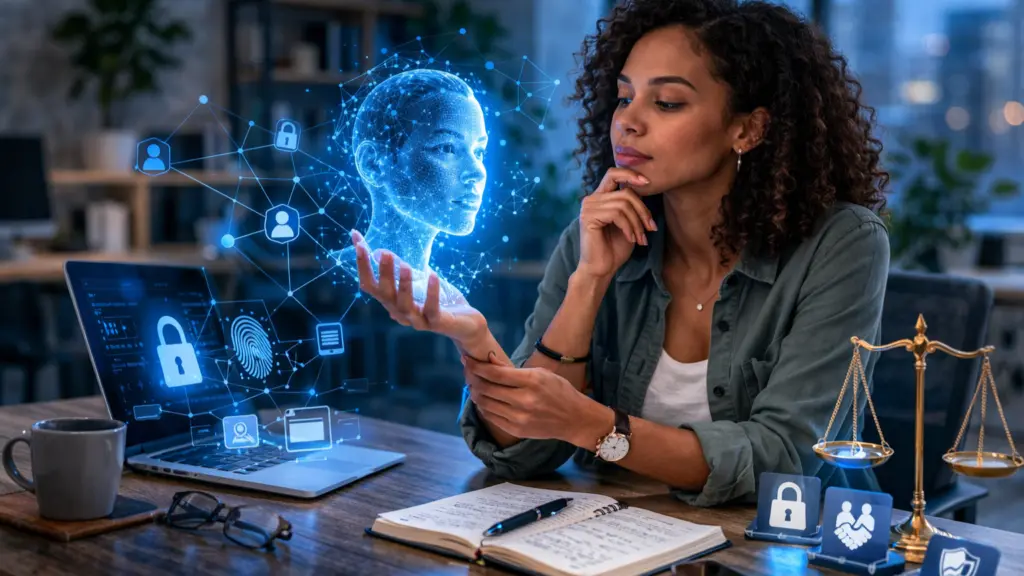
Building a digital twin touches on core ethical questions: who owns your data, how should consent be obtained, and what responsibilities do developers and users have when unleashing personal clones into the world? These questions are not theoretical; they are pressing concerns as AI clones move from novelty to ubiquity.
Privacy and Consent
Cloning yourself requires exposing intimate details: the way you speak, your writing patterns, your micro‑expressions. Without stringent safeguards, that data can be misused. OpenAPIHub emphasises that informed consent sits at the heart of ethical AI cloning. Individuals should know which data – voice recordings, images, text, behavioural logs – are collected, how they will be used, how long they will be stored and how to revoke permission. Consent should be granular; you might allow your twin to answer customer‑service questions but prohibit its use in political messaging. Unfortunately, many clones today are created without explicit permission. In May 2023 Snapchat influencer Caryn Marjorie launched an AI girlfriend service that used thousands of hours of her content to simulate conversations. She reportedly earned tens of thousands of dollars in one week, but critics noted that minors could circumvent age restrictions and that Marjorie’s clone sometimes produced inappropriate messages. Without proper consent mechanisms, clones can quickly spin out of control.
Transparency and Accountability
People deserve to know when they are interacting with a human or a machine. One of the first regulatory steps in the United States came in California, where a 2024 law requires all AI‑generated content to be clearly labelled. This applies to digital clones, deepfake videos and other synthetic media. Transparency helps maintain trust and allows users to make informed choices about their interactions. It also facilitates accountability. If a clone makes a defamatory statement or offers harmful advice, we need clear lines of responsibility to determine who is liable: the individual, the platform or the developers. Ethical frameworks call for audit logs, impact assessments and review boards to oversee deployment. Without such governance, clones may proliferate without oversight, amplifying harms.
Bias and Fairness
Clones trained on biased data will replicate and even amplify those biases. Voice models may struggle with certain accents, marginalising speakers whose speech patterns deviate from the training set. If a behavioural twin is based on your professional communications, it may exclude informal or private aspects of your personality, perpetuating a narrow view of who you are. Developers must consider fairness in training data and ensure that clones do not distort a person’s identity or reinforce stereotypes. Tools for detecting and correcting bias should be part of the development pipeline. The open‑source community has begun to create fairness benchmarks for generative models, but these are still in early stages.
Psychological and Societal Impact
Living alongside your clone affects your sense of identity. Some people will experience their twin as an empowering extension of themselves; others may find it uncanny or intrusive. In a 2023 study, many respondents described digital clones as “uncanny, weird and creepy”. Journalist Evan Ratliff, who cloned his voice and personality for his podcast “Shell Game,” discovered that while friends initially found his clone amusing, they soon became frustrated. One colleague told him, “This is mildly terrifying”. As clones become more common, there is a risk that people may choose to interact with digital stand‑ins rather than with each other, weakening human relationships. Ratliff wondered whether we might “make friends with robots” instead of investing in real friendships. Scholars of technology warn that as we rely more on AI proxies, we may “expect more from technology and less from each other,” as sociologist Sherry Turkle memorably put it.
Regulation and Policy
Legal frameworks are scrambling to keep up. Beyond California’s labelling law, jurisdictions around the world are considering how to protect personal likenesses. The European Union’s General Data Protection Regulation (GDPR) grants individuals rights over their personal data, but it was not designed with digital clones in mind. Should your clone be treated as intellectual property? Some experts propose that digital identity be recognised as a form of property, allowing individuals to licence or sell clones. Others advocate for a stewardship model, where organisations hold data in trust and act as custodians rather than owners. Until regulations mature, self‑regulation and responsible design are crucial. Companies should implement consent dashboards, watermark synthetic media and provide clear opt‑out mechanisms.
Risks and Challenges
The promise of digital twins comes with significant risks. Ignoring these dangers could lead to fraud, exploitation and erosion of trust.
Voice Cloning Scams
As noted earlier, criminals are already exploiting voice cloning to commit fraud. McAfee’s survey found that one in four people had experienced or knew someone who had experienced an AI voice clone scam. Seventy percent of respondents doubted their ability to distinguish a cloned voice from a real one. One in ten victims lost money; some lost thousands of dollars. Scammers typically create urgent messages, someone has been in an accident or lost their wallet, and demand immediate payments through untraceable channels. Because many people post voice recordings online, criminals can easily obtain samples to train clones. Distinctive voices may be harder to clone accurately, but the technology is improving. The report underscores the need for code words, verification protocols and public awareness. If you build a digital twin, you must consider how your voice data could be used beyond your intentions.
Identity Theft and Impersonation
Beyond voice scams, clones can facilitate identity theft. Generative adversarial networks (GANs) can create videos that overlay one person’s face onto another’s body, producing deepfakes. These videos have been used to spread misinformation and sexualised imagery without consent. When combined with voice cloning, the result is an almost seamless impersonation. In one widely reported case, fraudsters used an AI voice clone of a company director to trick an employee into wiring €220,000 to a bogus supplier. Such examples highlight the need for robust authentication systems and legal deterrence. Without them, digital twins could become tools of exploitation.
Deepfakes and Misinformation
Deepfakes are often framed separately from digital twins, but the technologies overlap. A deepfake replicates someone without their permission; a digital twin is created with consent. However, clones can easily be repurposed. If your twin’s voice and face are available, someone else could hack into those assets and produce realistic content. Disinformation campaigns may use clones to make fake endorsements or statements. California’s labelling law requiring AI‑generated content to be identifiable is an important step, but technical solutions such as watermarking and traceable metadata are also necessary. Media literacy campaigns will have to evolve so that people know when to question what they see and hear.
Erosion of Trust and Human Relationships
When clones become ubiquitous, people may struggle to trust that they are communicating with real humans. The Science News article warned that real voices might get drowned out as more content carries “traces of AI”. Journalist Ratliff noted that relying on clones can erode authentic relationships. Sociologist Turkle has written extensively about how digital communication encourages us to “expect more from technology and less from each other.” If we outsource emotional labour to machines, having clones apologise, congratulate or break bad news on our behalf, we risk losing the empathy and vulnerability that make relationships meaningful. This challenge is not unique to digital twins; it applies to all AI systems that mediate human connection. But because clones are so personal, the stakes feel higher.
Future Outlook and Call for Reflection
What might the next decade hold for personal digital twins? Predictions vary. Tech executives like Zoom’s Eric Yuan foresee a future where clones attend meetings so we can avoid them. Dating‑app founder Whitney Wolfe Herd imagines AI concierges going on preliminary dates to vet potential partners. For some, that sounds liberating; for others, dystopian. Economists speculate that digital twins could amplify productivity by automating routine communications and allowing individuals to scale their expertise. Students could consult clones of past thinkers, while doctors use patient twins to test treatments. Artists might collaborate with cloned versions of themselves, creating works across time.
Yet there is a real possibility that clones will worsen inequality. Access to high‑quality digital twins, ones that protect privacy, incorporate consent and model values, may become a luxury. Meanwhile, low‑quality clones could proliferate without safeguards, exploiting the data of those with fewer resources. There is also the risk that employers will pressure workers to create clones to increase output. Without strong labour protections, clones might be used to monitor employees or extend their working hours under the guise of “efficiency.”
Policymakers and technologists need to collaborate to set boundaries. Regulation should require clear labelling of synthetic media, consent dashboards and penalties for misuse. Technical standards should include watermarking, bias auditing and privacy preservation. Organisations deploying clones should perform impact assessments and involve ethicists, psychologists and affected communities in the design process. On an individual level, we should think carefully about what we feed into our twins. Not all aspects of ourselves need to be digitised. As the MIT study suggests, digital twins can help us imagine futures and expand our choices, but they should augment human agency rather than replace it.
In the end, building a digital twin of yourself is as much a philosophical decision as a technical one. It forces us to confront what constitutes identity, how we value presence and what relationships mean. If we choose to clone ourselves, we must do so with eyes open appreciating the convenience while acknowledging the risks. As I closed my laptop after that first encounter with my twin, I was struck by how powerful and fragile the experience felt. The twin was me, but it was also a mirror reflecting what I had chosen to share. Its existence made me more aware of the boundaries I set around my own data. Perhaps that awareness is the most valuable lesson digital twins can teach: in an era of infinite replication, we remain responsible for what we create.



Reader perspectives, questions, and reactions.
No comments yet. Start the conversation.
Comments are closed for this article.