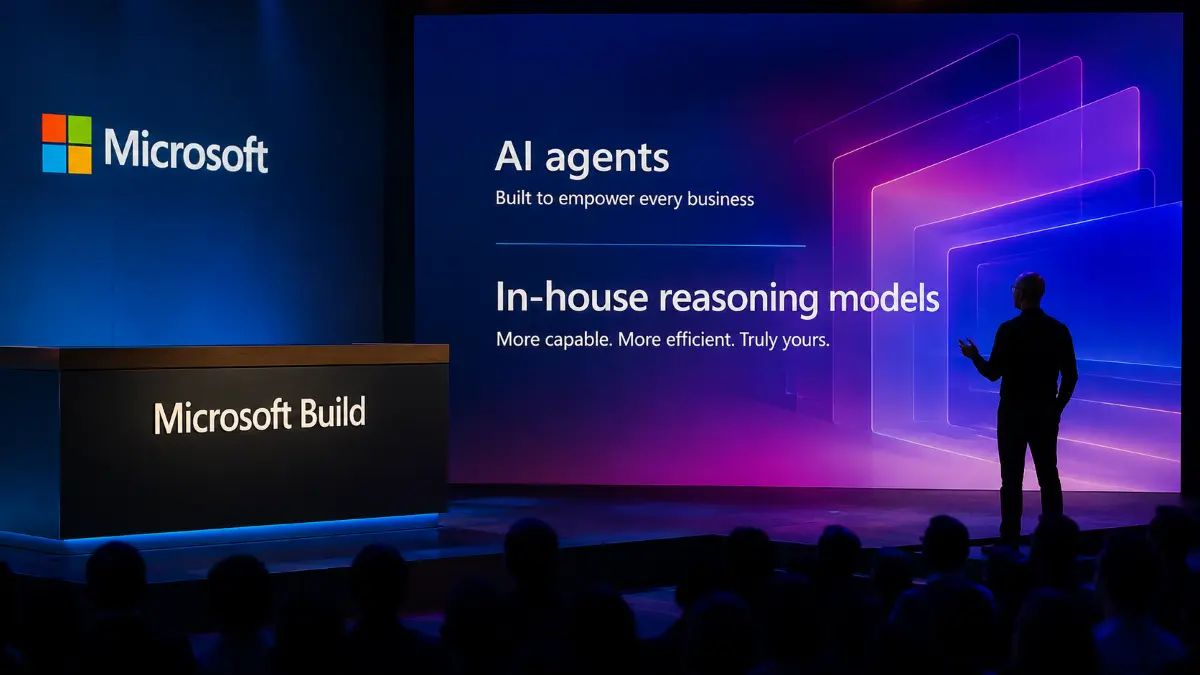

Microsoft’s AI ambitions took a sharp turn at its Build conference, where the company unveiled a suite of new AI initiatives, including a super app and proprietary reasoning models. This marks a clear pivot following the recent split with OpenAI, positioning Microsoft as a direct competitor in the rapidly evolving AI landscape.
The introduction of AI agents capable of autonomous reasoning and task execution underscores Microsoft’s intent to move beyond reliance on OpenAI’s technology. By developing its own models, Microsoft aims to assert greater control over its AI ecosystem and accelerate innovation within its software and cloud services. This shift is significant as it signals a more aggressive stance in the AI arms race, where differentiation and proprietary capabilities are becoming critical.
This move comes amid growing industry momentum toward AI agents that can perform complex workflows independently, a trend that is reshaping enterprise software and consumer applications alike. Microsoft’s super app concept hints at a future where AI agents integrate deeply across productivity tools, potentially redefining user interaction paradigms. The split from OpenAI also highlights the evolving dynamics between tech giants and AI startups, where partnerships can quickly turn into competition as the stakes rise.
Strategically, Microsoft’s new AI push could impact its cloud platform Azure by attracting developers seeking integrated AI tools and services. It also signals to competitors that Microsoft is doubling down on AI innovation internally, rather than relying on external partnerships. For enterprises, this could mean faster access to advanced AI capabilities embedded directly in Microsoft’s ecosystem, but it also raises questions about interoperability and vendor lock-in.
Looking ahead, the AI community will be watching how Microsoft’s agents perform in real-world applications and whether this strategy accelerates the fragmentation or consolidation of AI technologies. The company’s ability to deliver on these promises while maintaining developer and customer trust will be crucial as competition with OpenAI and others intensifies.