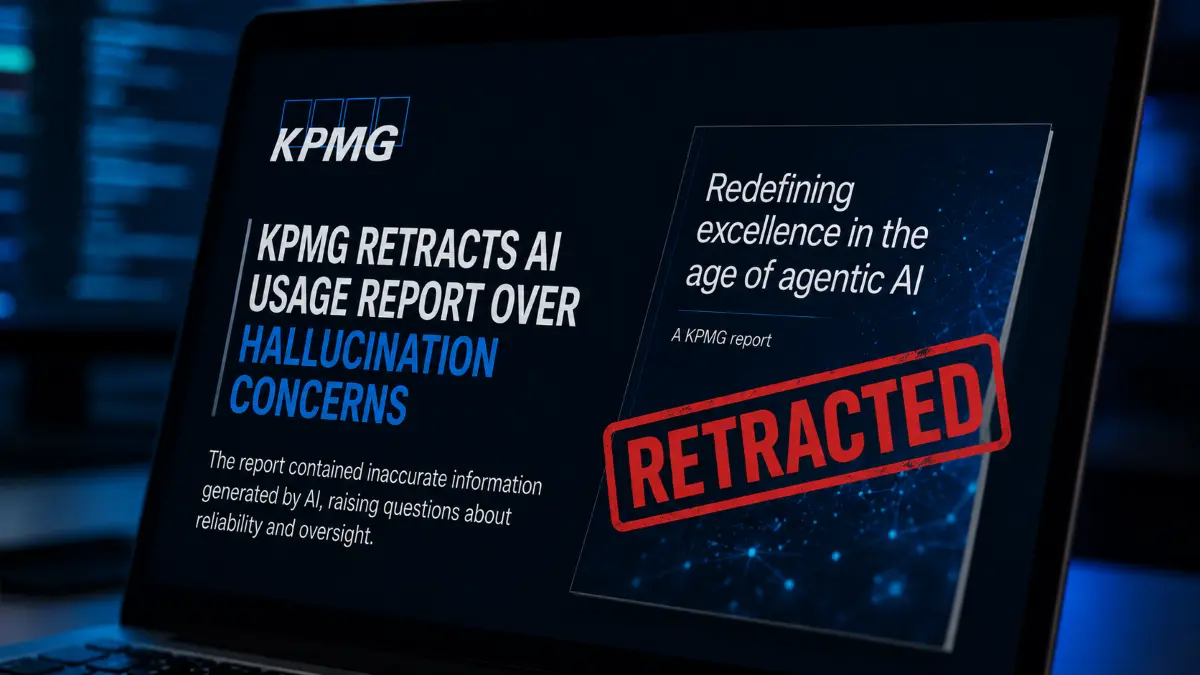

KPMG has withdrawn a recent report on AI usage after uncovering significant hallucinations in the AI-generated content. The retraction highlights the ongoing reliability issues with AI systems, especially when deployed in high-stakes corporate environments. This incident underscores the risks companies face when relying on AI for critical analysis and reporting.
The report’s withdrawal matters because it exposes the fragility of AI-generated insights in professional contexts. Hallucinations, fabricated or erroneous information produced by AI, can undermine trust and lead to flawed decision-making. For a major consultancy like KPMG, which advises clients on technology adoption, such errors can damage credibility and raise questions about the readiness of AI tools for enterprise use.
This episode fits into a broader industry pattern where AI’s impressive capabilities are tempered by persistent accuracy challenges. Despite advances, hallucinations remain a thorny problem, especially in generative AI models that produce text. As corporations increasingly integrate AI into workflows, ensuring the factual integrity of AI outputs becomes critical to avoid reputational and operational risks.
Strategically, KPMG’s retraction may prompt other firms to reassess their reliance on AI-generated content without rigorous human oversight. It also signals the need for stronger validation frameworks and transparency about AI limitations. The incident could slow enterprise AI adoption or shift focus toward hybrid models combining AI efficiency with expert review.
Looking ahead, the industry will watch how KPMG and others address these challenges. Will new tools emerge to better detect and mitigate hallucinations? How will regulatory and ethical standards evolve around AI-generated business content? The answers will shape AI’s trajectory in corporate decision-making and risk management.