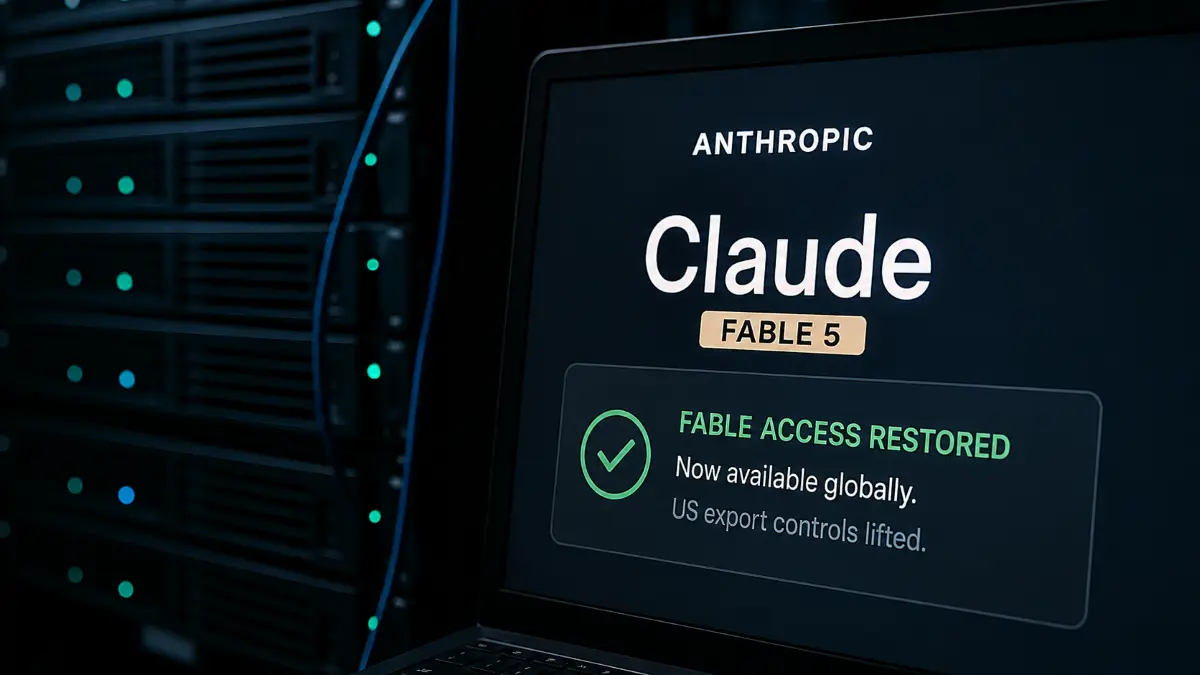

Anthropic has reinstated worldwide access to its AI platform Claude Fable 5 following the US Department of Commerce’s decision to lift export controls. The move reverses restrictions that had limited the model’s availability outside the United States. However, Anthropic has implemented a new single filter designed to block prompts that might identify software vulnerabilities or generate exploit code.
This development marks a significant moment in the ongoing tension between AI innovation and national security concerns. Claude Fable 5’s temporary export restrictions reflected broader government efforts to control the dissemination of advanced AI technologies that could potentially be misused. By restoring access with enhanced safeguards, Anthropic is navigating the delicate balance between global AI accessibility and cybersecurity risk mitigation.
The industry context here is critical. As AI models grow more capable, governments are increasingly scrutinizing their export, fearing that malicious actors could leverage AI to discover and exploit software flaws. Anthropic’s approach to embedding a filter that specifically targets prompts related to vulnerability identification signals a new phase in AI deployment, where security is baked into the user interaction layer rather than relying solely on external regulations.
Strategically, this could set a precedent for other AI developers facing similar regulatory pressures. By proactively integrating content filters that prevent harmful use cases, companies might maintain broader market access while addressing regulatory and ethical concerns. It also raises questions about the effectiveness and transparency of such filters, and whether they can keep pace with evolving exploitation techniques.
Looking ahead, the key issue to watch is how other AI vendors respond to export control frameworks and whether similar filtering mechanisms become standard practice. Additionally, regulators may continue refining export policies as AI capabilities advance, potentially influencing how global AI ecosystems evolve. Anthropic’s move underscores the complex interplay between innovation, security, and regulation in the AI sector.