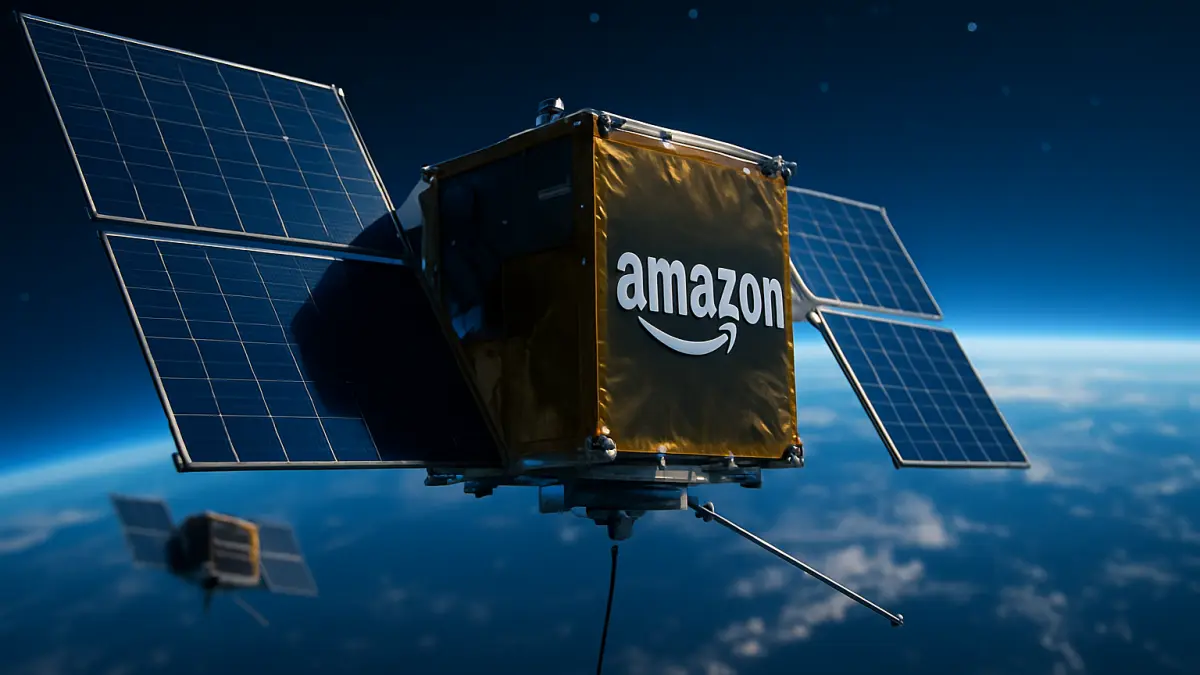

Amazon is gearing up to launch its Leo satellite broadband service, marking a significant step into the competitive satellite internet market. The company now has enough Leo satellites in orbit to begin offering service, though its constellation remains much smaller than SpaceX’s Starlink network. This development signals Amazon’s serious intent to challenge established players in delivering global broadband connectivity from space.
The Amazon Leo service aims to provide high-speed internet access via low Earth orbit satellites, targeting underserved and remote areas where traditional infrastructure is limited. While the constellation size is currently modest, Amazon’s entry could pressure competitors to innovate and expand coverage. The satellite internet sector has rapidly evolved, with Starlink leading the charge by deploying thousands of satellites. Amazon’s approach may focus on leveraging its cloud and logistics expertise to differentiate its offering.
This move comes amid growing demand for reliable, high-speed internet worldwide, especially in rural and developing regions. Satellite broadband is increasingly seen as a viable solution to bridge digital divides, but the race to build out constellations is capital intensive and technologically complex. Amazon’s readiness to launch Leo service suggests it is prepared to invest heavily in infrastructure and customer acquisition to carve out market share.
Strategically, Amazon’s satellite broadband push complements its broader cloud and edge computing ambitions. Integrating satellite connectivity with AWS could unlock new enterprise and consumer use cases, particularly in remote operations and IoT deployments. However, the company faces challenges in scaling its constellation and competing against Starlink’s head start and growing user base.
What to watch next is how quickly Amazon can expand its Leo satellite network and roll out service globally. The company’s ability to attract customers and deliver consistent performance will be critical in a market where speed, latency, and coverage define success. Amazon’s entry intensifies the satellite broadband race, promising more options but also fiercer competition for space-based internet supremacy.