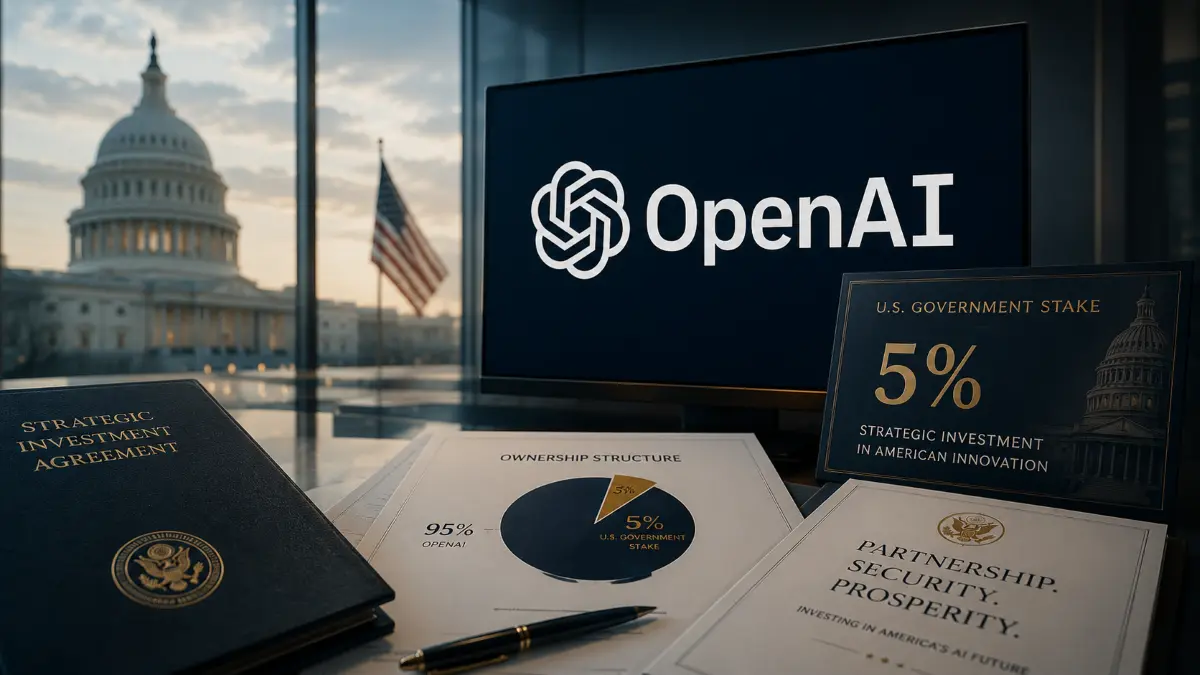

OpenAI is reportedly exploring a bold new approach to AI funding by offering the US government a 5% equity stake in the company. This move comes just days after Washington delayed the rollout of GPT-5.6, raising questions about the future of AI development and regulatory oversight in the United States.
According to sources, OpenAI CEO Sam Altman has discussed the proposal with high-level officials including President Donald Trump, Commerce Secretary Howard Lutnick, and Treasury Secretary Scott Bessent. The plan also envisions a broader framework where all leading US AI labs contribute to a public fund modeled after Alaska’s oil revenue system. This fund would presumably support AI research and public interest initiatives, signaling a novel public-private partnership in the tech sector.
The significance of this proposal lies in its potential to reshape how AI innovation is financed and governed. By giving the government a direct stake, OpenAI could align its commercial ambitions with national priorities, possibly easing regulatory tensions that have mounted amid rapid AI advancements. This approach contrasts with traditional venture capital or purely private funding models, suggesting a new path for balancing innovation with public accountability.
In the broader industry context, OpenAI’s idea reflects growing scrutiny of AI’s societal impact and the challenges governments face in keeping pace with technology. As AI capabilities accelerate, the question of who benefits and who controls these powerful tools becomes increasingly urgent. OpenAI’s proposal could set a precedent for other AI companies navigating similar pressures.
Looking ahead, the tech world will be watching closely to see if Washington embraces this equity stake offer and the public fund concept. The outcome could influence AI development strategies, regulatory frameworks, and investment flows across the sector. Whether this model gains traction or remains a tentative experiment, it underscores the evolving relationship between AI innovators and government in shaping the future of artificial intelligence.