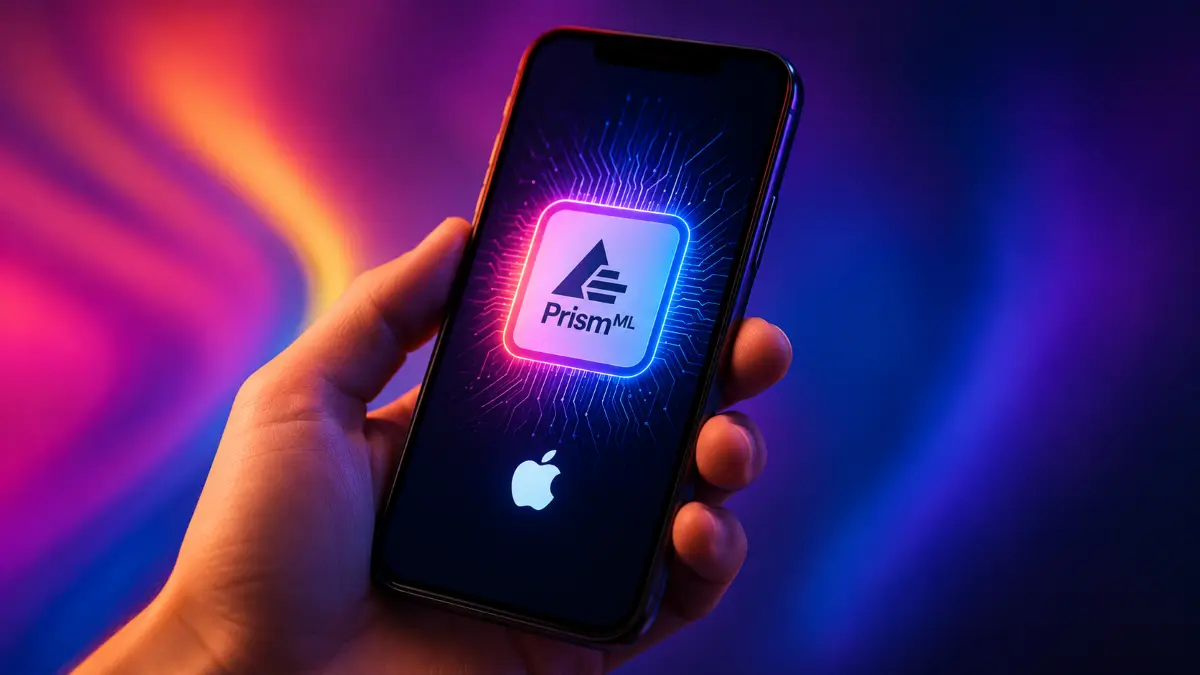

Apple is reportedly exploring technology from AI startup PrismML, which specializes in running large AI models directly on iPhones without the need for server-based processing. According to a report from The Information, PrismML’s approach focuses on shrinking traditionally server-dependent AI models to function efficiently on-device while maintaining comparable intelligence. This development could mark a significant shift in how Apple handles AI workloads across its ecosystem.
For Apple users and developers, on-device AI models mean faster, more private, and more reliable AI-powered features. By reducing reliance on cloud servers, iPhones could perform complex AI tasks with lower latency and without continuous internet connectivity. This aligns with Apple’s long-standing emphasis on user privacy and security, as sensitive data would no longer need to be transmitted to external servers for processing.
In the broader industry context, Apple’s interest in PrismML reflects a growing trend toward decentralized AI. Many tech companies still depend heavily on cloud infrastructure for AI, but on-device AI offers distinct advantages in terms of speed, privacy, and energy efficiency. Apple’s silicon advancements, including its custom neural engines, have already pushed the boundaries of local AI processing, and PrismML’s technology could accelerate this trajectory.
Strategically, integrating PrismML’s technology could strengthen Apple’s competitive edge in AI by enabling new features that are both powerful and privacy-centric. It may also reduce operational costs associated with server infrastructure and data management. For developers, this could open new opportunities to build AI-driven apps optimized for local execution, potentially reshaping app capabilities on iOS.
What to watch next is whether Apple will acquire PrismML or integrate its technology through partnerships. Observers should also monitor how this on-device AI approach will influence the rollout of future iOS features and hardware designs, especially as AI becomes a core element of user experience across Apple’s product lineup.