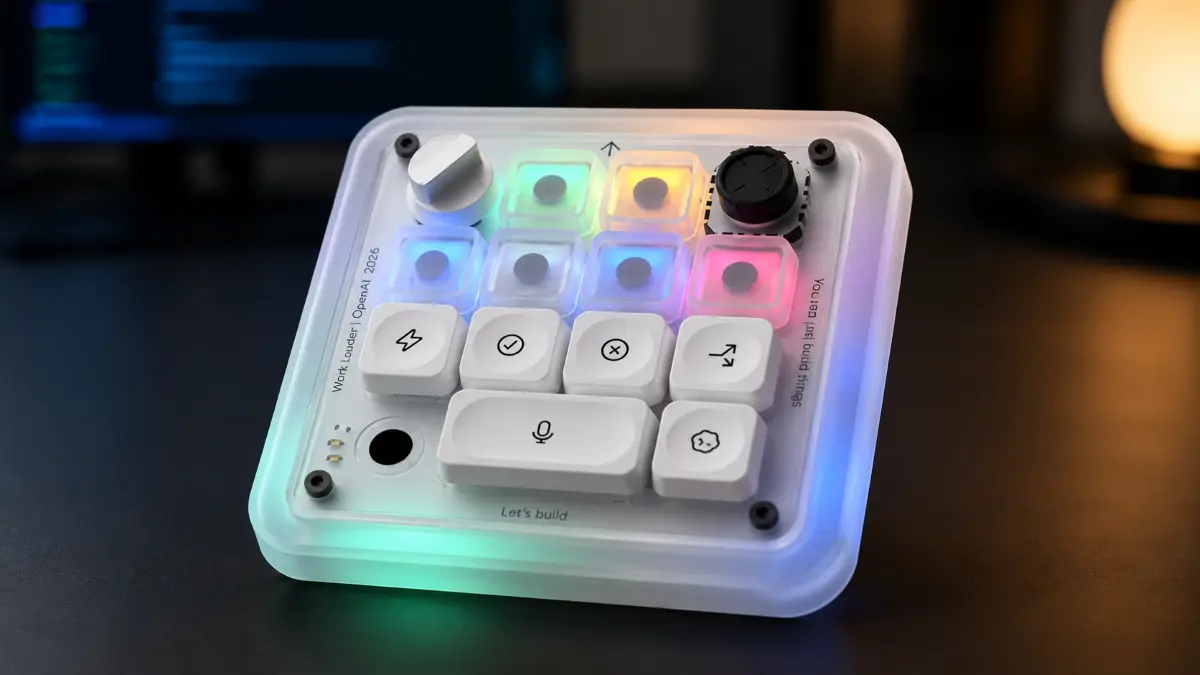

OpenAI has introduced its first hardware device, the Codex Micro, a compact RGB macropad tailored for developers working with AI coding agents. Featuring 13 low-profile keys and a joystick, the device is designed to provide customizable inputs that streamline interaction with AI tools. This marks a notable shift for OpenAI, traditionally focused on software, as it explores physical interfaces to augment AI workflows.
The Codex Micro’s design balances aesthetics and function, incorporating RGB lighting alongside programmable keys. This combination aims to give developers more tactile and intuitive control over AI coding assistants, potentially speeding up coding tasks and improving user experience. The joystick adds a unique input method, hinting at more dynamic ways to navigate AI-driven environments or coding interfaces.
This move by OpenAI reflects a broader industry trend where AI companies are expanding beyond pure software solutions to create specialized hardware that enhances AI usability. Similar efforts have emerged from other tech giants, but OpenAI’s focus on a niche developer tool suggests an interest in deepening engagement with the coding community. It also underscores the growing importance of hybrid hardware-software ecosystems in AI development.
Strategically, the Codex Micro could serve as a testbed for OpenAI to refine how users interact with AI agents in real-time. If successful, it may pave the way for more advanced peripherals or integrated hardware platforms that make AI tools more accessible and efficient. For developers, this device might represent a new category of productivity tools designed specifically for AI-assisted programming.
What to watch next is how the market responds to this hardware debut and whether OpenAI will expand its hardware lineup. Observers should also track how well the Codex Micro integrates with existing AI coding platforms and whether it influences broader hardware trends in the AI space.