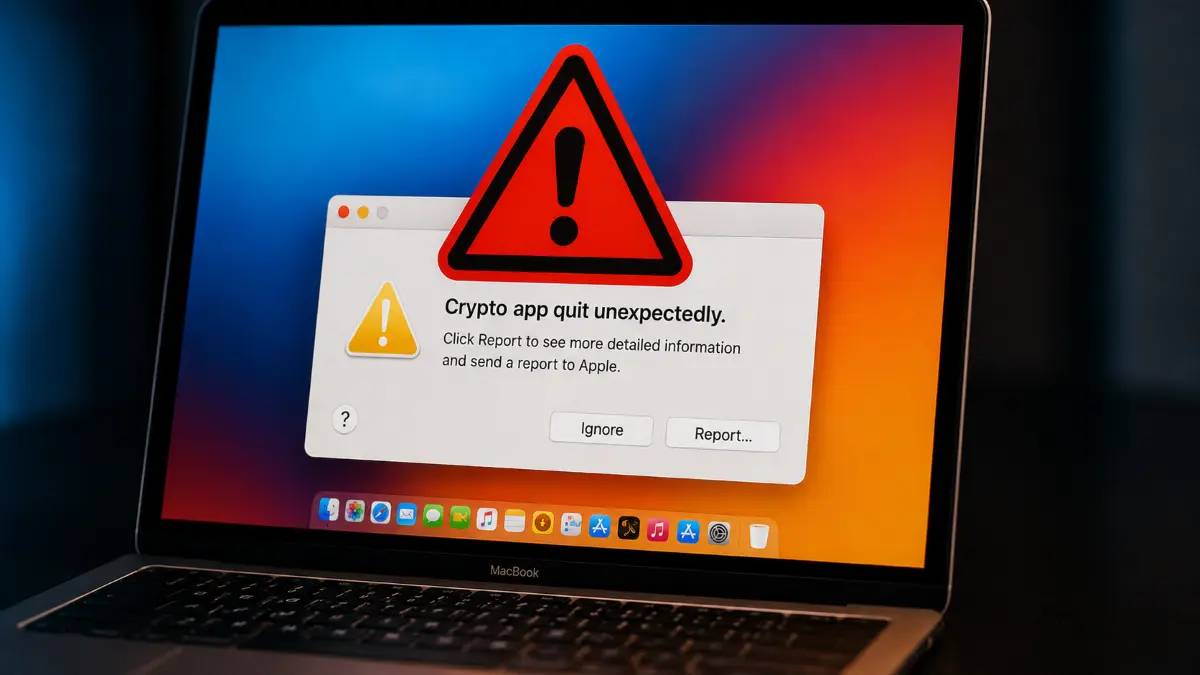

A new wave of malware targeting Mac users is exploiting fake crash report dialogs to steal sensitive information, including passwords and cryptocurrency wallet credentials. This sophisticated phishing tactic mimics legitimate macOS crash alerts, fooling users into entering their private data. The malware’s deceptive approach marks a concerning evolution in threats facing the Apple ecosystem.
For Apple users, this development underscores the importance of vigilance when interacting with system prompts. The malware’s ability to replicate authentic crash report windows makes it harder to detect, increasing the risk of credential compromise. Developers and security teams within Apple’s ecosystem must consider enhanced safeguards against such social engineering attacks, especially as macOS continues to grow in popularity.
This incident fits into a broader industry trend where attackers leverage trusted system interfaces to bypass traditional security measures. Unlike generic phishing emails, these fake crash reports exploit user trust in system-generated dialogs, raising the stakes for endpoint security. Apple’s tightly integrated hardware and software environment is generally seen as a security advantage, but this malware highlights persistent vulnerabilities in user interaction layers.
Strategically, Apple faces pressure to bolster macOS’s defenses against UI spoofing and to educate users on recognizing suspicious prompts. The company’s ongoing efforts to secure its ecosystem may need to extend beyond technical barriers to include more intuitive warnings and verification methods. For developers, this also signals a need to design apps and system alerts that can resist mimicry without compromising usability.
Looking ahead, it will be crucial to monitor how Apple responds to this threat and whether new security features or updates are introduced to counteract such phishing techniques. Users should remain cautious of unexpected password requests, even if they appear linked to system crashes, and rely on official Apple support channels for verification.