

A Space Odyssey: The Birth of the Twin
On 13 April 1970, an oxygen tank on the Apollo 13 spacecraft exploded, crippling the mission and threatening the lives of three astronauts. Far from the stricken craft, engineers in Houston turned to a combination of physical replicas and digital simulations to understand the failure and improvise a rescue plan. NASA’s frantic problem‑solving, immortalized by the command “Houston, we’ve had a problem,” gave rise to a new idea: creating a living model of a complex system that could ingest real‑time data, mirror the physical object’s state and help chart a safe course forward. This improvised “digital twin” not only saved the crew but also illuminated how tightly coupled data, models and human ingenuity could become.
Half a century later, the concept has left the confines of mission control and entered everyday life. Virtual replicas now track factory lines and entire cities, help doctors fine‑tune treatments, and let climate scientists simulate a planet in peril. When we talk about digital twin technology, we are no longer just talking about simulation. A true twin, as scholars and standards bodies emphasize, is an adaptive model that synchronizes continuously with its physical counterpart. Real‑time sensor streams flow into the model, algorithms predict what might happen next, and humans gain a canvas for decision‑making. The digital twin thus becomes more than a mirror; it is a partner that can anticipate problems, explore alternatives and help optimize outcomes.
Table of Contents
What Is a Digital Twin? Defining the Concept and the Market
At its core, a digital twin is a digital model of an intended or actual physical product, system or process. Unlike a one‑off simulation, a twin remains connected to its real‑world counterpart through a digital thread of data that allows it to update in real time and learn across the asset’s life cycle. When engineers speak of “twins,” they often distinguish between a prototype (a model built before the physical object exists), an instance (a twin linked to a specific object) and an aggregate (an ensemble of twins used for fleet‑level analysis). All share three elements: the physical system, the digital representation and the communication channel between them.
NASA’s experience demonstrates why dynamic synchronization matters. As the agency notes, simulators in the Apollo era were extended with digital components to ingest real‑time telemetry so they could mimic the evolving state of the crippled spacecraft. Without that continuous data flow, the model would have been little more than a static mock‑up. Contemporary definitions sharpen this point: a digital twin is “a set of adaptive models that emulate the behaviour of a physical system … using real‑time data”. By coupling sensing, machine learning and predictive analytics, the twin can predict failures, suggest interventions and even autonomously manage aspects of its physical sibling.
This potential is driving explosive investment. According to BCC Research, the global market for digital twins was valued at US $11.5 billion in 2023 and is expected to grow from US $18.2 billion in 2024 to US $119.3 billion by 2029, reflecting a compound annual growth rate of 45.7 percent. A complementary analysis from The Business Research Company notes that the market will grow from US $21.01 billion in 2024 to US $28.9 billion in 2025, an annual increase of 37.6 percent. Much of this growth comes from manufacturing, energy and healthcare sectors, where Internet‑of‑Things (IoT) sensors and artificial intelligence (AI) analytics are already in place. These numbers illustrate that digital twins have moved from early prototypes to mainstream tools—a transition supported by public‑sector initiatives and corporate investment.
Real‑World Applications: Factories, Cities, Health and Earth
Factories: BMW’s Virtual Production Lines
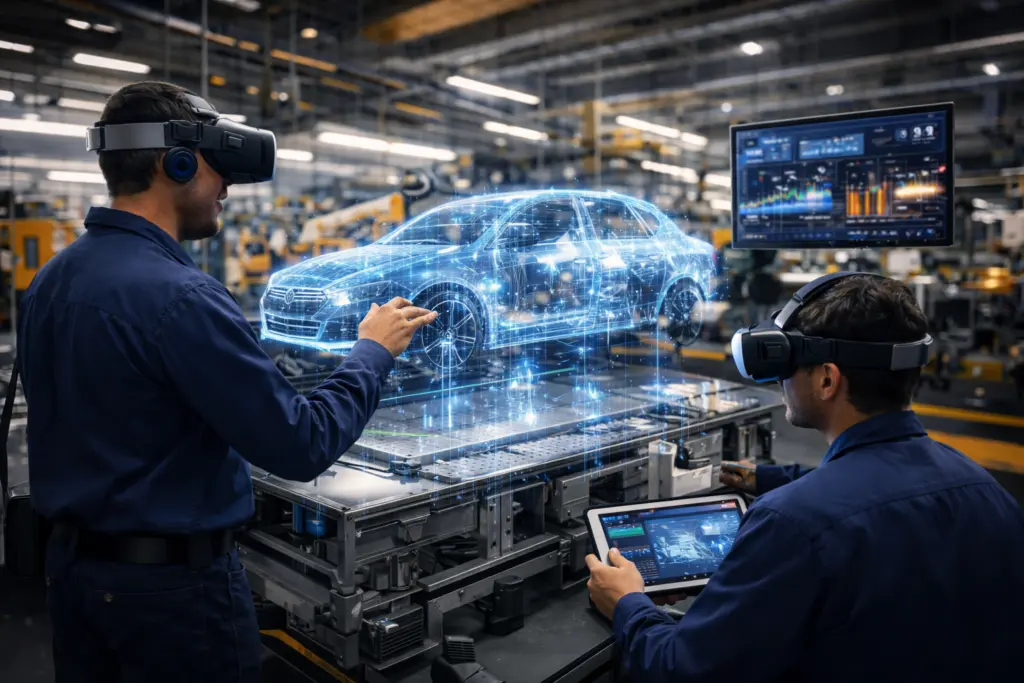
One of the clearest examples of industrial adoption comes from BMW. The German automaker began creating virtual replicas of its production lines in 2014 and, by 2021, had developed a fully operational digital twin of its Regensburg factory to simulate production and scheduling down to the work‑order level. Today, the company maintains a digital twin of all 31 production sites, accessible from any device, allowing planners to “walk through” factories in real time. BMW’s “iFactory” strategy claims that digital twins reduce production planning time by nearly one‑third. The initiative relies on a customized BMW Factory Viewer application through which roughly 15,000 employees can inspect specific areas, take measurements and collaborate across locations. By enabling virtual experiments, managers can redesign layouts, spot bottlenecks and identify root causes of problems without disrupting the physical lines.
Retail and Industry: Lowe’s and Tata Steel
Digital twins aren’t confined to automotive manufacturing. U.S. home‑improvement retailer Lowe’s has built digital duplicates of its stores that combine spatial scans with order histories, giving employees “superpowers” to optimize operations. Using augmented‑reality headsets, staff can overlay the ideal shelf arrangement on the physical aisle and adjust inventory accordingly, turning a capital‑intensive restocking exercise into a data‑driven simulation. Heat‑map visualizations show foot traffic patterns and help refine product placement, while predictive models suggest optimized layouts. Similarly, Tata Steel uses digital twins to test radical innovations such as the HIsarna ironmaking process—a low‑carbon alternative to blast furnaces—by simulating process failures before investing in full‑scale implementation. These examples highlight how digital twins enable companies to prototype complex operations, reduce waste and accelerate sustainability goals.
Smart Cities: Virtual Singapore

Urban planners are applying digital twins at unprecedented scale. In 2015, the Singapore Land Authority began developing Virtual Singapore, a national‑level digital twin that captures buildings, roads, green spaces and underground infrastructure using laser‑scanning aircraft and vehicles. The platform integrates real‑time data on population movements, environmental factors and infrastructure, allowing planners to model scenarios—from flood management to new infrastructure projects—before implementing them. A key objective is to support sustainable development, efficient resource allocation and disaster preparedness by letting government agencies, researchers and businesses experiment with urban policies in a risk‑free digital environment. Virtual Singapore demonstrates how a national digital twin can democratize access to data and foster collaboration across sectors, serving as a blueprint for other smart‑city initiatives.
Healthcare: Personalised Medicine and Diabetes Management
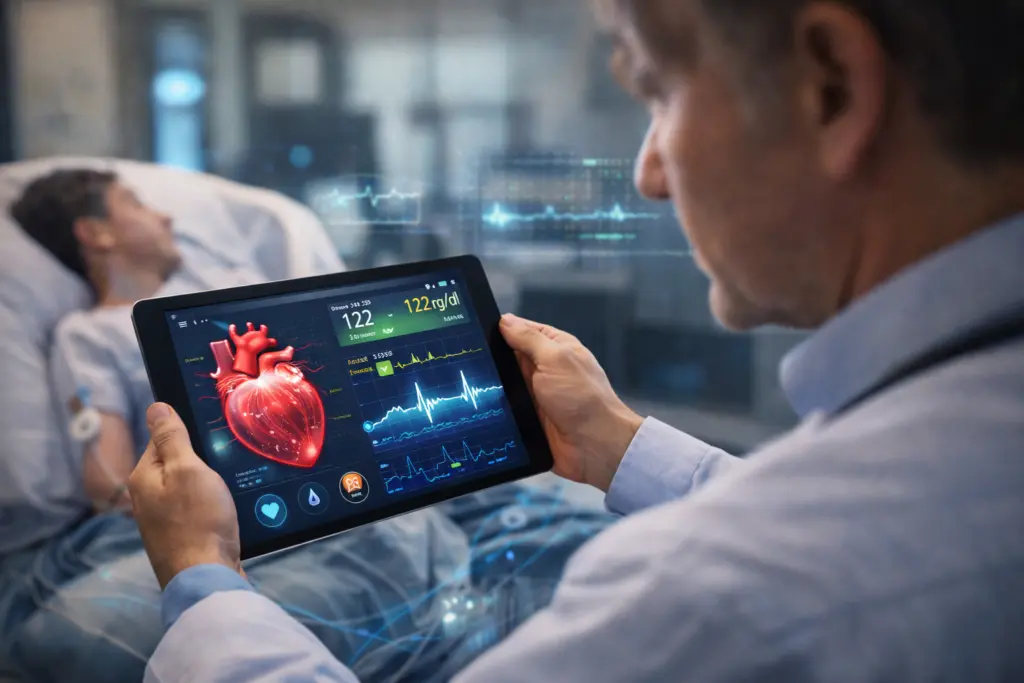
Medical researchers envision digital twins of organs and entire bodies to personalize treatment. NASA’s article notes that digital twins show promise in personalized medicine, adjusting insulin delivery for patients with Type 1 diabetes and helping diagnose cardiac conditions. A 2025 study led by the University of Virginia demonstrates how such a twin can help people with Type 1 diabetes control their condition. Researchers created digital copies of 72 participants using artificial pancreas technology and cloud‑based software. Participants could simulate activities and insulin adjustments in a safe virtual environment, learning how their systems would respond. Access to the digital twin model increased the time patients spent within their target glucose range from 72 percent to 77 percent, while reducing average hemoglobin A1c from 6.8 percent to 6.6 percent. The authors emphasize that digital twins can provide rapid therapy parameter optimization and educational support, making diabetes management more accessible.
Digital twins are also being used to monitor complex space missions and the planet itself. NASA built digital twins to test and monitor the James Webb Space Telescope, including a video‑based model that simulated the deployment of its giant sunshield. It also maintains a Wildfire Digital Twin that merges sensor data and AI to forecast burn paths and produce precise global models. Such planetary twins help scientists understand earth systems, predict disasters and plan responses, demonstrating that digital twins can operate at scales far beyond the factory floor.
Ethical Challenges: Ownership, Privacy and Power
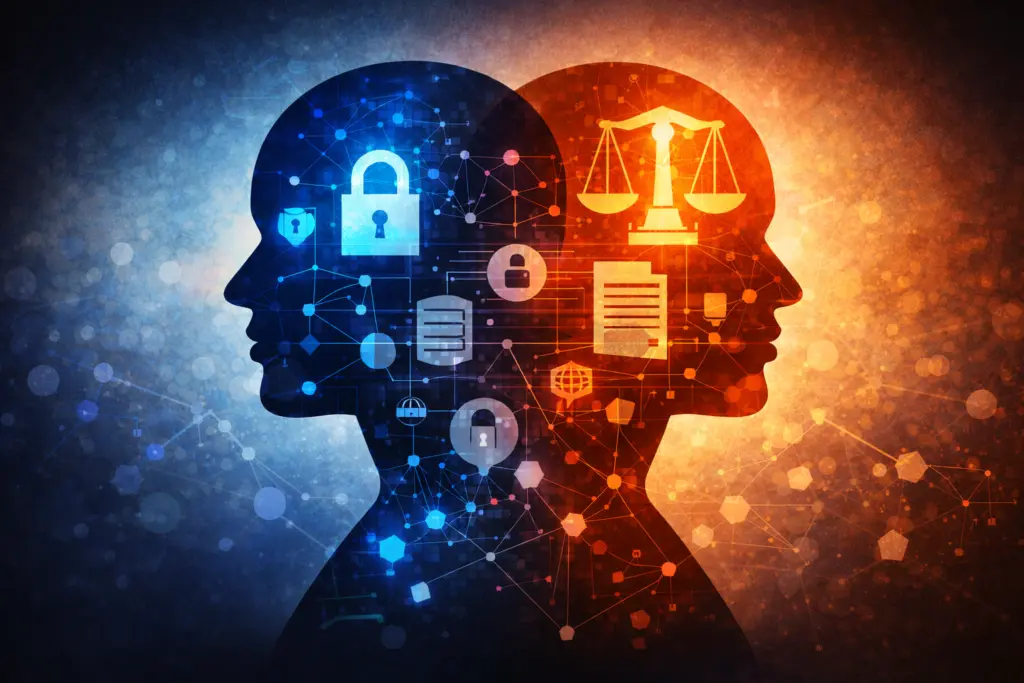
As digital twins proliferate, questions arise about who controls the data they generate, how consent is managed and how these models might be used. Nowhere are these questions more pressing than in healthcare, where digital twins rely on sensitive, granular patient data. A 2025 article from Viva Technology outlines three plausible answers to the question of who owns a digital twin: the patient (as the data subject), the healthcare provider (which manages treatment) or the technology company that builds the model. Without clear ownership rules, patients risk losing control over their most sensitive information and may find their data commercialized without their knowledge.
Consent is equally thorny. Traditional consent forms typically grant broad permission for treatment and research, but a digital twin may be used to train algorithms, test drugs or share predictive data with insurers. Ethical frameworks must therefore support ongoing, dynamic consent, allowing patients to manage permissions as their twin evolves and new uses emerge. Privacy and cybersecurity present another risk: because digital twins integrate multiple datasets into a detailed real‑time model, they become attractive targets for hackers. Potential harms range from identity theft to genetic discrimination, and experts argue that stronger safeguards are needed than those currently applied to electronic health records.
Existing data protection laws such as the EU’s General Data Protection Regulation (GDPR) and HIPAA in the United States govern the use of personal health data, but these frameworks were designed for static records, not dynamic models that continuously evolve. Regulators are scrambling to fill the gaps. Proposals include clarifying whether patients can demand the deletion of their twin, whether developers have partial ownership because their algorithms co‑created the model, and whether predictions about future disease risk constitute protected health information. Without answers, healthcare providers and technology companies could face legal risks and erode public trust.
Ethical challenges extend beyond healthcare. Information Governance Services (IGS) warns that digital twins modelling civic systems, such as city transportation networks, implicitly track the movements and choices of citizens. Data sovereignty becomes a core issue: who decides what data is collected, what scenarios are optimized and who benefits from those decisions? The article argues that communities whose data is being modelled should have a voice in how their information is used, shared and monetized. Governance must therefore go beyond compliance checklists and embrace dynamic stewardship—embedding data stewards within twin‑development teams to adapt to evolving risks rather than relying on periodic audits.
Power dynamics further complicate the picture. A city‑scale digital twin could be used for resource optimization, but it could also become a tool for surveillance or social control, depending on who holds the reins. This underscores the need for participatory design and democratic accountability. The same is true in industrial contexts: a twin designed to optimize productivity might inadvertently entrench existing inequalities if it is used to intensify labour without worker input. Ethics demands that we ask not only is it legal? but whose interests does the twin serve? and what values are embedded in its design?.
Future Outlook and Call for Reflection
Digital twin technology is evolving rapidly, and its trajectory will be shaped by technological innovation, regulation and collective choices. On the technical side, advances in AI, generative models and edge computing are making twins more sophisticated and accessible. For instance, BMW’s virtual factories leverage Nvidia’s Omniverse to enable global collaboration and real‑time updates. City‑scale twins like Virtual Singapore are integrating AI and IoT to enhance resilience and sustainability. Meanwhile, NASA and other agencies are building planetary twins to model Earth systems and improve disaster response.
At the same time, the regulatory landscape is shifting. Experts expect international bodies to develop global standards for data governance that affirm patient ownership, require dynamic consent and mandate strong cybersecurity and transparency. These standards will need to address not only healthcare but also cities, factories, energy grids and other domains where digital twins operate. The challenge is to balance innovation with the protection of fundamental rights: the same technology that optimizes resource use could easily become a surveillance mechanism if misaligned with social values.
Crucially, the future of digital twins hinges on human agency. When digital twins succeed, it is because they augment human insight, not replace it. As NASA notes, the goal is not just to ensure technologies operate as expected, but also to enable predictive maintenance and adaptive decision‑making. The promise extends to healthcare, where digital twins could personalize treatments and improve outcomes. Yet, as ethicists remind us, if these tools are built without public participation and robust stewardship, they risk reinforcing existing power imbalances.
As readers, practitioners and citizens, we should reflect on several questions:
- Who owns and controls data in digital twins? Ownership determines who benefits and who can say no.
- How can consent and privacy be upheld in dynamic, real‑time models? Patients and citizens need mechanisms to manage permissions as situations change.
- What governance structures ensure that digital twins serve the public good? Data stewardship and participatory design must become core parts of the development process.
- How do we prevent digital twins from becoming instruments of surveillance or inequity? Embedding ethical values into model design and enforcing accountability can mitigate misuse.
Conclusion: Mirror Worlds and Human Agency
The story of digital twins began with a spacecraft in crisis and a group of engineers determined to bring three astronauts home. Today, the same idea that saved Apollo 13 is reshaping industries, cities and medicine. Digital twins offer the possibility of mirror worlds that help us learn from the real one, anticipate problems and explore possibilities. They promise efficiency, sustainability and health. But they also raise profound questions about privacy, consent, ownership and power.
Dr. Aisha Idris, as an AI ethicist and former machine‑learning researcher, believes the real challenge is not technical but moral. We must decide what kind of mirror we want to build and what we hope to see in it. Do we want a digital twin that simply optimizes profits and control, or one that enhances human agency, fairness and resilience? The answer depends on deliberate choices by engineers, policymakers, businesses and communities. Only by embedding ethics, transparency and participation into the fabric of digital twin systems can we ensure that these AI‑powered mirrors reflect our best selves rather than our blind spots. The world they mirror is ours to shape.



Reader perspectives, questions, and reactions.
No comments yet. Start the conversation.
Comments are closed for this article.