

Artificial intelligence has moved from science‑fiction to an everyday companion. Today large language models finish our sentences, and AI‑enhanced cameras diagnose diseases. As one technology vision report notes, the generalization of AI—where intelligent systems learn autonomously and act across every part of society—is already under way. Modern models can outperform chess champions, write code, book travel and interact through speech. With generative AI tools in the pockets of most knowledge workers, the coming decade will see artificial intelligence expand beyond isolated applications to become a ubiquitous “cognitive digital brain” that reshapes how individuals, businesses and governments operate.
AI adoption and economic momentum
Recent surveys show that AI has become a mainstream driver of productivity and investment. In 2024 private AI investment exceeded $109 billion, with spending on generative AI jumping nearly 19 % from the previous year. More than three quarters of organizations now report using AI in some capacity, and autonomous vehicles and AI‑enabled medical devices have transitioned from pilot projects to daily life. Analysts forecast that AI could add trillions of dollars to the global economy by 2030, and some reports predict that by then up to 80 % of industries will have embedded AI into their core operations.
This surge is underpinned by improvements in hardware and algorithms. New chips and training techniques cut inference costs and enable multimodal models that process text, images and audio. The result is an explosion of AI‑driven startups, corporate initiatives and national AI strategies aimed at securing economic advantages.
Key trends shaping the next decade
Agentic and autonomous AI
By 2030, AI systems are expected to evolve from reactive tools to agentic entities capable of making independent decisions. These personal assistants will handle scheduling, finances and creative ideation, while enterprise‑grade agents will optimize supply chains and even design other AI systems. Experts argue that this evolution—rather than a distant artificial general intelligence—is the most pressing development to prepare for. Ensuring human oversight will be critical as autonomous agents gain more authority.
Multimodal and personalized AI
Next‑generation models will integrate data from text, images, audio and sensors to deliver hyper‑personalized experiences. Early examples like GPT‑4o hint at this shift, but by 2030 AI will merge with wearables and IoT devices to tailor everything from education to retail. Personalized AI tutors could adapt lessons to individual learning styles, while shopping assistants anticipate needs before users even express them. The flip side is rising privacy concerns; compliance with emerging data‑protection regulations will be essential.
Quantum AI and computational breakthroughs
Quantum computing promises to solve problems intractable for classical machines. Analysts forecast quantum AI systems that accelerate drug discovery, materials science and cryptography by orders of magnitude. However, scaling quantum hardware and controlling error rates are still major challenges, and such systems will remain accessible mainly to research institutions and large corporations through the 2030s.
AI‑driven sustainability
Artificial intelligence will play a pivotal role in achieving climate goals. Forecasts suggest that AI‑enabled energy optimization could reduce greenhouse‑gas emissions in North America by 6.1 % by 2030. Smart grids, predictive maintenance and circular‑economy logistics may minimize waste and resource consumption. Yet AI’s own environmental footprint is significant; training large models consumes vast amounts of energy. Advances in energy‑efficient hardware and transparent impact reporting will be vital to ensure that AI helps rather than harms the climate.
AI in healthcare transformation
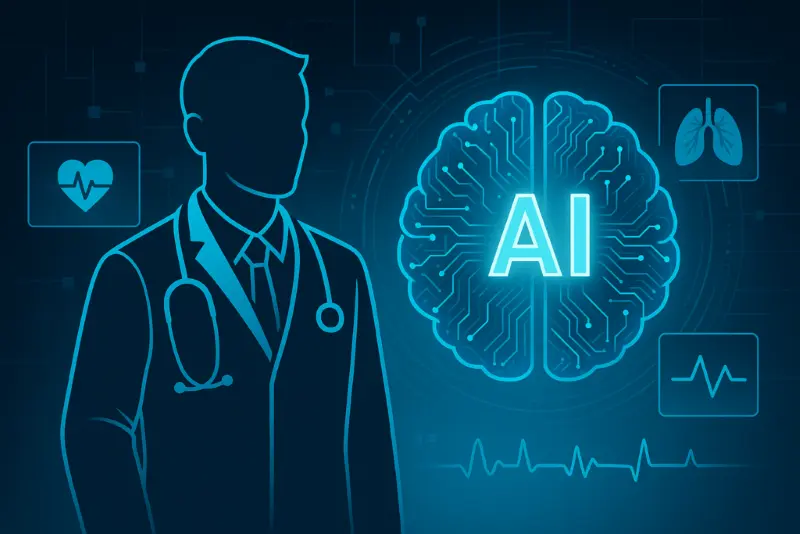
AI has already demonstrated prowess in protein folding and radiology. By 2030, experts anticipate that AI could save $100 billion per year through diagnostics, predictive analytics and personalized medicine. Models that predict patient outcomes based on genetics and lifestyle may reduce medical errors by 30 %, while virtual nursing assistants and AI‑driven wearables could decrease hospital visits by one‑fifth. However, equitable access to these innovations and bias mitigation in medical algorithms will remain urgent concerns.
Ethical AI and governance
The next decade will bring stricter oversight of high‑risk AI systems. Regulators are already classifying AI applications by risk level and imposing transparency requirements. Organizations will need ethical review boards and codes of conduct to ensure fairness and accountability. Fragmentation of laws across regions could hamper harmonization, making it harder to build internationally consistent AI frameworks.
Toward and beyond 2035: AGI, hybrid societies and space‑based infrastructure
Some futurists predict that human‑level AI could emerge around 2030, leading to an “intelligence explosion” and the integration of AI with brain‑computer interfaces. Others anticipate hybrid societies where humans and AI collaborate seamlessly. Fully autonomous vehicles could dominate cities, reducing transportation costs and reshaping urban planning. Space‑based AI data centers may emerge to meet energy demands and support exploration. Economically, AI could create tens of millions of new jobs but also render many roles obsolete; policies like universal basic income may gain traction to mitigate inequality.
Human and societal impacts
Technological progress will not just transform industries—it will reshape human experience. Surveys of experts predict that by 2035 AI will deeply affect social intelligence, complex thinking, empathy and identity. The majority anticipate negative impacts on nine core human traits, while some see improvements in curiosity, decision‑making and creativity.
Pew Research canvassing highlights a similar duality: experts expect a future where AI enables personalized medical care, immersive learning and progress on sustainability. At the same time, they fear existential risks, from loss of privacy and widespread misinformation to mass unemployment and increased surveillance. Over four in five of the respondents were as concerned as they were excited about these technologies. They warned that ethical design often lags profit motives, exacerbating inequality and eroding democratic institutions. The mental health implications of hyperconnected lives—anxiety, depression and social isolation—were also cited.
Challenges on the horizon
Even with remarkable advances, AI’s growth presents formidable challenges:
- Privacy and security: AI relies on vast datasets. Upcoming regulations, such as mandatory encryption and consent for high‑risk applications, aim to protect users, but enforcement varies across jurisdictions.
- Bias and fairness: Models trained on unrepresentative data can perpetuate injustices. Auditing and diverse datasets are needed, especially in critical domains like healthcare and criminal justice.
- Job displacement: Automation of driving, legal analysis and other tasks could displace millions of workers. Mass reskilling and new safety nets will be essential to avoid widening economic divides.
- Energy consumption: AI’s energy demands threaten to double data‑center power use within a few years. Without efficiency improvements, AI could increase carbon emissions by 80 %.
- Regulatory fragmentation: Divergent standards and slow approval processes hinder responsible innovation.
Navigating the next decade
The future of AI is neither dystopian nor utopian; it will be what humanity makes of it. Businesses must embed trust, transparency and responsibility into every stage of AI development. Governments and international bodies need to collaborate on harmonized standards, balancing innovation with safeguards. Education systems should prepare people for a world where human–AI teamwork is the norm, emphasizing creativity, critical thinking and empathy.
Individuals will also shape the trajectory of AI. Choosing tools mindfully, demanding accountability from developers and engaging in public discourse about AI’s role can steer technology toward beneficial outcomes. With careful stewardship, the coming decade could unlock unprecedented advances—from curing diseases and revitalizing ecosystems to elevating human potential—while mitigating risks and ensuring that AI serves everyone.




Reader perspectives, questions, and reactions.
No comments yet. Start the conversation.
Comments are closed for this article.