

When a network goes silent
On January 14 2026, millions of Verizon customers across the United States watched their smartphones slip into SOS only mode. The country’s largest wireless carrier experienced its first major nationwide outage since 2024, cutting off voice and data service for roughly ten hours. According to Downdetector, outage reports peaked at over 180,000 complaints and accumulated more than 2.2 million reports over the course of the day. Major metropolitan areas—including New York, Los Angeles, San Francisco, Houston, Phoenix and Miami—were hit hardest. As emergency communications officials urged people to use landlines or rival carriers to call 911, the Federal Communications Commission (FCC) announced an investigation.

Verizon initially offered little detail beyond apologizing for the disruption. The company assured customers there was “no indication of a cyberattack” and later cited a software issue within its network equipment as the culprit. Service was largely restored by 10:20 p.m. ET, nearly ten hours after the outage began. To compensate, Verizon promised affected customers a $20 credit per account. But the outage rattled confidence in the reliability of the nation’s telecom infrastructure and raised broader questions about the fragility of modern networks. What caused the breakdown, and what should organizations learn about building resilient, secure and cost‑efficient systems?
This article unpacks the Jan. 14 outage through the lens of a cloud architect. We’ll explore the technical foundations of today’s networks, the security and regulatory implications, lessons learned from similar incidents, and the emerging trends shaping the future of reliable connectivity. By understanding both the root causes and the broader context, businesses can better prepare for disruptions and design architectures that combine high availability with robust security.
Table of Contents
What Happened: Anatomy of the Jan. 14 Outage
Timeline and scale
The outage began shortly after 12:30 p.m. Eastern Time, with customers noticing dropped calls and an inability to send texts or access mobile data. Within hours, user‑reported incidents on Downdetector surged past 180,000, making it one of the largest U.S. telecom outages since AT&T’s February 2024 incident. Service interruptions were widespread across the Northeast, Southern California, Texas and pockets of the Midwest. Emergency services in several cities warned residents to use other carriers to call 911, underscoring the outage’s severity.
By mid‑afternoon, Verizon acknowledged the disruption but offered little detail. Customers flocked to social media, and some companies—such as Krispy Kreme—jumped into the conversation by offering free doughnuts to those “stuck at home”. The network status page temporarily went down, fueling speculation about a cyberattack. However, by early evening Verizon issued a statement attributing the outage to a “network element’s software issue” and emphasized that no security breach had occurred. Service returned gradually throughout the evening and was considered fully restored by about 10 p.m..
Customer impact and compensation
The outage underscored how pervasive mobile connectivity has become. Verizon serves approximately 146 million subscribers, and even a brief disruption can interrupt small businesses, healthcare providers and individuals reliant on mobile data. Users reported missed medical appointments, disruptions in ride‑share services and lost business transactions. Verizon responded by promising a $20 credit per affected account—not per individual line—likely costing the company millions of dollars in revenue. While the credit offers some relief, customers were quick to note that the outage’s economic cost likely exceeded this gesture.
Public and regulatory response
Government agencies and regulators responded swiftly. Municipalities issued public safety alerts advising residents to seek alternative ways to reach emergency services. The FCC announced it would review the incident to determine whether Verizon violated any service‑quality obligations. The episode revived calls for stronger reliability requirements for carriers, with some experts comparing the situation to the Rogers Communications outage that disrupted Canada in 2022 when a misconfigured router flooded the network with updates.
Technical Deep Dive: Why Large Networks Fail
The architecture behind modern telecom networks
Modern wireless networks are no longer monolithic, hardware‑centric systems. Instead, they are increasingly software‑defined and virtualized, built on commodity hardware and orchestrated through software control layers. This approach—known as Network Functions Virtualization (NFV) and Software‑Defined Networking (SDN)—allows carriers to spin up network functions dynamically, scale capacity on demand and reduce dependence on specialized appliances. Components such as baseband units, packet gateways and service controllers can run in virtual machines or containers across distributed data centers.

While virtualization improves agility and cost efficiency, it introduces new complexity. Networks now comprise countless microservices communicating through APIs, with configuration changes propagated across data centers. A minor misconfiguration—such as an incorrect routing policy or a malformed software update—can ripple through the system, knocking out interconnected components. In the AT&T outage of February 2024, a misconfigured network element triggered cascading failures across a cloud‑based 5G core. Similarly, the Rogers 2022 outage began when an engineer removed an access control list during maintenance, flooding the core network with routes and overwhelming routers.
Potential causes of the Verizon outage
Verizon has stated that the Jan. 14 outage was due to a software issue in a network element. Although the company has not shared detailed technical specifics, network engineers and researchers have offered plausible scenarios:
- Faulty firmware or patch deployment. Telecom equipment vendors regularly release patches to address bugs or security vulnerabilities. If a firmware update contained a bug or was applied incorrectly, it could have caused network elements—such as MME (Mobility Management Entity) or EPC (Evolved Packet Core) servers—to crash or reboot unexpectedly. A widespread firmware issue could disrupt call setup, authentication or bearer establishment across multiple regions.
- Configuration drift in a software‑defined network. In NFV environments, configuration is often managed through automation pipelines. A misapplied configuration change (e.g., an errant route, misconfigured BGP policy or incorrect Quality of Service parameter) might propagate through multiple nodes before being detected. Given the tens of thousands of nodes in a national network, the blast radius can be enormous.
- Centralized control plane failure. SDN architectures rely on centralized controllers to program the forwarding plane. If a controller cluster goes offline or enters a split‑brain state, distributed switches and routers may fail to receive updates or revert to fail‑open modes. The result can be inconsistent routing tables, leading to dropped packets and call failures.
- Unexpected interaction with legacy systems. Many carriers still operate hybrid networks that integrate 3G/4G systems with 5G cores. Incompatibilities between old and new protocols—particularly when combined with virtualization layers—can cause unanticipated chain reactions.
None of these possibilities have been officially confirmed by Verizon, but they illustrate the types of issues that can arise in complex, software‑defined infrastructures. Regardless of the specific trigger, the Jan. 14 outage demonstrates how single points of failure can emerge even in theoretically redundant systems.
Scaling and redundancy
Telecom networks are designed with redundancy at multiple layers—core routers, backhaul links and geographic diversity. In theory, traffic can be rerouted through alternate nodes if one data center fails. However, achieving true resiliency in the face of software bugs is challenging. Redundancy helps when there are physical failures, like fiber cuts, but does little if the software controlling multiple nodes fails simultaneously. For example, if a bug is present in a core routing protocol implementation, redundant routers may all crash or misbehave when they receive the same erroneous update.
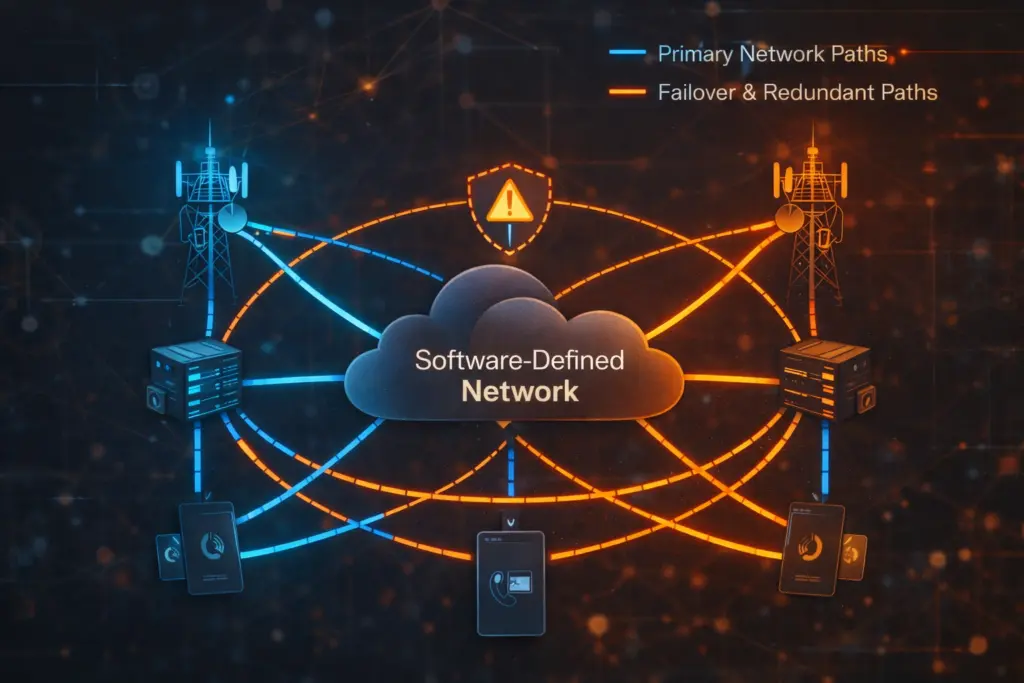
Practically, carriers implement graceful restart mechanisms, fast reroute, multi‑region replication and distributed control planes to mitigate outages. They also perform chaos engineering experiments—intentionally failing components to validate failover paths. Despite these safeguards, human error or untested software updates can still cause cascading failures. The Jan. 14 incident reminds us that operational excellence requires not only robust architecture but also disciplined change management and continuous testing.
Security and Compliance Analysis
Cyber threat landscape for telecom
Telecom networks are high‑value targets for cybercriminals and nation‑state actors because they carry critical communications and sensitive user metadata. Intrusions could enable surveillance, SIM swapping, or disruption of service. However, Verizon emphasized that there was no cyberattack involved in the Jan. 14 incident. This claim aligns with the pattern of recent outages across the industry, which often stem from misconfigurations rather than malicious actors.
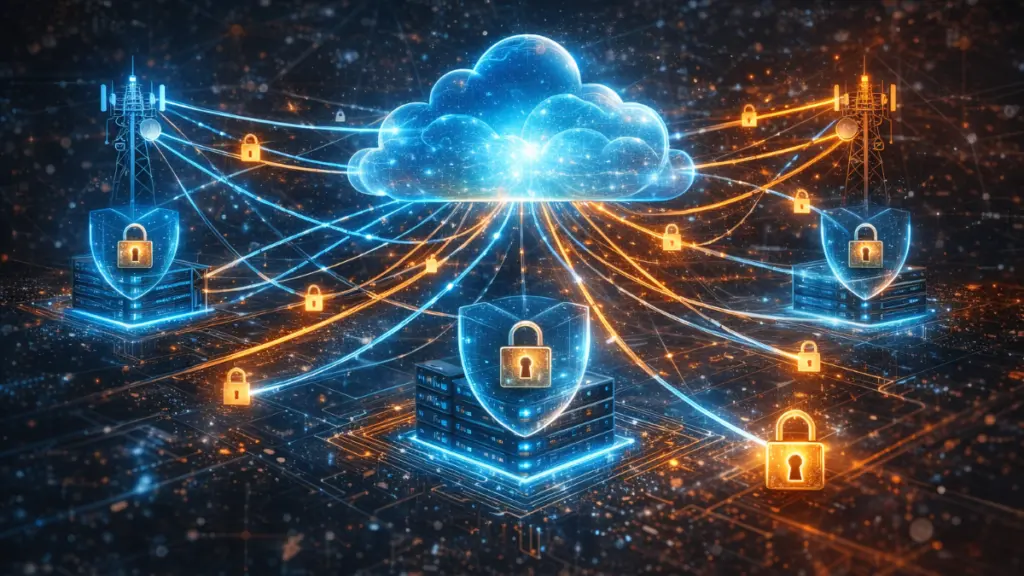
Nonetheless, security cannot be neglected. Attackers could exploit vulnerabilities in control plane software, compromise orchestration tools or conduct distributed denial‑of‑service (DDoS) attacks targeting 5G cores. To mitigate these risks, carriers should:
- Adopt zero‑trust principles. Treat all network components as potentially untrusted, enforce mutual TLS authentication between microservices, and implement robust identity and access management for administrators.
- Harden the control plane. Isolate control plane components from user traffic, employ strong role‑based access control, and apply rigorous code review and security testing to orchestration software.
- Continuous monitoring and anomaly detection. Use AI/ML tools to detect unusual patterns in signaling traffic, configuration changes or resource utilization. Rapid detection can prevent misconfigurations from propagating.
- Segmentation and blast‑radius reduction. Partition networks into smaller fault domains so that a failure or security breach in one domain does not cascade across the entire country. Techniques such as network slicing and regionalization can help contain faults.
Compliance and regulatory considerations
U.S. carriers operate under FCC service‑quality rules and 911 reliability regulations. During the outage, some public safety officials reported difficulty contacting emergency services. Under FCC requirements, carriers must maintain reasonable reliability and report major disruptions. The FCC’s investigation will likely assess whether Verizon’s redundancy and notification processes met regulatory expectations. A similar regulatory inquiry followed the 2024 AT&T outage and led to recommendations for improved failover for emergency calls.
In addition, carriers must comply with Federal Information Security Management Act (FISMA) requirements for protecting government communications, Customer Proprietary Network Information (CPNI) rules for protecting user metadata, and C‑10 compliance for infrastructure critical to national security. The shift to software‑defined networks does not absolve carriers from these obligations; instead, it demands new testing regimes to ensure reliability. For example, carriers should document software release lifecycles, maintain audit trails of configuration changes, and perform regular third‑party penetration testing.
Lessons Learned and Best Practices
The Jan. 14 outage illustrates that technology alone cannot guarantee reliability. Robust design must be paired with disciplined operations. Below are key lessons and best practices for carriers and enterprises operating large-scale networks:
- Implement rigorous change management. Even minor configuration changes should follow a structured process: peer review, testing in staging environments, canary deployment and automatic rollback on anomalies. Continuous integration and delivery (CI/CD) pipelines should include automated tests that simulate high‑load conditions and failure modes.
- Invest in chaos engineering. Regularly inject faults—such as turning off network components, throttling control plane bandwidth or introducing configuration errors—to validate that redundancy and failover mechanisms work as intended. Document the results and fix weaknesses exposed.
- Distribute control planes and avoid monocultures. Relying on a single software stack or vendor can amplify the impact of bugs. Deploy multi‑vendor architectures or at least separate control plane instances across regions. Use diversity in routing protocols and equipment where feasible.
- Enhance observability. Monitoring should capture metrics, logs and traces from all layers: hardware, virtualization, orchestration and application services. Establish baselines for normal operation and set up alerts for deviations. Real‑time observability helps detect issues before they cascade.
- Educate customers and stakeholders. Transparency during outages builds trust. Provide timely updates, clear guidance on workaround steps (such as restarting devices) and realistic recovery timelines. In the Jan. 14 outage, many customers felt frustrated by initial silence, illustrating the importance of communication.
- Design for cost‑efficient resilience. High availability does not necessarily mean throwing money at redundant hardware. Use cloud‑native principles—such as scaling horizontally on demand, using commodity hardware with software redundancy, and adopting serverless functions—to achieve resiliency while controlling costs. Evaluate the trade‑off between always‑on redundancy and just‑in‑time failover.
Case Study: Comparing Past Outages
AT&T’s February 2024 outage
In February 2024, AT&T experienced a nationwide service disruption that lasted several hours. The company later attributed the outage to a misconfigured network element during the expansion of its network to support cloud infrastructure. The misconfiguration caused a cascading failure that affected both voice and data services, and the incident raised questions about the reliability of software‑defined 5G cores. Regulators ordered AT&T to implement stronger change‑control and redundancy measures. AT&T’s outage underscores how misconfiguration can be as damaging as a cyberattack and that network modernization projects must include robust testing.
Rogers Communications’ July 2022 outage
In July 2022, Canadian telecom Rogers experienced a massive network failure that knocked out mobile, internet and emergency services for millions of customers. Investigation revealed that an engineer removed a critical Access Control List (ACL) during routine maintenance, causing a flood of route updates that overwhelmed the core network. The resulting outage lasted over 15 hours and affected payment systems, hospitals and law enforcement. The Rogers incident highlighted the importance of change isolation and the need for better segmentation. It also spurred regulators to demand more stringent reliability reporting and contingency planning.
Lessons applicable to Verizon
Both incidents share themes: a single configuration change triggered cascading failures; redundancy did not prevent the outage; and transparency during the event was limited. For Verizon, the Jan. 14 outage may also have stemmed from a software misconfiguration. By learning from AT&T and Rogers, Verizon and other carriers can implement stronger safeguards:
- Staged rollouts: deploy software updates gradually across regions and monitor metrics before widespread deployment.
- Pre‑change validation: run what‑if analyses and simulations using digital twins of the network to predict the impact of changes.
- Regional fault domains: design networks so that failures are contained within a region, minimizing nationwide impact.
- Cross‑carrier cooperation: during emergencies, carriers should assist each other in rerouting emergency calls, as suggested by public safety officials during the Verizon outage.
Emerging Trends and Forward Outlook
AI and machine learning for network management
Artificial intelligence is increasingly being applied to telecom networks to predict failures, optimize routing and detect anomalies. Self‑optimizing networks (SON) use algorithms to adjust parameters like power levels and handover thresholds, improving performance and reducing human intervention. In the future, AI could analyse telemetry data to detect signs of misconfiguration before users are affected. However, AI systems themselves must be robust; biased or faulty models could inadvertently cause network issues. Carriers should treat AI as an augmentation tool rather than a silver bullet.
Open RAN and vendor diversification
Open Radio Access Network (Open RAN) architectures decouple hardware from software, allowing carriers to choose components from multiple vendors. Open RAN promotes innovation and reduces vendor lock‑in but also increases integration complexity. To avoid the monoculture risk that exacerbated the Verizon outage, carriers may adopt open ecosystems while investing in interoperability testing and security certification.
Edge computing and cloud‑native cores
5G networks are increasingly built on cloud‑native principles, deploying packet cores in containers orchestrated by Kubernetes. Edge computing pushes compute resources closer to users, reducing latency for applications like autonomous vehicles and AR/VR. However, distributing the network edge introduces new operational challenges: there are more nodes to manage, and software updates must be orchestrated across hundreds of edge sites. Carriers will need automated pipelines and real‑time observability to keep edge networks resilient.
Quantum‑safe and secure communications
As quantum computing advances, the cryptographic primitives securing telecom networks may become vulnerable. Forward‑looking carriers are experimenting with quantum‑safe encryption and quantum key distribution (QKD) to safeguard control and user plane communications. Although still experimental, these technologies could become part of critical infrastructure within the decade, adding another layer to the security stack.
Sustainability considerations
Telecom networks consume significant energy. Outages like Verizon’s not only disrupt service but also waste energy by forcing retry loops and network congestion. Carriers are exploring green networking strategies, such as using renewable energy at base stations, dynamic power scaling based on traffic, and efficient cooling. Building sustainable networks aligns with corporate climate goals while reducing operational expenses—a win for both reliability and cost efficiency.
Conclusion: Building Resilient, Secure Networks
The Jan. 14 Verizon outage serves as a wake‑up call for carriers and enterprises that rely on complex, software‑defined infrastructure. Despite the benefits of NFV and SDN—flexibility, scalability, and cost efficiency—these technologies introduce operational risks that can lead to nationwide failures. Verizon’s ten‑hour disruption reminds us that even giants can stumble when software goes wrong and that resilience must be built into every layer of the network.
Key takeaways include the importance of rigorous change management, multi‑layer redundancy, and transparency with customers and regulators. Security remains paramount, even when outages are not caused by attacks. By adopting best practices drawn from past incidents and embracing emerging technologies like AI and Open RAN responsibly, carriers can design networks that are not only resilient and secure but also cost‑efficient and sustainable. The stakes are high: in an increasingly connected world, reliable communication is not just a convenience—it’s a lifeline.



Reader perspectives, questions, and reactions.
No comments yet. Start the conversation.
Comments are closed for this article.