

A New Kind of Race
The start of the 2026 Formula 1 season will sound and feel different. Alongside the familiar roar of a 1.6 litre turbo engine will be an electronic whir from a powerful motor‑generator and a battery management system. Each car will deploy around half of its power from electric energy and burn advanced sustainable fuels made from captured carbon, municipal waste and non‑food biomass. Drivers will press a manual override button for an electric boost rather than waiting for a Drag Reduction System zone, and fans will watch rear wings open and close like flaps on an aeroplane.
This isn’t just a motorsport spectacle. It’s a microcosm of how mobility, energy and computation are converging. As Dana Morgan, a technology columnist who connects innovation with design and ethics, I see the 2026 F1 rules as a lens through which to examine our broader relationship with machines. When speed meets intelligence, when hybrid power meets AI-managed strategies, we confront questions about sustainability, human agency and the ethics of automation. The next chapters of racing are being written not only by engineers but by algorithms, policy makers and cultural critics.
Table of Contents
From Turbo-Hybrid to AI-Hybrid: Rewiring the Power Unit
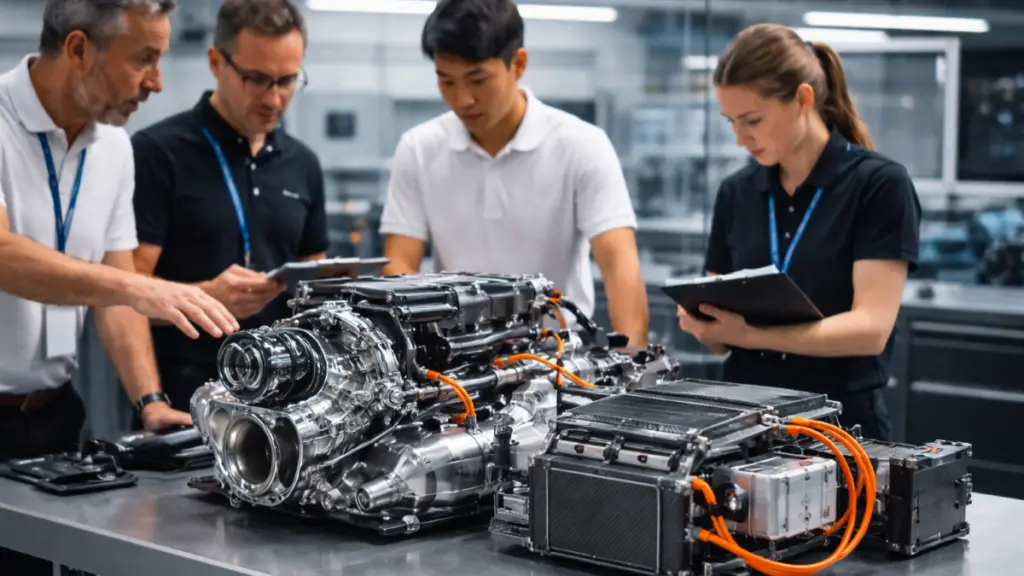
Formula 1 entered its hybrid era in 2014. Engineers paired a downsized turbocharged engine with two motor‑generators MGU‑K (recovering kinetic energy) and MGU‑H (recovering heat from the turbo). The 2026 regulations tear up this architecture. The Motor Generator Unit‑Heat disappears, simplifying the system and making it more road‑relevant. In its place, a more powerful MGU‑K delivers roughly 350 kW, almost triple today’s 120 kW, while the internal combustion engine’s output drops from around 550 kW to approximately 400 kW. The result is a 50:50 power split between combustion and electric energy.
This shift isn’t just about efficiency; it’s about simplifying complexity. The old MGU‑H units recovered exhaust heat but were notoriously expensive and hard to maintain. By removing them, regulators aim to attract new power‑unit suppliers like Audi, Honda and Ford while encouraging existing players like Mercedes and Ferrari to invest in sustainable technology. It also means the electric side must do more work: cars will recover around 8.5 megajoules of energy per lap, more than double the current harvest. Teams must build high‑density batteries, robust power electronics and software that can handle 350 km/h vibrations.
Manual Override and Energy Deployment
With less combustion power and more regeneration, strategy becomes an electrical puzzle. Drivers will have MGU‑K override and boost modes that provide a burst of electric power when within reach of another car or at strategic moments on a lap. Instead of simply pressing a DRS button on the straight, the driver and their race engineer will decide how to deploy energy across an entire lap. Should they conserve battery for a late‑race attack? Or use it early to overtake in heavy traffic? The answer will come from predictive algorithms, not just instinct.
A Smaller, Nimbler Chassis
To compensate for heavier batteries and maintain lap times, F1’s 2026 cars will be shorter and lighter. The wheelbase shrinks by 200 mm and the minimum weight drops from 798 kg to 768 kg. Ground‑effect tunnels are removed and replaced by a simpler floor. The new active aerodynamics allow the rear and front wings to switch between high downforce (Z‑mode) and low drag (X‑mode). Engineers will pre‑program zones where wings open to reduce drag and then close before braking points, much like flaps on an aircraft. This isn’t just theatre; it reduces energy consumption and ensures cars can follow more closely.
Sustainable Fuels: Racing on Captured Carbon
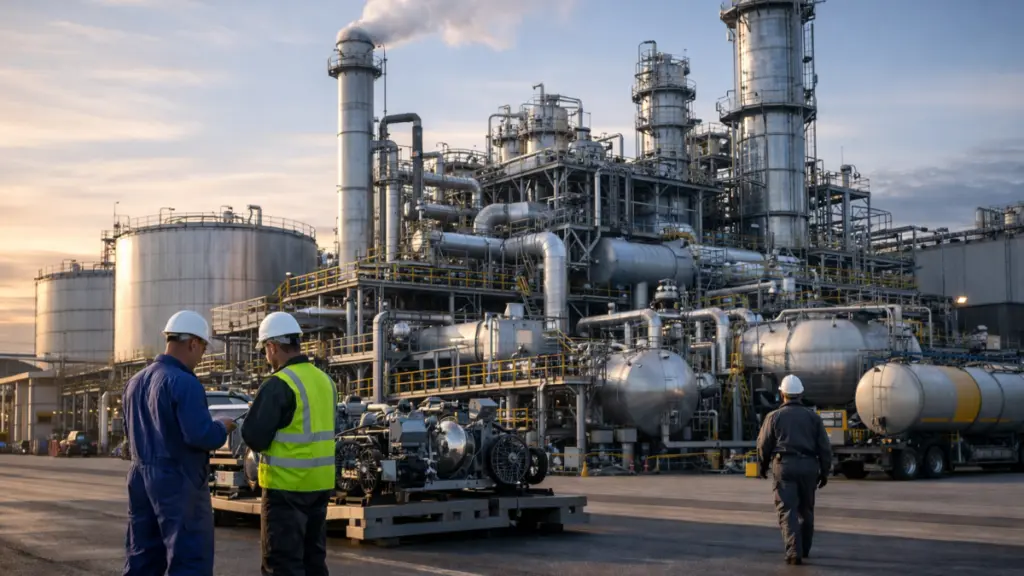
Electrification alone won’t deliver F1’s net‑zero carbon target by 2030. That is why every car will run on 100 % advanced sustainable fuel. These e‑fuels are synthesised from captured CO₂, municipal waste and non‑food biomass, and must be produced using renewable energy. Because they are drop‑in fuels, the chemistry is tailored so they burn like petrol in current internal combustion engines and require no major hardware changes. The energy used to create the fuel counts toward F1’s carbon tally, so suppliers must demonstrate renewable inputs and traceable carbon capture.
Why invest in synthetic fuels when the world is moving towards battery electric vehicles? Because there will still be hundreds of millions of combustion engines on the road in the 2030s. Decarbonising that fleet requires more than bans and subsidies; it needs transitional energy carriers. F1’s experiment could spur large‑scale production, lowering costs and proving the viability of e‑fuels for aviation or shipping. But synthetic fuels are energy intensive to make, and some critics argue that renewable electricity would be better spent powering electric vehicles directly. The ethics hinge on whether these fuels accelerate a just transition or prolong the life of combustion technology.
Active Aerodynamics & Nimble Design
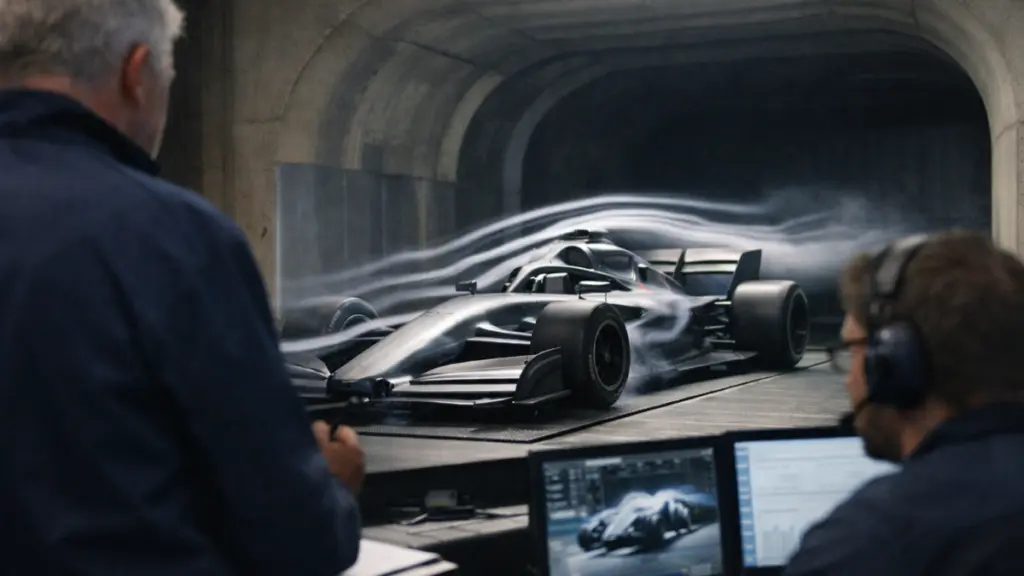
Aerodynamic efficiency and energy management are twin pillars of the 2026 rules. The new cars ditch the Venturi tunnels of the 2022‑generation machines, replacing them with a simpler underfloor and adjustable bodywork. The rear wing and, crucially, the front wing will be able to switch between low and high drag modes. This active aero is pre‑programmed; teams select certain straight sections where the flaps open to reduce drag, then close them before corners to regain downforce. The interplay between the front and rear wings is key; simulation data showed that opening only the rear wing causes imbalance, so the front wing adjusts in concert.
The manual override system, triggered when a chasing car is within a certain distance, provides an electrical power surge and extends low drag up to 337 km/h. This replaces the current DRS and aims to encourage more overtaking. The result is a car that actively reshapes itself to suit the airflow; a dynamic sculpture that looks more like a high‑performance aircraft than a traditional open‑wheeler. For designers, it poses a philosophical question: how does a racing car maintain its identity when its surfaces move? For spectators, it adds a new layer of strategy to decipher.
AI & Digital Twins: The Invisible Engineers
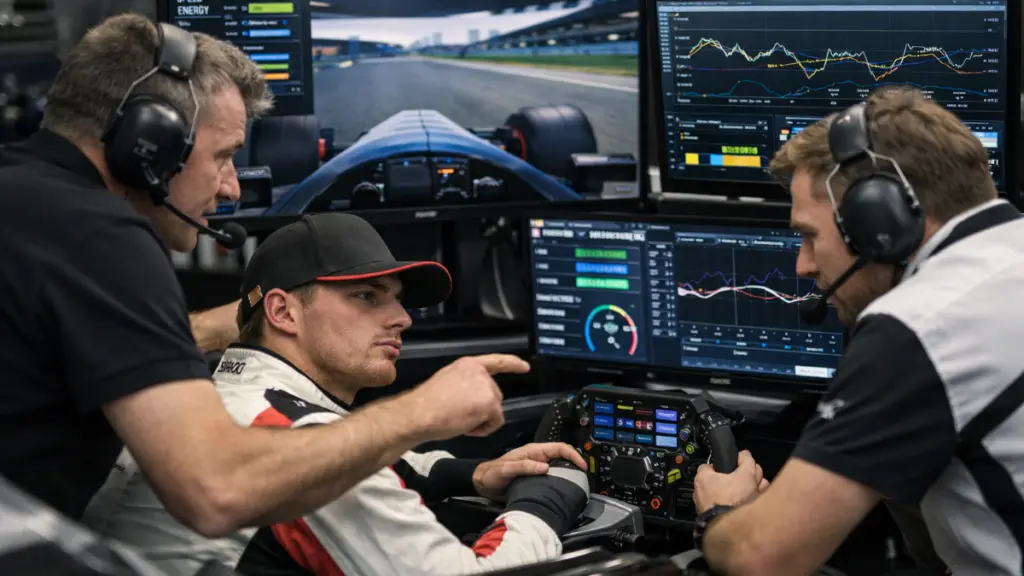
Modern F1 cars are not just mechanical masterpieces; they are supercomputers on wheels. Each car carries around 300 sensors, producing 1.5 terabytes of data during a race weekend. Zak Brown, CEO of McLaren Racing, notes that his team runs 50 million simulations across a race weekend to evaluate strategy options, pit stops and setup changes. This data travels from trackside to remote operations rooms where engineers and data scientists run predictive models.
Building the Ghost Car
Teams build digital twins virtual replicas of the car, power unit and track to simulate how every parameter will respond to changes. According to technical analysts, these models feed years of historical data into machine‑learning algorithms, capturing patterns in tyre wear, fuel consumption and energy recovery. During a race, AI runs billions of Monte Carlo simulations to predict lap times and pit‑stop windows, effectively creating a ghost car that races ahead in a parallel universe. When a safety car is deployed or rain begins to fall, the digital twin recalculates scenarios and presents engineers with the optimal call. The AI helps decide whether to pit early, stay out, or switch to a different tyre compound.
These models also monitor the health of mechanical components. Machine learning can detect subtle shifts in vibration patterns or temperature signals that precede failure, enabling teams to prevent breakdowns. In design phases, generative AI parses the entire FIA rulebook to ensure compliance and runs optimisation loops on aerodynamic shapes using cloud computing .
Managing the Energy Code
AI isn’t limited to pre‑race preparation. On the pit wall, engineers watch real‑time data streams and adjust strategy on the fly. Reinforcement‑learning algorithms calculate when to harvest energy and when to deploy, balancing battery levels with potential overtakes. Bayesian networks and deep neural networks update predictions on tyre wear, fuel consumption and competitor behaviour. The interplay between the driver and AI becomes more intimate: a strategy engineer may say, “Press override at Turn 10 to defend” because the model indicates the trailing car will attempt an overtake in two laps.
The Human‑AI Edge
Despite this computational sophistication, humans remain central. IMD researchers studying F1’s adoption of AI note that teams deploy human‑in‑the‑loop systems: engineers and drivers interpret AI outputs and decide whether to follow or override recommendations. The best teams invest in explainable AI so that decision-makers understand why an algorithm suggests a particular strategy. Rather than relinquishing control to machines, F1 is pioneering symbiotic teamwork where AI handles repetitive number crunching and humans apply context, intuition and ethical judgment.
Human Dimension: Drivers, Engineers and Ethics
Not everyone is convinced that F1’s 2026 direction enhances racing. Reigning champion Max Verstappen has criticised the new regulations, calling them “anti-racing” and comparing the cars to Formula E on steroids. After testing a prototype, he complained that energy management and recharge strategies dominate the driving experience. Instead of pushing flat out, drivers must constantly modulate braking to harvest energy and plan boost deployment. Other drivers worry that overtaking will depend more on software than on courage.
These concerns highlight a broader cultural tension. Racing has long been framed as a test of human bravery and mechanical reliability. As AI takes on more tasks optimising energy, adjusting wing angles, predicting rival strategies, the fear is that drivers become passengers to algorithms. Will fans care as much about a victory engineered by software? Will young drivers spend more time learning to read code than to feel a car at the limit?
On the other hand, some argue that adding complexity doesn’t diminish heroism; it simply shifts it. Today’s drivers already manage brake migration, engine modes and tyre temperatures while racing wheel to wheel. Learning to coordinate with AI is another skill. In corporate boardrooms and autonomous vehicles, similar questions about human agency vs. automation abound. F1 provides a visible test case for how to integrate AI responsibly without erasing human meaning.
Beyond the Paddock: Impact on Mobility, Sustainability & Design
The innovations baked into F1 2026 are not confined to the paddock. Historically, F1 introduced disc brakes, carbon-fibre structures and turbocharging before they filtered into road cars. The next wave could include:
- Battery breakthroughs: Building compact, high‑power batteries capable of surviving racing temperatures will accelerate chemistries and cooling techniques that benefit electric vehicles.
- Power electronics: The converters and inverters used to handle 350 kW of electric power at 350 km/h have parallels in aerospace and grid storage.
- Active aerodynamics: If F1 proves that adjustable wings reduce drag and energy consumption without compromising safety, road cars might incorporate adaptive panels to optimise highway efficiency and city downforce.
- Sustainable fuels: Validating e‑fuel performance under extreme conditions can help aviation and shipping decarbonise, especially where battery electric solutions face range or weight constraints.
- Digital twins for design and urban planning: The simulation techniques used by F1 teams, which integrate sensor data, weather forecasts and AI-driven optimisation, could inform city planners building smarter transport networks.
Beyond hardware, F1’s focus on data and sustainability influences how fans and businesses think about consumption. The sport’s logistics operations now use analytics to optimise freight routes and reduce emissions, while circuits monitor energy and water usage using IoT sensors. Data models are even applied to fan engagement and sponsor visibility. This holistic approach mirrors broader industry trends where data sciences shape everything from supply chains to home energy consumption.
Speculative Futures: Racing Into Tomorrow
Looking beyond 2026, there are several plausible trajectories:
- Incremental electrification: Electric power continues to increase. By the early 2030s, F1 might see 60 % or more of power from electric sources while combustion engines become smaller and rely entirely on e‑fuels. Battery technology could allow full‑power deployment on straights, making manual overrides redundant.
- Parallel paths: Formula E and other electric series grow in prestige while F1 remains a hybrid showcase. Technology transfer occurs across series, with active aerodynamics and AI‑based strategy models becoming common threads. F1 becomes a test bed for e‑fuel scaling, while Formula E pushes battery and supercapacitor development.
- Radical electrification: A breakthrough in energy density and charging might enable fully electric grand prix cars. F1 would need to rethink pit stops, maybe swapping battery modules or using ultra‑fast inductive charging lanes. The sport could then reposition itself as the pinnacle of electric mobility.
- AI as Race Director: As predictive models grow more accurate, AI could monitor race safety, adapt track limits in real time, or even officiate sporting decisions. This raises ethical questions about fairness, accountability and bias in algorithms. Would fans accept a stewardless race run by software? How would teams audit AI decisions?
Whatever path emerges, F1 will continue to mirror our own technological debates. It will remain a cultural barometer for how societies balance speed with sustainability, automation with agency.
Conclusion: Speed, Intelligence and the Human Heart
F1 2026 is more than a sporting regulation change; it is a case study in systems design. Cars will derive half of their power from electricity and run on fuel made from air and waste. Rear wings will open on straights, front wings will adjust automatically, and drivers will coordinate with AI systems that run millions of simulations per weekend. In the words of McLaren CEO Zak Brown, a single car will rely on 300 sensors, 1.5 terabytes of data and 50 million simulations across a race weekend.
As a technology columnist, I see this as a thrilling yet cautionary tale. The interplay of AI and hybrid power shows how speed and intelligence can co-create new forms of performance. But it also surfaces questions: Who benefits from these advances? Do they accelerate sustainable mobility for the many or primarily entertain the few? How do we ensure that algorithms augment rather than replace human judgment? As we hurtle toward a future where machines think and move alongside us, F1’s next season invites us to reflect on our own race, the race to build a world that is cleaner, more connected and more humane.




Reader perspectives, questions, and reactions.
No comments yet. Start the conversation.
Comments are closed for this article.