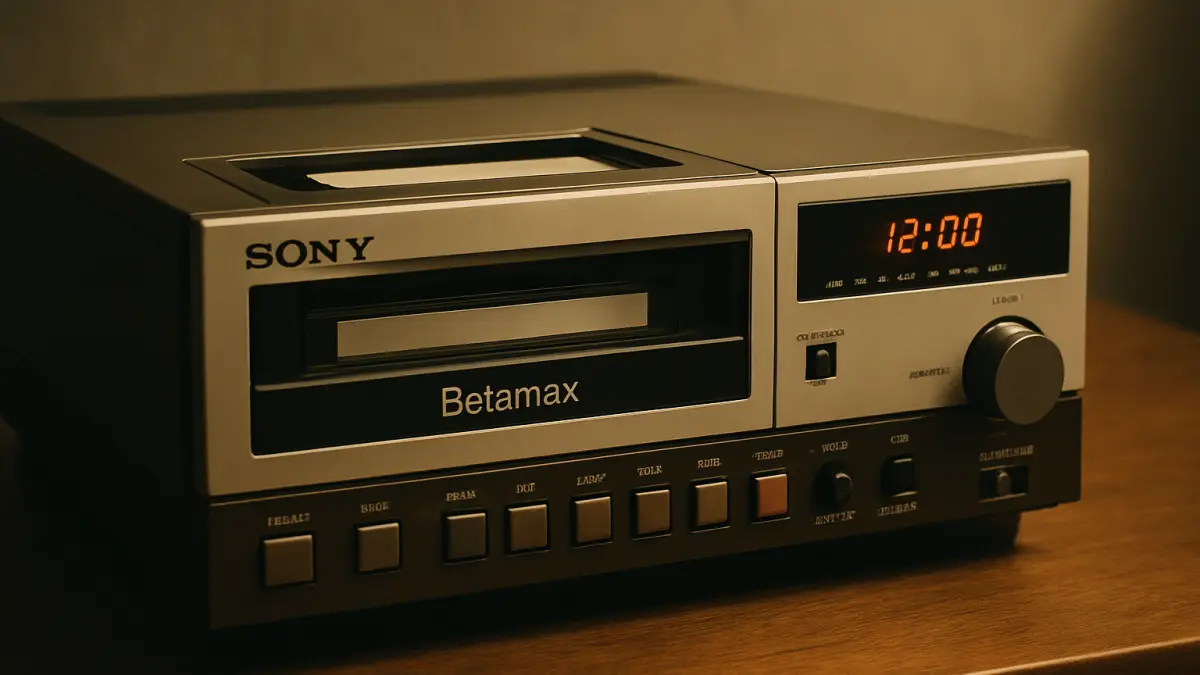

The moment a new form of home entertainment was born came quietly but with lasting impact. On May 10, 1975, Sony introduced the Betamax videocassette recorder, a device that redefined how people captured and consumed video content. This was not just a new gadget; it was a shift in media technology that challenged the status quo of broadcast schedules and film rentals.
Sony Betamax arrived at a time when videotape recording was cumbersome and largely confined to professionals. The Betamax brought video recording into living rooms, solving a key problem: how to give consumers control over what they watched and when. Before this, viewers were tethered to TV schedules or expensive movie theaters. Betamax’s compact cassette format made it possible to record TV shows, create home movies, and build personal video libraries.
At the time, Betamax’s technical design was a standout. It used a half-inch tape housed in a compact cassette, which was easier to handle than the bulky reel-to-reel systems. The format offered superior picture quality compared to competitors, thanks to Sony’s precise engineering and tape speed. This focus on quality over convenience set Betamax apart, even as it faced stiff competition from other emerging formats.
The introduction of Betamax triggered a broader transformation in the media landscape. It forced content producers and broadcasters to rethink distribution and rights management. Suddenly, viewers could pause, rewind, and record live broadcasts. This shift laid the groundwork for the on-demand media culture we take for granted today. The technology also sparked a format war that influenced how standards were set in the consumer electronics industry.
While Betamax eventually lost market dominance to VHS, its influence is undeniable. It demonstrated that consumers wanted control over their viewing experience, pushing the industry toward more user-centric designs. The lessons learned from Betamax’s strengths and weaknesses informed future video formats and digital recording technologies.
Today, the legacy of Sony Betamax is visible in the streaming and digital recording ecosystems. The desire to capture and control content, first popularized by Betamax, is now a fundamental expectation. The device’s emphasis on quality and user experience continues to resonate in modern media technology development.
Looking back, the Betamax launch was more than a product release; it was a statement about the future of media consumption. It challenged the industry to innovate and adapt, setting a precedent for how technology can empower users. This event remains a key chapter in understanding the evolution of video technology and consumer electronics.