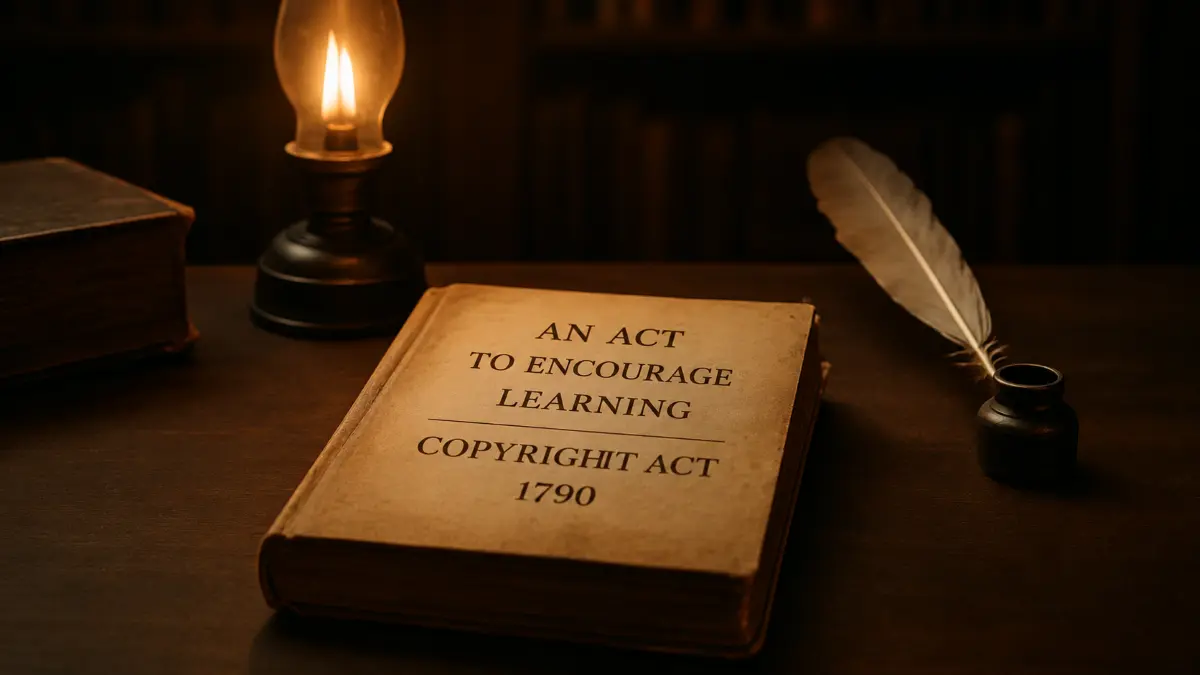

Imagine a world without legal protection for creators, a world where ideas could be copied freely, and inventors had little incentive to innovate. On May 31, 1790, the United States enacted its first copyright statute, the Copyright Act of 1790. This was more than a legal milestone; it was a foundational moment for the protection of intellectual property that still resonates in today’s digital age.
The Copyright Act of 1790 was the first federal law in the United States to grant exclusive rights to authors for their original works. It covered maps, charts, and books, providing creators with a 14-year term of protection, renewable once. This framework addressed a critical problem: without legal safeguards, creators faced rampant copying and little control over their work. The act established a formal recognition that ideas and creative expressions had value that deserved protection.
At the time, this law was a practical response to the challenges of a young nation eager to foster creativity and knowledge dissemination. It balanced public access with incentives for authors, allowing society to benefit from new works while rewarding those who produced them. By formalizing copyright protection, the act encouraged authors and inventors to invest time and resources into their creations, knowing they could reap the benefits.
The impact of the Copyright Act of 1790 extended far beyond its initial scope. It laid the groundwork for the modern intellectual property system, which is essential for technological advancement. By securing rights for creators, it enabled a culture where innovation could thrive. This legal protection became the backbone for industries ranging from publishing to software development, where the value of original content and inventions is paramount.
In today’s technology-driven world, the principles established by the Copyright Act of 1790 remain crucial. Digital content, software, and multimedia all rely on copyright laws to protect creators’ rights and encourage ongoing innovation. Without such protections, the rapid pace of technological progress and creative output we see today would be at risk. The act’s legacy is evident in how intellectual property laws continue to evolve, adapting to new challenges while preserving the core idea that creators deserve recognition and reward.
Reflecting on this event reminds us that technology and creativity are inseparable from the legal frameworks that support them. The Copyright Act of 1790 was not just a law; it was a catalyst for a system that fuels innovation, creativity, and economic growth. Understanding its origins helps us appreciate the complex interplay between law and technology that shapes our digital future.