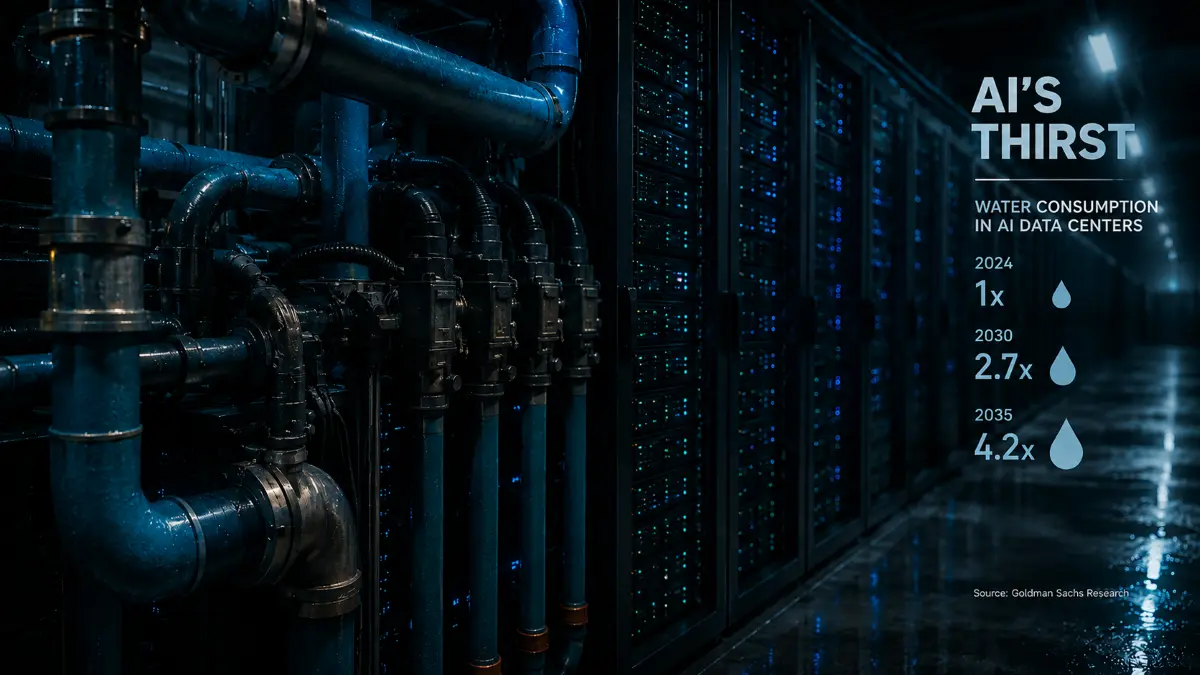

AI’s rapid expansion is poised to dramatically increase water consumption in data centers, potentially reaching 600 billion gallons annually by 2030. This surge is primarily driven by rising energy demands as next-generation GPUs and rack systems become more power-hungry. The environmental impact of AI is extending beyond electricity use, spotlighting water as a critical resource under pressure.
Data centers rely heavily on water for cooling, especially as AI workloads push hardware to its limits. Direct cooling of GPUs uses significantly less water than traditional methods, but as AI models grow larger and more complex, the overall demand for power, and consequently water, will escalate. This trend underscores a growing challenge for the tech industry: balancing AI innovation with sustainable resource management.
The broader context reveals an industry grappling with the environmental costs of scaling AI infrastructure. As AI models become more sophisticated, they require more powerful hardware that generates substantial heat. Cooling these systems efficiently is essential but increasingly resource-intensive. The rising water consumption tied to these cooling needs adds a new dimension to the environmental footprint of AI, beyond carbon emissions and electricity use.
Strategically, companies and data center operators must explore more water-efficient cooling technologies and alternative energy sources to mitigate this impact. The pressure to innovate in sustainability is mounting as regulatory and public scrutiny intensifies. Failure to address water consumption could lead to operational risks and reputational damage, especially in regions facing water scarcity.
Looking ahead, the industry should watch for advancements in cooling technology and shifts in data center design that prioritize water conservation. How AI hardware manufacturers and cloud providers respond to these challenges will shape the environmental sustainability of AI’s future growth.