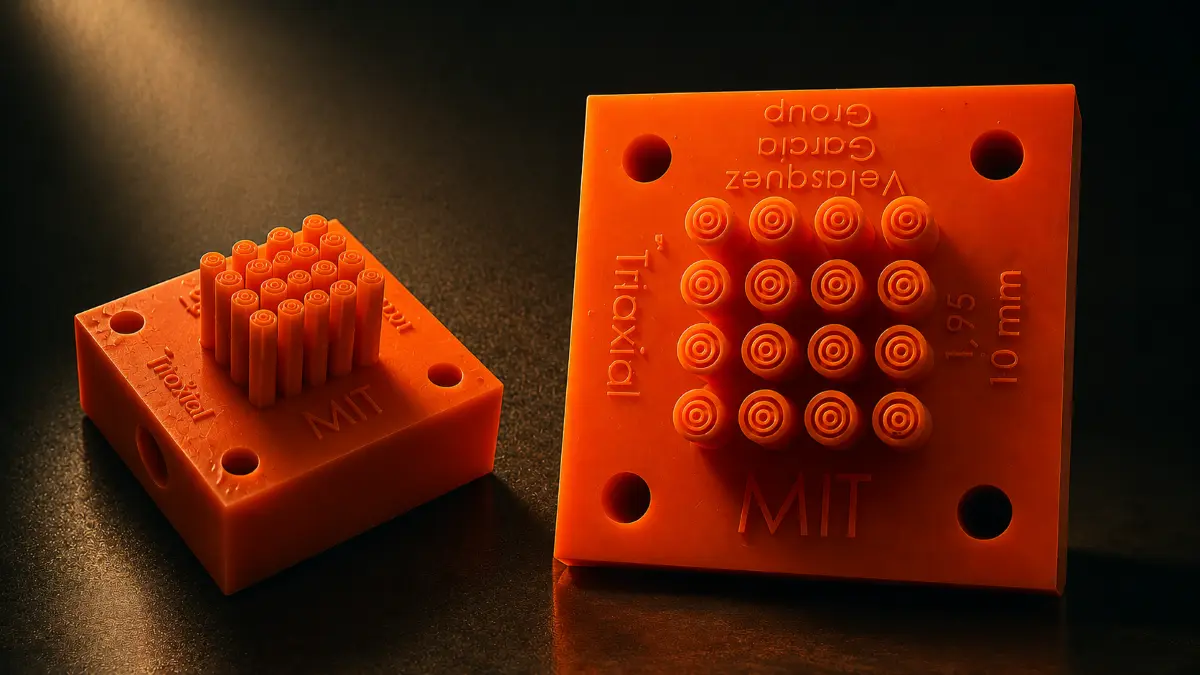

MIT researchers have developed a novel 3D-printed triaxial electrospray nozzle that could significantly change how drugs and self-healing materials are manufactured. Unlike traditional nozzles, which require semiconductor-grade cleanroom facilities for fabrication, this new design uses a cost-effective resin printing process. This breakthrough could lower barriers to advanced material production and accelerate innovation in pharmaceuticals and smart materials.
The significance of this development lies in its potential to democratize access to precision manufacturing tools. Electrospray nozzles are critical for producing uniform micro- and nanoparticles used in drug delivery systems and self-healing materials. By removing the cleanroom requirement, MIT’s approach allows smaller labs and startups to prototype and produce these components without the high overhead costs typically associated with semiconductor fabrication.
This innovation arrives at a time when the manufacturing industry is increasingly exploring additive manufacturing and microfabrication techniques to enhance customization and reduce costs. The ability to 3D print complex nozzles with triaxial flow channels opens new avenues for scalable production of advanced materials, especially in sectors where precision and purity are paramount. It also highlights the growing intersection between 3D printing and microfluidics, fields that have traditionally been limited by fabrication constraints.
Strategically, MIT’s technique could shift competitive dynamics in pharmaceutical manufacturing and materials science. Companies that adopt this technology may accelerate R&D cycles and reduce dependency on specialized fabrication facilities. However, broader adoption will depend on further validation of the nozzles’ performance in real-world manufacturing environments and integration with existing production workflows.
Looking ahead, the industry should watch for how this 3D printing method scales and whether it can maintain the stringent quality standards required for medical and self-healing applications. If successful, it could inspire a wave of innovation in microfabricated components beyond nozzles, further blurring the lines between traditional manufacturing and additive processes.