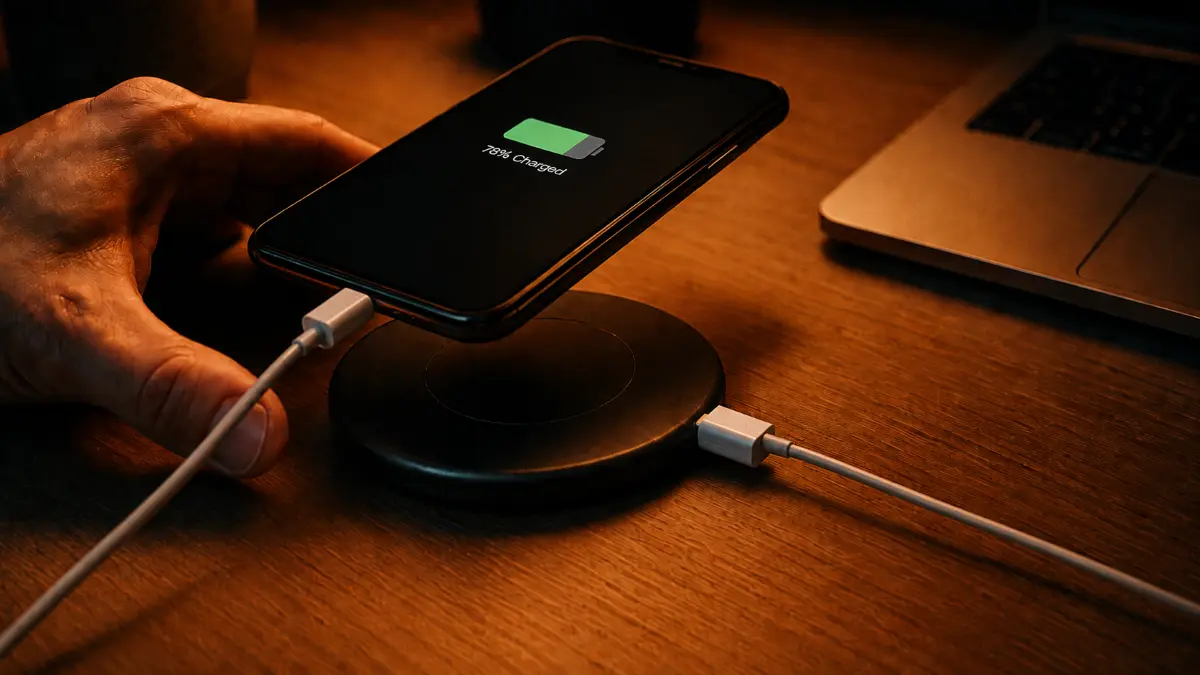

The claim that wireless charging is less efficient than wired charging receives a mixed verdict. While it is often true that wired charging is more efficient in terms of energy transfer, the efficiency of wireless charging can vary significantly depending on the device and the specific charger being used.
Claim: Wireless charging is less efficient than wired charging.
Quick answer: The verdict is mixed due to varying efficiency based on device and charger type.
Wireless charging utilizes electromagnetic fields to transfer energy from a charging pad to a device. This method can lead to energy loss due to heat and distance between the charger and the device. However, advancements in technology are continually improving wireless charging efficiency. Some modern devices and chargers are designed to minimize these losses, making wireless charging more comparable to wired options.
On the other hand, wired charging typically offers a more direct energy transfer, which usually results in higher efficiency. For example, many fast-charging technologies available today provide rapid charging times with minimal energy loss. The efficiency of wired charging can also be influenced by the quality of the charging cable and the power adapter used.
Understanding when to use wireless versus wired charging can help users optimize their charging habits. For instance, using wired charging when you need a quick charge can be beneficial, while wireless charging may be more convenient for overnight charging or when you need to quickly grab your device and go.
In conclusion, while the general perception may lean towards wired charging being more efficient, the context of device type and charger capabilities complicates this claim. Knowing the specifics can help users make informed decisions about their charging practices and ultimately prolong the lifespan of their devices.