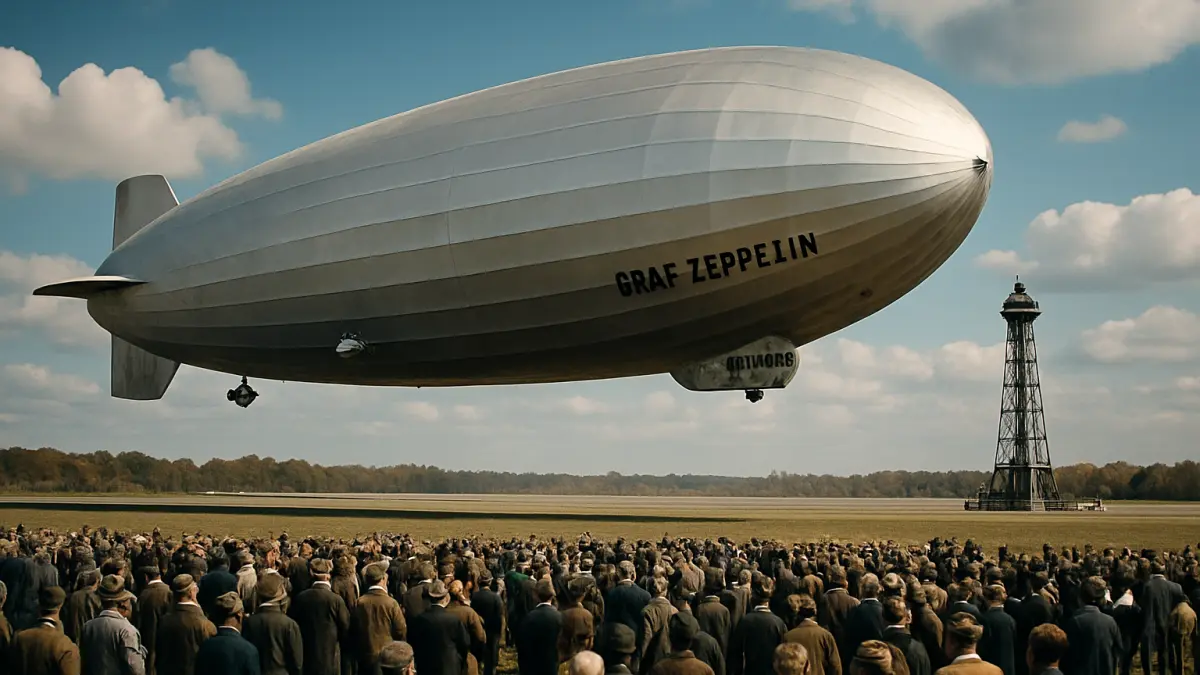

The sky was no longer a barrier but a bridge on October 15, 1928. The Graf Zeppelin completed its first trans-Atlantic flight, landing at Lakehurst, New Jersey, United States. This was more than a journey; it was a demonstration of what airship technology could achieve in an era when crossing oceans by air was still a daring venture.
The Graf Zeppelin first trans-Atlantic flight was a technical feat that showcased the potential of rigid airships for long-distance travel. Unlike airplanes of the time, which struggled with range and reliability, the Graf Zeppelin offered a stable, fuel-efficient platform capable of covering vast distances without frequent stops. This flight was a practical solution to the limitations of early aviation, addressing the need for safer, longer-range passenger and cargo transport.
At the time, the significance of this flight was clear. It validated the airship as a viable mode of intercontinental travel, opening new possibilities for commercial aviation. The Graf Zeppelin’s success demonstrated that airships could connect continents, reducing travel times and bypassing the rough seas that made ocean liners the only option for trans-Atlantic journeys. This was a critical step in expanding global connectivity through technology.
The impact of the Graf Zeppelin’s flight extended beyond its immediate achievement. It influenced the design and operation of future airships and contributed to the broader aviation industry’s understanding of long-distance flight dynamics. The flight also underscored the importance of infrastructure, such as the Lakehurst airship base, which became a hub for airship operations and innovation.
Today, the legacy of the Graf Zeppelin first trans-Atlantic flight still resonates. While rigid airships eventually gave way to airplanes, the principles of efficient, long-range travel it embodied remain relevant. Modern aviation continues to grapple with balancing range, fuel efficiency, and passenger comfort, challenges the Graf Zeppelin addressed nearly a century ago. The flight also serves as a reminder of how early 20th-century engineering tackled the complexities of global transportation.
Reflecting on the Graf Zeppelin’s journey, it’s clear that this event was a milestone not just in aviation but in the broader narrative of technological progress. It captured a moment when human ingenuity stretched the limits of what was possible in the sky and laid groundwork for the interconnected world we navigate today.