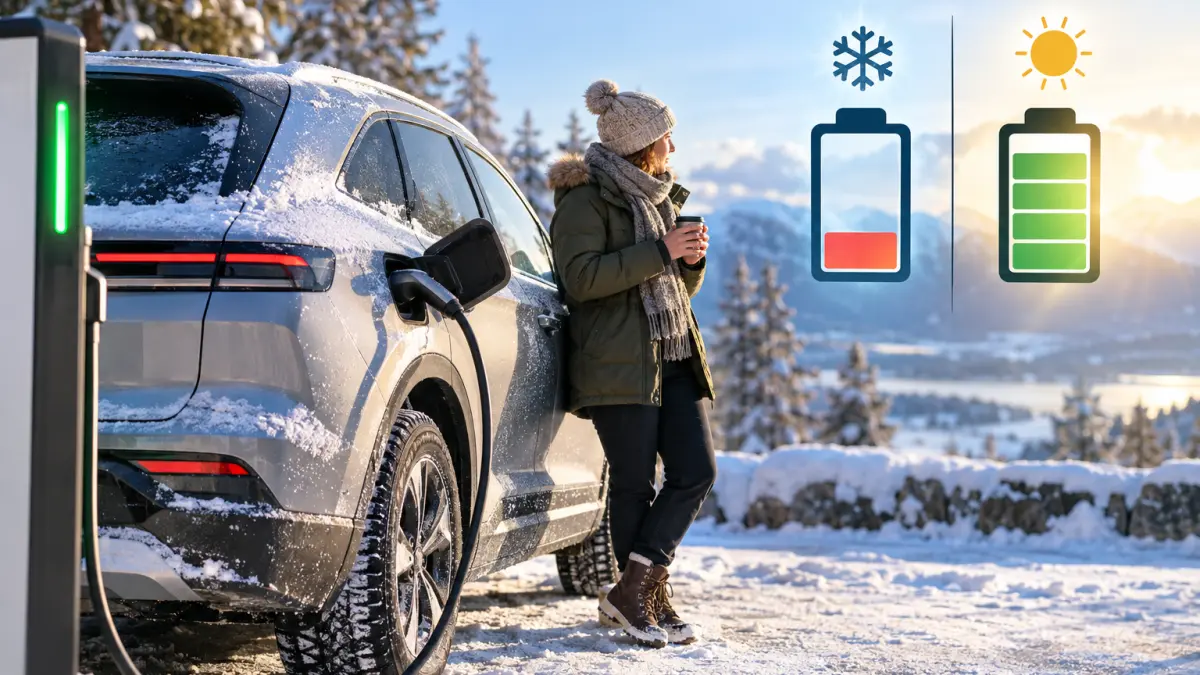

Electric vehicle (EV) owners often report reduced driving range during colder months. But how exactly does temperature impact the range of an EV, and what role does battery chemistry play in this phenomenon? Understanding the relationship between temperature and battery performance is key to managing expectations and planning trips in different seasons.
Claim: Electric vehicles lose range faster in cold weather due to reduced battery chemical efficiency.
Quick answer: Electric vehicle range decreases in cold weather primarily because lower temperatures reduce battery chemical efficiency.
How Temperature Affects Battery Chemistry and EV Range
Electric vehicle batteries rely on chemical reactions within lithium-ion cells to store and release energy. These reactions are temperature sensitive. In colder conditions, the chemical processes slow down, reducing the battery’s ability to deliver power efficiently. This results in a lower available capacity and diminished energy output.
At low temperatures, the electrolyte inside the battery becomes less conductive, and the internal resistance increases. This means more energy is lost as heat and less is available for driving. Additionally, the battery management system may restrict power output to protect the battery, further impacting range.
Practical Implications for EV Owners
Because of these chemical and physical changes, EV range estimates in cold weather tend to be lower than those in moderate temperatures. This is not just a minor drop; range can decrease by 20% or more depending on how cold it gets and the specific battery technology used.
EV owners should anticipate this seasonal variation and plan accordingly. Preconditioning the battery by warming it before driving, using seat heaters instead of cabin heating, and reducing high-speed driving can help mitigate some range loss. Charging practices may also need adjustment, as cold batteries accept charge more slowly.
Understanding how battery chemistry performance varies with temperature helps EV drivers make informed decisions and manage their vehicle’s range expectations throughout the year.