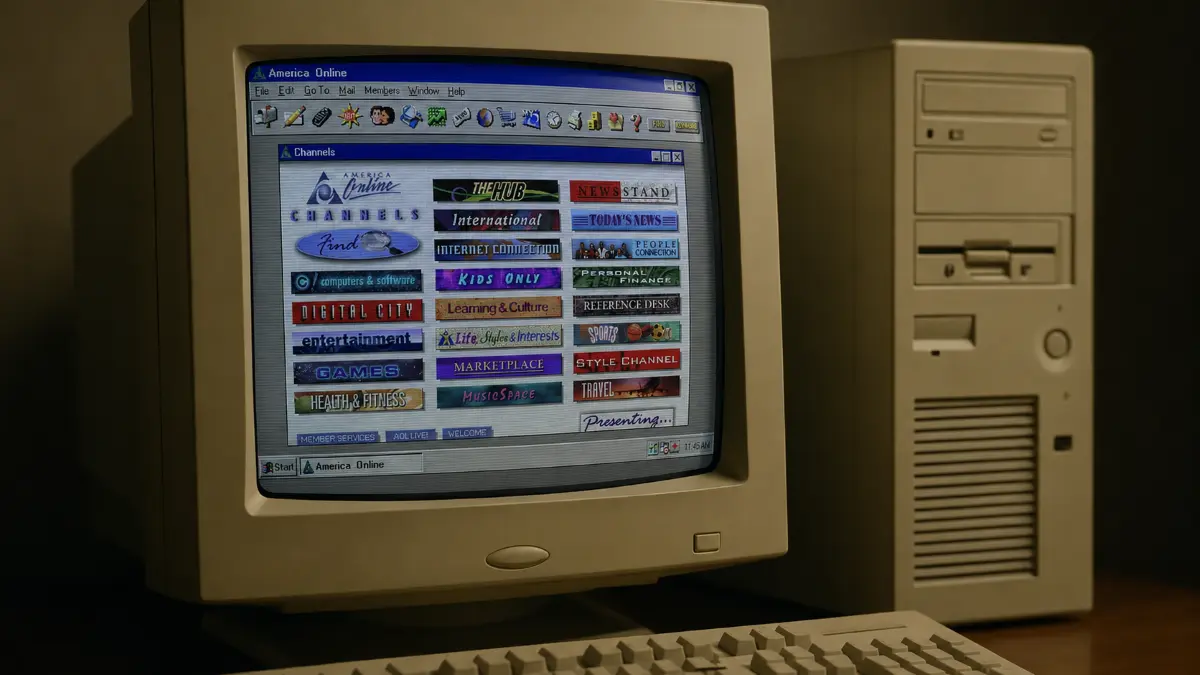

The internet was still a wild frontier in 1996, and online access felt more like a toll road than an open highway. On July 6 of that year, AOL hourly billing came under legal fire, leading to a settlement that would reshape how millions connected to the web. This wasn’t just a billing tweak, it was a fundamental shift in user experience that exposed the limitations and frustrations of early internet pricing models.
America Online, then the dominant internet service provider, faced 11 class action lawsuits accusing it of misleading billing practices. Customers were blindsided by charges rounded up to the next full minute and an extra 15 seconds tagged as “connection time” on every session. Even more egregiously, some users were billed for time spent in “free areas,” a practice that blurred the lines between paid and unpaid internet use. These complaints highlighted a core problem: the hourly billing system was opaque and often exploitative, making users wary of how much time they could afford online.
The settlement forced AOL to confront these issues head-on. Instead of continuing to charge by the hour, AOL switched to a flat monthly rate of $19.95 by December 1996. This change was seismic for the internet landscape. It removed the psychological barrier of “paying by the minute,” which had limited how people used the internet. Suddenly, users could explore, browse, and communicate without constantly watching the clock or fearing unexpected charges.
The immediate aftermath was chaotic but telling. The flat-rate pricing caused such a surge in new users that AOL’s servers were overwhelmed, leading to busy signals and connection difficulties. This spike wasn’t just a technical hiccup; it was a clear signal that the demand for internet access was far greater than previously unleashed. By removing the hourly billing constraint, AOL unlocked a new wave of digital engagement.
This shift also set a precedent for internet service providers and digital services worldwide. It underscored the importance of transparent pricing models that align with user behavior and expectations. The move away from metered billing paved the way for the subscription-based models that dominate today’s digital economy, from streaming services to cloud platforms. It demonstrated that accessibility and simplicity in pricing could drive adoption and growth far more effectively than complex, usage-based fees.
The legacy of AOL’s billing change still resonates. It marked a turning point where internet access began to feel less like a luxury and more like a utility. This democratization of access helped fuel the rapid expansion of online communities, e-commerce, and digital media that define the modern internet. It also highlighted the ongoing tension between business models and user trust, a balance every tech company still navigates.
Looking back, the AOL hourly billing settlement reminds us how foundational pricing strategies are to technology adoption. It wasn’t just about dollars and cents; it was about removing barriers to connection and enabling a broader digital culture to flourish. The event on July 6, 1996, remains a case study in how business decisions can ripple through technology ecosystems, shaping user behavior and industry standards for decades.