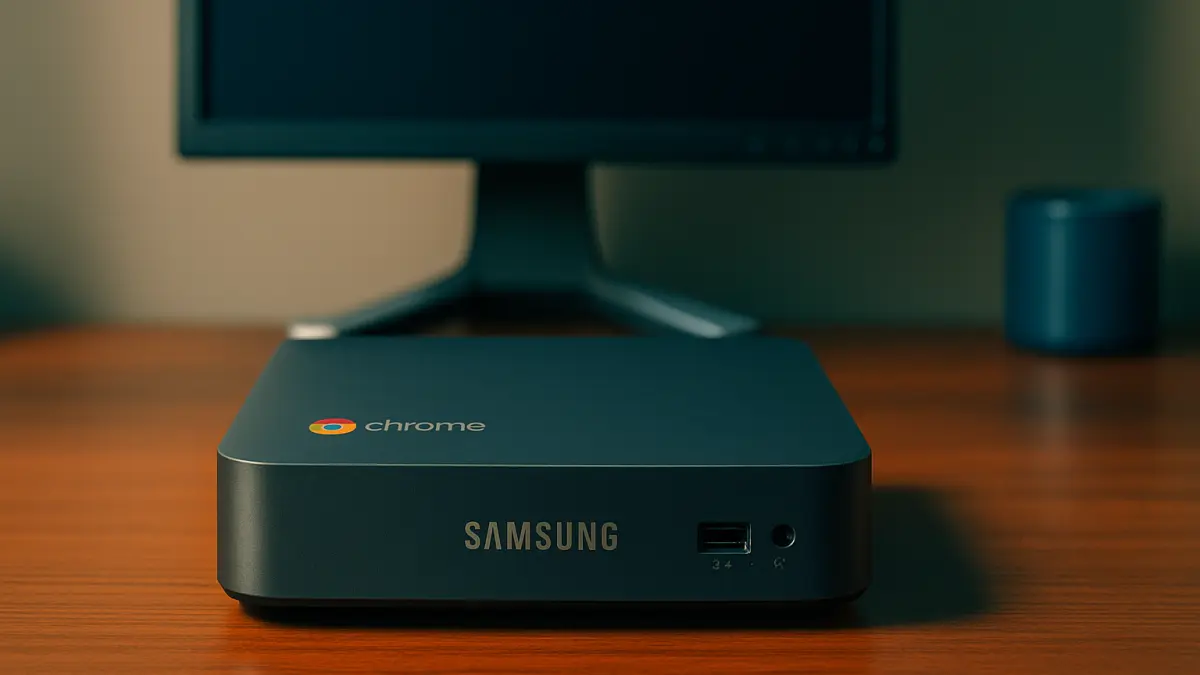

In the fast-moving world of tech, some launches quietly rewrite the rules of computing. On May 29, 2012, the first Chromebox launch by Google and Samsung marked one such moment. It wasn’t just another desktop PC hitting the market. It was a statement about what computing could be when stripped down to essentials and built around the cloud.
The world’s first Chromebox was officially launched by Google and Samsung on May 29, 2012. This compact desktop device was designed to run Chrome OS, a lightweight operating system centered on the Chrome browser and cloud services. Unlike traditional PCs that relied heavily on local software and storage, the Chromebox shifted the focus to web-based applications and online data. This change wasn’t just about convenience, it was about rethinking the entire user experience.
At the time, the first Chromebox launch addressed a growing need for simplicity and speed in desktop computing. Many users were frustrated by bulky operating systems, lengthy boot times, and constant software updates. The Chromebox offered near-instant startup, automatic updates, and a minimalist interface that prioritized web apps and cloud storage. This approach solved a fundamental problem: how to make computing more accessible and less cumbersome without sacrificing functionality.
The implications of this launch went beyond just a new device. It introduced a new category of desktop computing that emphasized cloud integration and security. By pushing storage and applications to the cloud, the Chromebox reduced the risk of data loss and malware infections common on traditional PCs. It also lowered hardware requirements, allowing manufacturers to produce smaller, more affordable machines. This shift opened up opportunities for businesses, schools, and casual users who needed reliable, low-maintenance desktops.
What changed because of the first Chromebox launch was the way we think about desktop environments. It challenged the dominance of traditional operating systems by proving that a browser-centric model could handle everyday tasks. This concept paved the way for broader adoption of cloud-first devices and influenced the development of Chromebooks, which eventually became a staple in education and enterprise sectors. The Chromebox also helped accelerate the transition to SaaS (Software as a Service) models, which now dominate software distribution.
Today, the legacy of the first Chromebox launch remains relevant. As cloud computing continues to expand, the principles behind the Chromebox, speed, simplicity, and security, are more important than ever. Modern desktops and laptops increasingly rely on cloud services for storage and processing power, validating the vision Google and Samsung introduced back in 2012. The Chromebox was an early proof point that the future of computing lies not in local hardware power but in seamless cloud connectivity.
Looking back, the first Chromebox launch was more than a product debut. It was a glimpse into a new computing paradigm that prioritized user experience over raw hardware specs. It nudged the industry toward a cloud-centric future that we now take for granted. As we continue to navigate an increasingly digital world, the Chromebox reminds us that innovation often comes from rethinking the basics, making technology simpler, faster, and more connected.