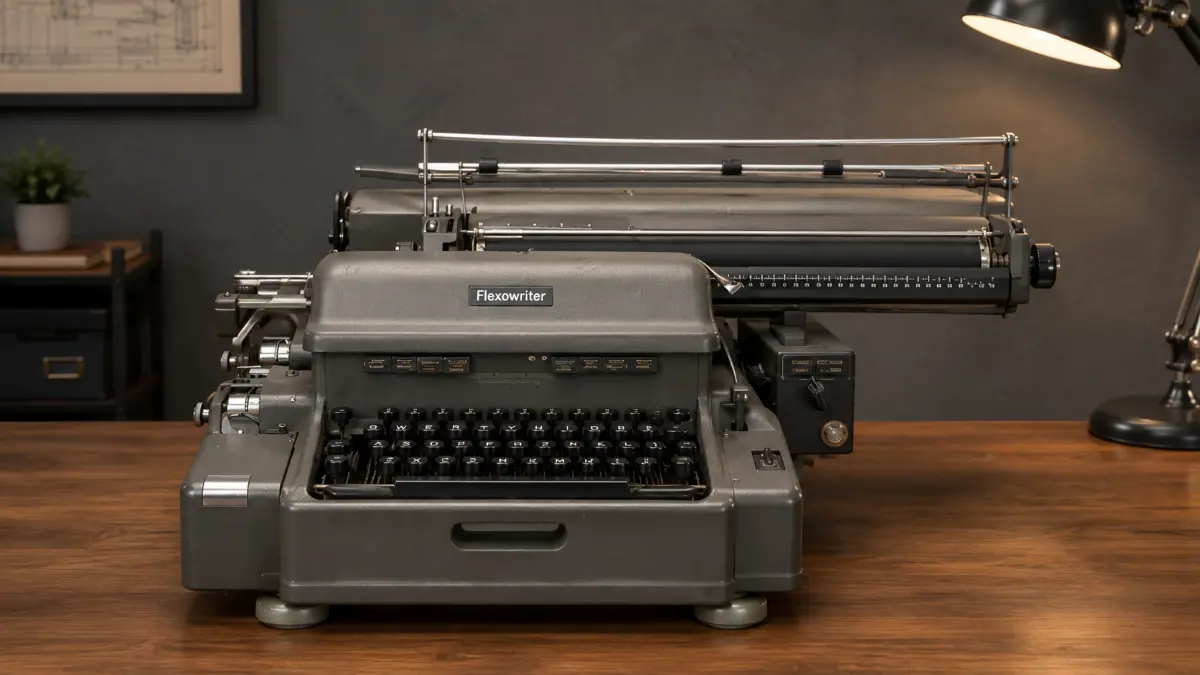

The way we interact with computers today feels natural and immediate. But it wasn’t always this way. On July 4, 1956, MIT’s Whirlwind computer became the first in the world to allow users to enter commands through a keyboard. This shift from mechanical switches, dials, and punch cards to a direct, tactile interface marked a fundamental change in human-computer interaction.
Before this event, computers were largely inaccessible machines. Input was cumbersome, slow, and error-prone. Operators had to manipulate physical switches or prepare punch cards, which required specialized knowledge and introduced delays between command and execution. The Whirlwind’s keyboard input solved a core usability problem: it made computers more interactive and responsive to human commands in real time.
The significance of this innovation lies in what it enabled next. Keyboard input opened the door to more dynamic computing environments. It allowed programmers, operators, and eventually everyday users to communicate with machines more efficiently. This was a critical step toward the interactive computing models that underpin everything from command-line interfaces to modern graphical user interfaces.
The Whirlwind’s keyboard input was not just a convenience; it was a technical leap. It required rethinking how computers processed input signals and integrated them into their operation cycles. This innovation foreshadowed the development of real-time computing systems, where immediate feedback and control became essential. The Whirlwind itself was a pioneering real-time computer, and the keyboard input was a natural extension of that capability.
What changed because of this? The keyboard became a standard input device for computers, shaping the design of hardware and software alike. It influenced the development of programming languages, operating systems, and user interfaces that rely on typed commands. The keyboard’s introduction also paved the way for personal computing by making machines more accessible to non-specialists.
Today, the legacy of the Whirlwind’s keyboard input is everywhere. Despite the rise of touchscreens, voice commands, and gesture controls, the keyboard remains a primary tool for precise and efficient interaction with digital systems. Its design principles continue to inform how we think about input devices, balancing speed, accuracy, and user comfort.
Reflecting on this moment reminds us that technological progress often hinges on improving how humans and machines communicate. The Whirlwind’s keyboard input was a quiet but profound step that helped turn computers from distant calculation engines into interactive tools that fit into daily workflows.
In a world now dominated by instant digital interaction, it’s worth remembering that this shift started with a simple change in how commands were entered. The keyboard didn’t just make computers easier to use; it made them more human.