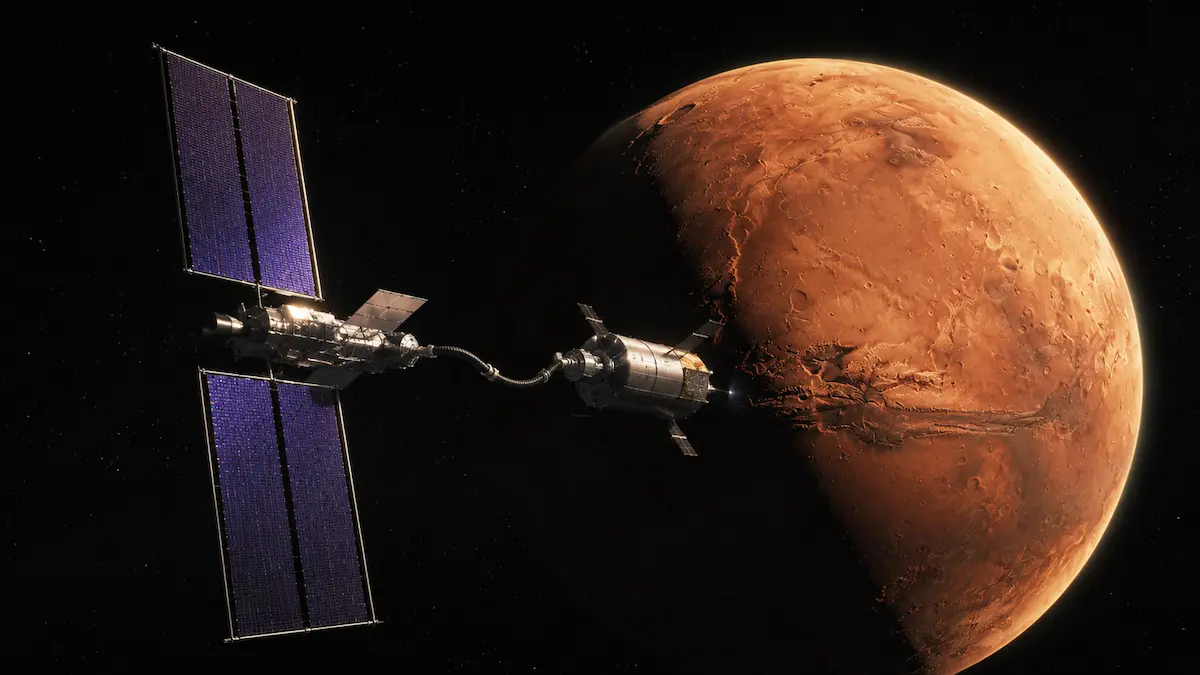

NASA has begun testing a new cryocoupler developed by L3Harris, a device designed to enable in-orbit refueling of spacecraft. This technology aims to transfer cryogenic propellants between vehicles in space, a capability that could dramatically extend mission durations and operational flexibility for deep space exploration.
In-orbit refueling matters because it addresses one of the most significant limitations in current space missions: finite fuel capacity. Spacecraft today must carry all their propellant from launch, which restricts their range and mission scope. By enabling refueling in orbit, NASA could support longer missions to the Moon, Mars, and beyond without the need for prohibitively large initial fuel loads.
The cryocoupler represents a critical advancement in the broader context of space infrastructure development. As agencies and private companies plan more ambitious missions, including sustained lunar presence and crewed Mars expeditions, in-space refueling is becoming a strategic necessity. It aligns with NASA’s Artemis program goals and the growing interest in reusable spacecraft and orbital servicing.
Strategically, mastering in-orbit refueling could shift how space missions are planned and executed. It would reduce launch mass requirements and costs while increasing mission resilience. This technology also opens opportunities for commercial satellite servicing and orbital logistics, potentially creating new markets and partnerships in space operations.
What to watch next is how NASA integrates this cryocoupler into upcoming missions and whether it can reliably operate in the harsh conditions of space. Successful demonstration could accelerate the timeline for routine refueling, transforming spacecraft design and mission architectures in the coming decade.