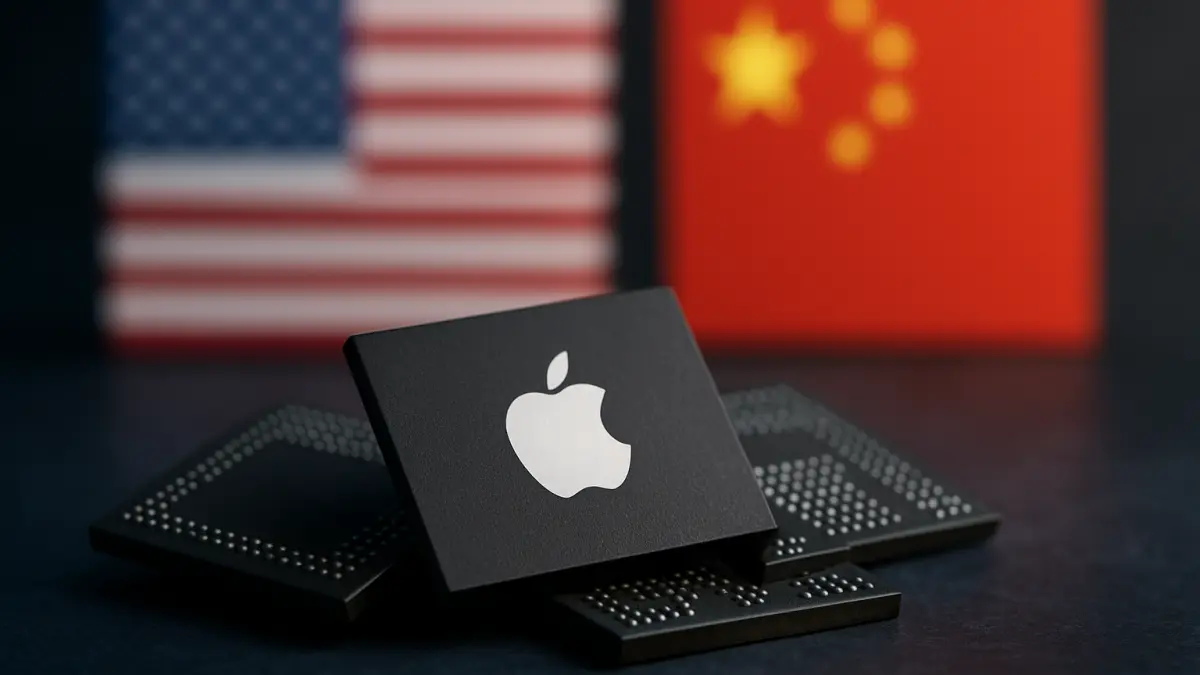

The US Commerce Secretary Howard Lutnick has reportedly urged Apple not to source memory chips from China, according to a recent report by The Wall Street Journal. This development comes as Apple explores alternative suppliers to ease ongoing global memory chip shortages affecting its hardware production. The US government’s opposition to Apple’s potential pivot toward Chinese memory chip vendors highlights the increasing geopolitical complexities surrounding Apple’s supply chain decisions.
For Apple users and developers, this pressure underscores the fragility of the hardware ecosystem underpinning Apple’s devices. Memory chips are critical components in iPhones, iPads, and Macs, and any disruption or forced change in sourcing could impact product availability, pricing, and performance. Developers relying on consistent hardware releases may face challenges if supply chain tensions delay new device launches or affect component quality.
This situation reflects broader industry trends where US-China tensions are reshaping semiconductor supply chains. Apple, like many tech giants, has been navigating a landscape marked by trade restrictions, export controls, and political scrutiny. The US government’s stance aims to curb reliance on Chinese technology amid national security concerns, but it complicates Apple’s efforts to secure stable and cost-effective chip supplies in a tight global market.
Strategically, Apple faces a delicate balancing act. Avoiding Chinese memory chips could mean higher costs or longer lead times as Apple leans more heavily on non-Chinese suppliers. Conversely, acquiescing to US pressure may limit Apple’s supply options and affect its global manufacturing footprint. How Apple manages these pressures will be critical for its hardware roadmap and supply chain resilience in the coming years.
Looking ahead, the industry will watch how Apple adapts its sourcing strategy and whether US-China trade policies intensify or ease. Apple’s supply chain moves will also signal how other tech companies might respond to geopolitical pressures in securing essential semiconductor components.