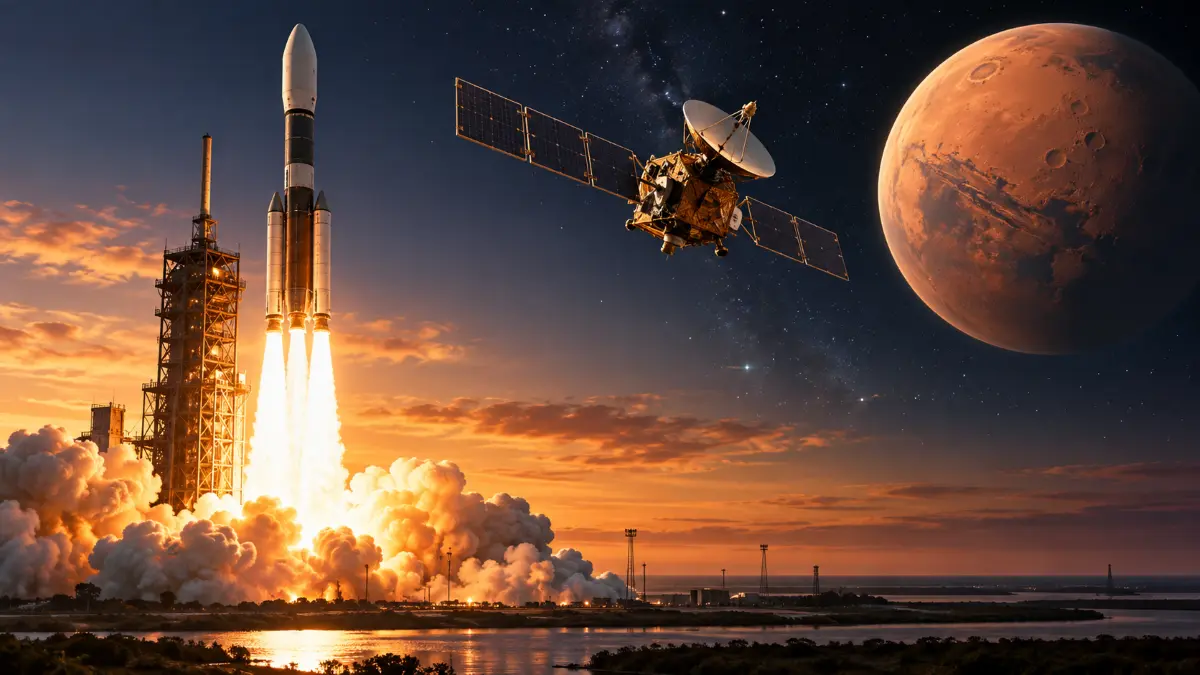

In the early 1990s, space exploration was entering a new phase of ambition and complexity. On September 25, 1992, NASA launched the Mars Observer, a spacecraft designed to gather unprecedented data about the Red Planet. This mission was not just another probe; it represented a leap forward in how we approached planetary science and remote sensing technology.
The Mars Observer launch was a carefully calculated move by NASA to deepen our understanding of Mars’ atmosphere, surface, and magnetic field. Eleven months after launch, however, the probe failed while preparing for orbital insertion, abruptly ending what could have been a groundbreaking mission. Despite this setback, the technology and mission design behind the Mars Observer left a lasting imprint on planetary exploration.
At the time, the Mars Observer was equipped with sophisticated instruments intended to map Mars’ surface in high resolution, analyze its climate, and detect water ice beneath the surface. This was a major step beyond previous flyby missions or landers with limited scope. The probe’s failure was a blow to NASA’s Mars program but also a critical learning point. It exposed the vulnerabilities in spacecraft communication and orbital maneuvering systems, pushing engineers to innovate more robust designs for future missions.
What changed because of the Mars Observer launch was not just the mission’s intended scientific output but the evolution of mission planning and risk management. NASA’s approach to Mars exploration became more resilient, incorporating lessons from the Observer’s failure. This led to improvements in spacecraft autonomy, fault detection, and recovery protocols that have since become standard in interplanetary missions. The Observer’s legacy is embedded in the DNA of subsequent Mars rovers and orbiters that have successfully operated for years.
The significance of the Mars Observer launch extends beyond its immediate mission failure. It marked a transition in how we think about planetary exploration, moving from short-term visits to sustained, detailed observation. The data it aimed to collect laid the conceptual groundwork for later missions that would confirm the presence of water ice and analyze Martian weather patterns in depth. These insights are foundational to current discussions about Mars colonization and the search for past life.
Today, the Mars Observer launch reminds us that failure in space exploration is often a necessary step toward success. The probe’s ambitious goals and the challenges it faced highlight the complexity of sending sophisticated instruments millions of miles away. It also underscores the iterative nature of technology development in space missions. Each attempt, successful or not, builds the framework for the next generation of explorers.
Reflecting on the Mars Observer launch, it’s clear that this mission was more than a lost probe. It was a catalyst for innovation and a testament to the relentless pursuit of knowledge. The lessons learned continue to influence how we design, build, and operate spacecraft, ensuring that humanity’s reach into the cosmos grows ever more precise and capable.