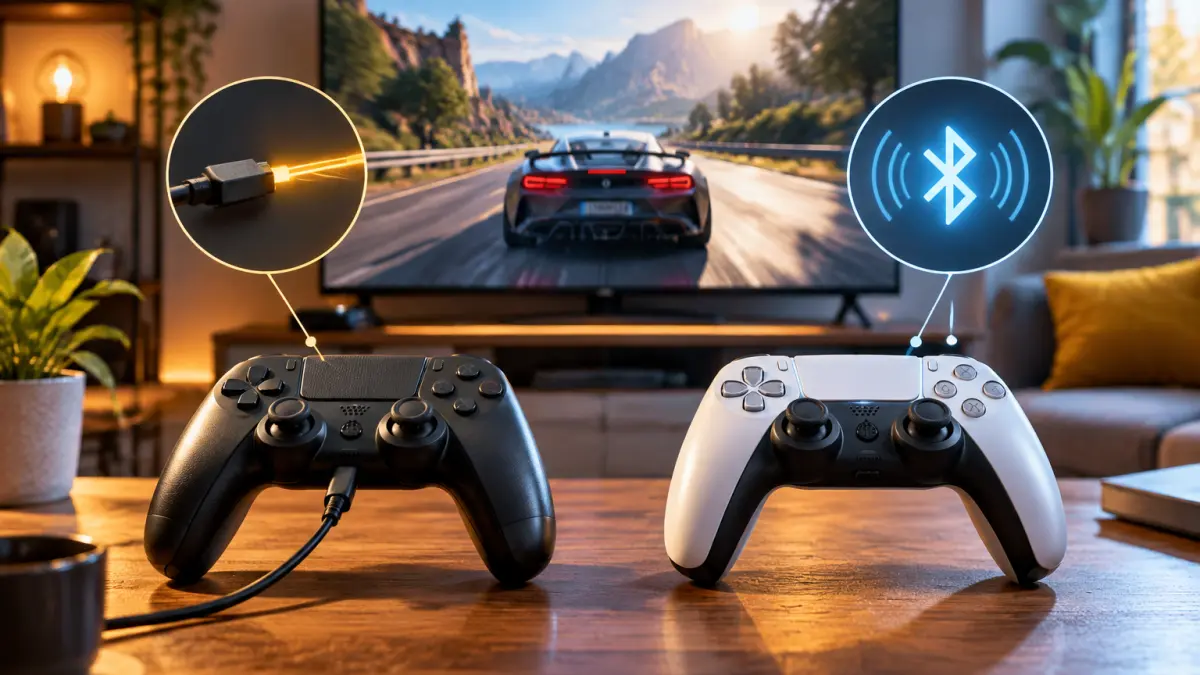

Gamers often ask whether Bluetooth gaming controllers inherently introduce more input lag than their wired counterparts. Input lag, the delay between pressing a button and seeing the action on screen, can affect gameplay, especially in fast-paced or competitive titles. But is Bluetooth always less responsive than a wired connection?
Claim: Gaming controllers connected via Bluetooth always have more input lag than wired controllers.
Quick answer: Bluetooth input lag varies depending on controller and device, making the claim a mixed case rather than absolute.
Bluetooth latency isn’t fixed and can vary significantly depending on the controller model, the device it’s paired with, and the Bluetooth version in use. Some wireless controllers use advanced low-latency Bluetooth protocols or proprietary wireless technologies designed to minimize delay. For example, certain modern controllers for consoles and PCs achieve latency nearly indistinguishable from wired connections under optimal conditions.
How Bluetooth Latency Varies
Bluetooth communication involves packet transmission, which can introduce small delays. Factors such as interference, distance from the receiver, and the Bluetooth chip’s efficiency all influence latency. Older Bluetooth versions or budget controllers may exhibit more noticeable lag compared to premium or recent devices.
Additionally, the host device’s hardware and software stack plays a role. Some gaming consoles and PCs optimize wireless controller input to reduce lag, while others may not. Wired connections typically offer a direct, stable signal path, which naturally reduces latency and potential interference.
Practical Implications for Gamers
Choosing between wired and Bluetooth controllers depends on your gaming priorities. If absolute minimum latency is critical, such as in competitive esports, wired controllers remain the safest bet. However, many casual and even serious gamers find wireless controllers provide sufficient responsiveness along with the convenience of freedom from cables.
Understanding that Bluetooth latency varies means gamers should consider their specific controller, device, and use case. Testing your preferred controller setup or reviewing latency benchmarks can help make an informed choice tailored to your gaming style.
In summary, Bluetooth gaming controllers do not always have more input lag than wired options. The difference depends on multiple factors, so knowing your hardware and requirements is key to selecting the best controller setup for you.