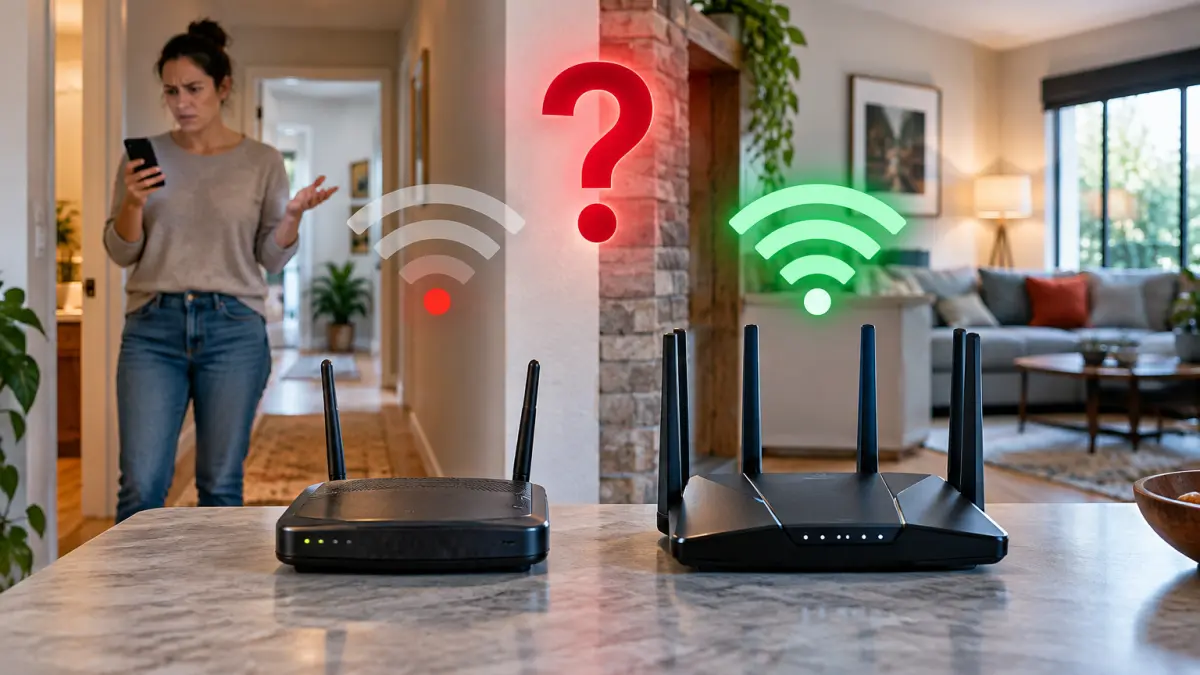

Upgrading to a newer router is often seen as a straightforward way to improve home Wi-Fi speed and coverage. But is replacing your router the only or even the most effective step to boost your wireless network’s performance? Understanding the factors that influence Wi-Fi can help you make smarter decisions before investing in new hardware.
Claim: Replacing a standard router with a newer model will always improve your home Wi-Fi coverage and speed.
Quick answer: Replacing a router alone does not guarantee better Wi-Fi performance due to other influencing factors.
Factors Beyond the Router Model
Wi-Fi performance depends on more than just the router’s specifications or age. While newer routers may support faster wireless standards and improved technologies, they cannot fully overcome environmental challenges. Physical placement of the router within your home plays a critical role. Walls, floors, and furniture can block or weaken signals, leading to dead zones and inconsistent speeds.
Interference from other electronic devices or neighboring Wi-Fi networks can also degrade performance. Devices like microwaves, cordless phones, and Bluetooth gadgets operate on similar frequency bands and can cause signal disruption. Additionally, the number of connected devices and the type of activities, such as streaming or gaming, impact network speed and stability.
When Does a New Router Help?
Replacing an old router might improve performance if your current device is outdated, malfunctioning, or lacks support for modern Wi-Fi standards like Wi-Fi 5 (802.11ac) or Wi-Fi 6 (802.11ax). Newer models often include better antennas, improved signal processing, and enhanced security features. However, if your existing router is functioning well and your Wi-Fi issues stem from poor placement or interference, a new router alone won’t deliver the expected improvements.
Practical Tips for Better Wi-Fi
Before spending money on new hardware, consider optimizing your current setup. Position your router in a central, elevated location away from thick walls and electronic interference. Use Wi-Fi analyzer apps to identify signal strength and interference sources. Sometimes, adding range extenders or mesh network systems can provide better coverage than a single router upgrade.
Ultimately, improving home Wi-Fi involves a holistic approach. Router upgrades can be part of the solution, but addressing environmental factors and network configuration often yields more noticeable results.