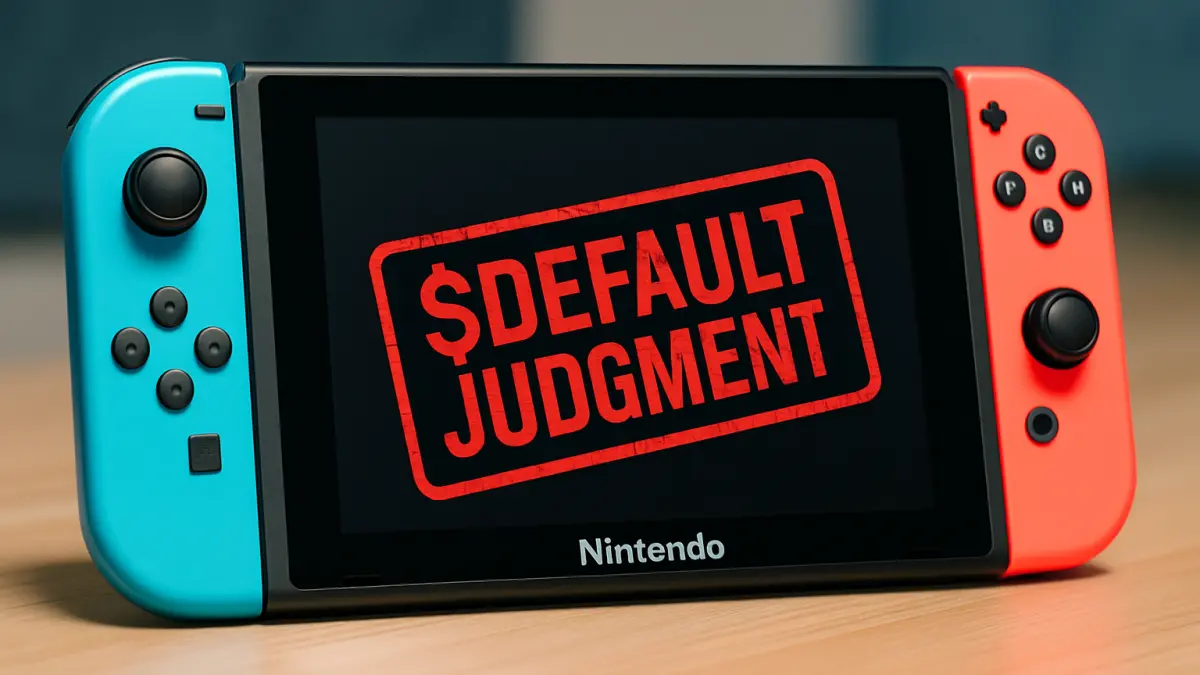

Nintendo has achieved a significant legal victory in its ongoing battle against piracy within the gaming industry. A federal court in Washington state has awarded Nintendo of America $4.5 million in damages against James Williams, a Reddit moderator known online as “Archbox.” Williams was accused of operating online stores that distributed pirated Nintendo Switch games, including popular titles like “The Legend of Zelda” and “Super Mario Odyssey.” This ruling underscores Nintendo’s commitment to safeguarding its intellectual property and maintaining the integrity of its gaming ecosystem.
The Allegations Against James Williams
In June 2024, Nintendo filed a lawsuit against Williams, alleging that he was the “operator, overseer and driving force behind several Pirate Shops.” These online platforms purportedly offered users access to extensive libraries of unauthorized Switch games. Williams, who moderated the r/SwitchPirates subreddit, was accused of facilitating the distribution of thousands of pirated copies of Nintendo’s titles. Despite receiving a cease-and-desist notice from Nintendo’s legal team, Williams failed to respond or appear in court, leading to the default judgment.
Legal Proceedings and Default Judgment
The court’s decision to grant a default judgment was influenced by Williams’ lack of response to the lawsuit. Default judgments are typically issued when a defendant does not contest the allegations or fails to appear in court. In this case, the court awarded Nintendo the full amount it had requested, amounting to $4.5 million in statutory copyright damages. Additionally, the court issued an injunction requiring Williams to immediately disable access to all online shops he operated that offered pirated Nintendo Switch games for download.
Implications for the Gaming Industry
This ruling serves as a stern reminder of the legal and financial consequences associated with piracy. For Nintendo, the judgment not only provides a financial remedy but also reinforces its stance against intellectual property violations. The company has a history of taking legal action against piracy, including previous cases involving the sale of circumvention devices and emulators designed to bypass Nintendo’s security measures. These actions highlight the industry’s ongoing efforts to protect digital content and ensure fair compensation for creators.
Broader Context of Nintendo’s Anti-Piracy Efforts
Nintendo’s aggressive approach to combating piracy is part of a broader strategy to preserve the value of its intellectual property. In recent years, the company has pursued legal actions against various entities involved in the distribution of pirated content. For instance, in September 2026, Nintendo won a court case in the Netherlands ruling that the sale of devices designed to circumvent Nintendo’s security measures was unlawful. This case involved the MIG Switch Card, a device that allowed users to play pirated copies of games on modified Switch hardware. The Hague District Court’s decision reinforced the legality of Nintendo’s security measures and the company’s right to protect its products from unauthorized use.
What Lies Ahead for Nintendo and the Gaming Community
While the $4.5 million judgment against Williams is a notable victory for Nintendo, the company has indicated that it views the damages as insufficient compared to the scale of harm caused by piracy. Nintendo’s legal team has stated that the damages awarded “are nowhere near” a fair compensation for the seriousness of the issue. This sentiment suggests that Nintendo may continue to pursue further legal actions against piracy to deter future violations and protect its intellectual property.
For the gaming community, this case serves as a cautionary tale about the risks associated with engaging in or supporting piracy. The legal and financial repercussions can be severe, not only for individuals directly involved but also for the broader gaming ecosystem. As the industry continues to evolve, it is crucial for both companies and consumers to understand the importance of respecting intellectual property rights and the impact of piracy on the development and sustainability of gaming content.
In conclusion, Nintendo’s recent legal victory against James Williams highlights the company’s unwavering commitment to protecting its intellectual property and maintaining the integrity of its gaming platforms. As piracy continues to pose challenges to the industry, it is expected that companies will persist in their efforts to combat unauthorized distribution and uphold the value of digital content.