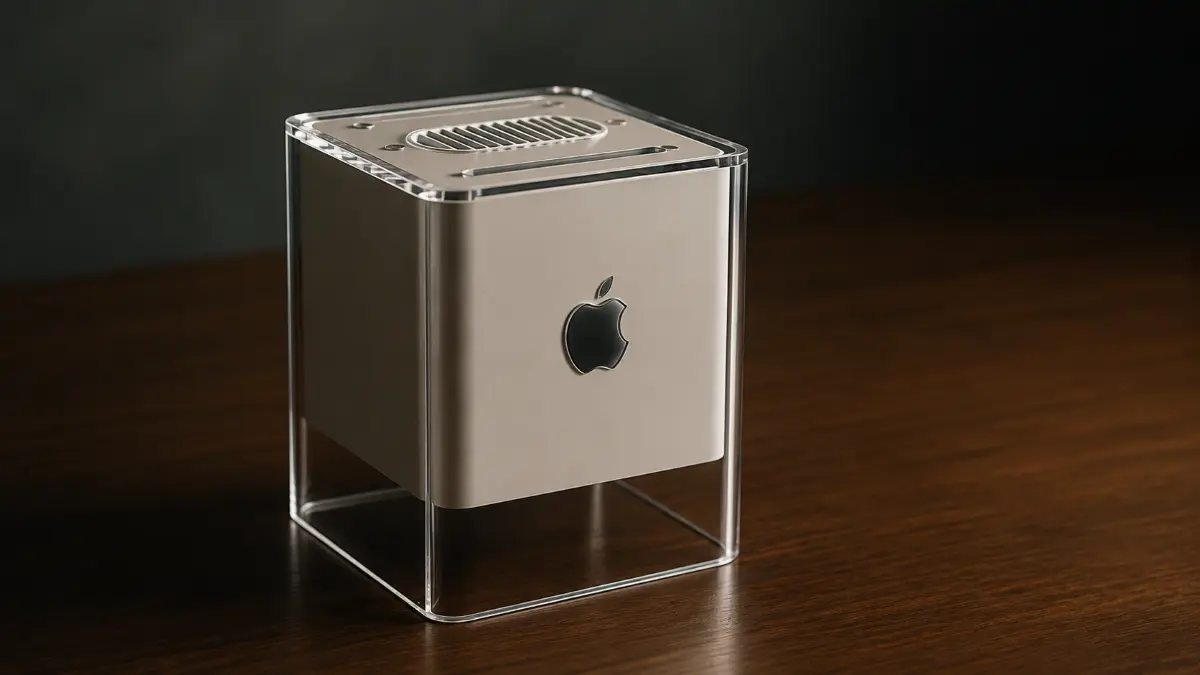

Small can be powerful, and sometimes it’s the boldest design choices that push technology forward. On July 19, 2000, Apple introduced the G4 “Cube” Power Macintosh, a desktop computer that challenged conventional ideas about what a desktop could look like and how it should function.
At the time of its launch, the G4 Cube was one of the smallest desktop computers ever produced. Its compact, minimalist design was a stark departure from the bulky towers dominating the market. While it wasn’t a commercial hit, the Cube’s engineering and aesthetic choices foreshadowed Apple’s future design language and priorities.
Why did the G4 Cube matter then? It tackled a problem that was becoming increasingly relevant: how to deliver high-performance computing in a smaller, more elegant package. The Cube’s design eliminated the traditional tower form factor, packing powerful hardware into a sleek, transparent enclosure that doubled as a statement piece. This wasn’t just about saving desk space; it was about rethinking the relationship between technology and environment.
The Cube’s architecture also reflected a shift in how Apple approached hardware integration. Its compact size required innovative cooling solutions and component layout, pushing engineering teams to rethink airflow and heat dissipation in ways that would influence later Apple products. The Cube’s form factor was a precursor to the company’s later focus on seamless, integrated design, where hardware and aesthetics work in tandem rather than in opposition.
Though the G4 Cube didn’t achieve widespread commercial success, it cultivated a small, dedicated following. This cult status underscored the importance of design innovation even when market conditions aren’t immediately favorable. The Cube showed that consumers could appreciate a product that prioritized form and function equally, setting a new benchmark for what desktop computers could aspire to.
What changed because of the Cube? Apple’s future designs increasingly embraced compactness and visual appeal as core principles. The Cube’s influence is visible in the evolution of Apple’s desktop and laptop lines, where sleekness and integration became selling points. It also helped cement Apple’s reputation as a company willing to experiment with form factors that defy industry norms.
Today, the G4 Cube remains relevant as a symbol of design-driven engineering. In an era where devices are expected to be both powerful and stylish, the Cube’s legacy is a reminder that innovation often means challenging the status quo. Its impact can be seen in how modern desktops and all-in-one computers balance performance with minimalist design.
Reflecting on the G4 Cube’s introduction reminds us that technology is not just about specs and speed. It’s about how devices fit into our lives and spaces. The Cube dared to be different, and in doing so, it helped shape the future of personal computing design.