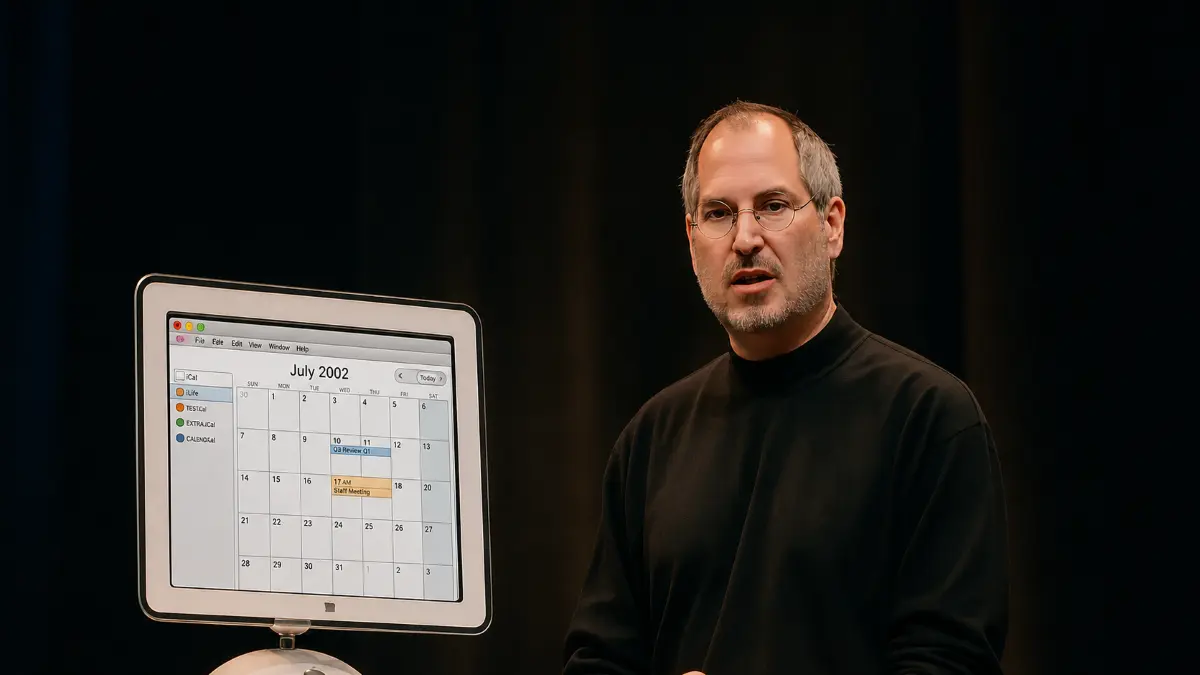

July 17, 2002, marked a quiet but critical shift in digital productivity when Steve Jobs introduced Apple’s iCal calendaring software for Macintosh computers. At first glance, iCal might have looked like just another calendar app. But beneath its sleek interface was a new approach to managing time and schedules that anticipated the connected world we live in today.
The Apple iCal launch was more than a simple software debut. It introduced internet sharing of calendar data, which was a fresh concept at the time. Users could now manage multiple calendars and share them seamlessly online, breaking down the isolation of desktop scheduling. This was a key step toward collaborative time management, something we take for granted now but was a real technical challenge back then.
What made iCal stand out was its integration with Apple’s iSync technology. This allowed users to sync their calendars wirelessly with Bluetooth-enabled mobile phones, PalmOS devices, and even the Apple iPod. The ability to access and update calendars on the go was a game-changer. Before this, calendar apps were largely static and confined to a single device. iCal’s syncing capabilities solved the problem of fragmented schedules and disconnected devices, setting a new standard for mobile productivity.
At the time, iCal’s innovations addressed two core issues: how to keep calendars updated across multiple devices and how to share scheduling information easily. These problems were not trivial. The internet was still evolving as a platform for real-time data exchange, and mobile device ecosystems were fragmented. Apple’s solution was a glimpse into a future where digital calendars would become dynamic hubs of personal and professional coordination.
The release of iCal changed the way people thought about calendars. It wasn’t just about marking dates anymore; it was about creating a living, breathing schedule that could adapt and sync wherever you were. This shift paved the way for the calendar apps we use today, which rely heavily on cloud syncing and real-time collaboration. iCal’s early adoption of internet sharing and device syncing foreshadowed the integrated ecosystems that define modern digital productivity tools.
Why does iCal still matter today? Because it laid the groundwork for the seamless, cross-device calendar experiences we now expect. The principles behind iCal, shared data, multi-calendar management, and wireless syncing, are foundational to how we organize our time in a hyper-connected world. Even as Apple’s calendar software evolved into what is now the Calendar app on macOS and iOS, the core innovations introduced in 2002 remain relevant.
Looking back at the Apple iCal launch reveals how incremental innovations can reshape daily workflows. It wasn’t a flashy hardware release or a headline-grabbing gadget. Instead, it was a thoughtful software solution that addressed real-world problems of time management and device fragmentation. The event reminds us that technology’s impact often comes from solving practical challenges in elegant ways.
In the end, iCal’s debut is a reminder that the tools we rely on every day often have humble beginnings. What started as a new calendar app on a Macintosh laid the foundation for the interconnected scheduling systems that keep millions on track worldwide.