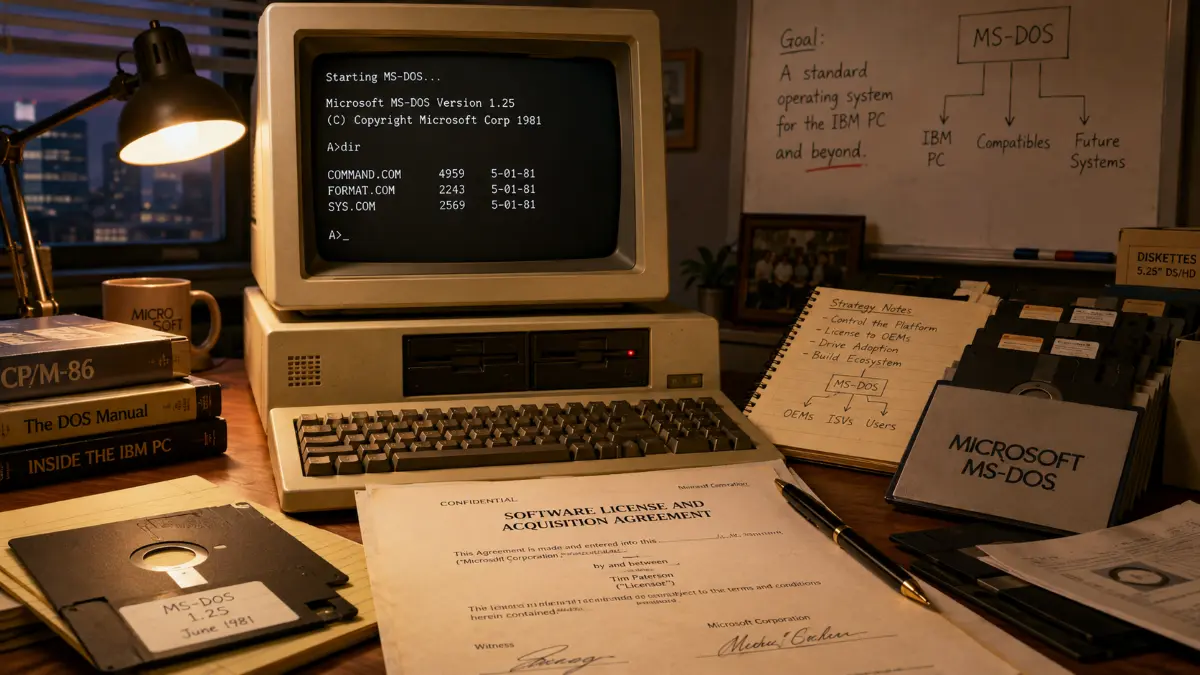

In the summer of 1981, the landscape of personal computing was on the cusp of a seismic shift. On July 27, 1981, Microsoft acquired the full rights to the operating system known as 86-DOS, formerly QDOS (Quick and Dirty Operating System), from Seattle Computer Products for $50,000. This acquisition was a strategic move that laid the groundwork for what would become the dominant operating system for IBM PCs and countless compatibles that followed.
About two weeks before IBM began shipping its first personal computer, Microsoft’s purchase of 86-DOS was more than a simple transaction. It was a calculated bet on the future of PC software. Microsoft had already secured a non-exclusive license to 86-DOS in December 1980 for $25,000 to adapt the system to the IBM PC’s Intel 8088 processor. But owning the full rights meant Microsoft could control development, licensing, and distribution without restrictions.
At the time, the PC market was fragmented, with no clear standard for operating systems. Microsoft’s move to rename 86-DOS as MS-DOS and license it to IBM as PC-DOS provided a unified software platform for IBM’s hardware. This solved a critical problem: enabling software compatibility and a consistent user experience across machines. MS-DOS became the foundation upon which software developers could build applications, knowing they had a stable and widely adopted operating system.
The acquisition also highlighted the emerging business model of software licensing. Microsoft’s deal with IBM allowed the company to license MS-DOS to other PC manufacturers, fueling the growth of the IBM PC-compatible market. This licensing strategy was a key factor in the rapid expansion of the personal computer ecosystem, as it encouraged hardware innovation while maintaining software consistency.
However, the story wasn’t without controversy. Seattle Computer Products later sued Microsoft, alleging fraud because Microsoft did not disclose IBM as a licensee when purchasing the rights. The lawsuit ended with a $1 million settlement in SCP’s favor, a fraction of the revenue Microsoft generated from MS-DOS and PC-DOS annually. This legal tussle underscores the high stakes and intense competition in early PC software development.
The ripple effects of Microsoft acquiring 86-DOS are still felt today. MS-DOS’s architecture influenced the design of later Windows operating systems, which dominated personal computing for decades. The concept of licensing software to multiple hardware vendors set a precedent that shaped the software industry’s business models. More broadly, it established Microsoft as a software powerhouse, a role it continues to play in various technology sectors.
Looking back, the acquisition of 86-DOS was more than a business deal. It was a strategic move that addressed the critical challenge of software standardization in a nascent market. It enabled the personal computer to become a practical and accessible tool for millions, driving software innovation and hardware diversity. The decision to control the operating system’s fate gave Microsoft leverage that would define the company’s trajectory for years.
Today, as we navigate an era dominated by cloud computing, mobile devices, and AI, the legacy of MS-DOS reminds us how foundational software platforms shape technology ecosystems. The story of 86-DOS’s acquisition is a lesson in recognizing the value of software control and licensing in building scalable technology businesses.
July 27, 1981, may seem like a distant chapter in tech history, but it marks a critical moment when software strategy intersected with hardware innovation. It’s a reminder that behind every device is a software story that enables its potential, and sometimes, a quiet deal that changes the game.