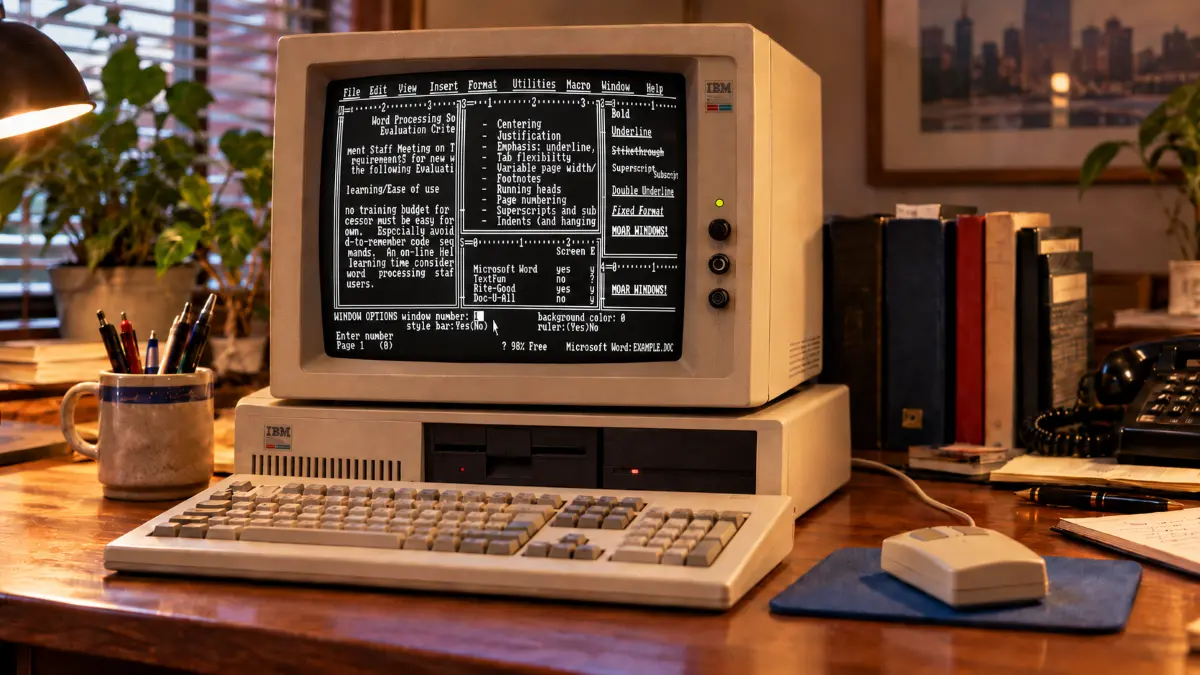

September 29, 1983, marked a defining moment in software history when Microsoft released Microsoft Word 1.0. This was not just another application launch. It was the first word processing software to fully embrace the computer mouse as a core input device, transforming how users interacted with text on MS-DOS compatible systems.
Before Word 1.0, word processing was largely keyboard-driven, a linear and often cumbersome process. Microsoft’s integration of the mouse shifted the paradigm, allowing users to point, click, and drag with unprecedented ease. This leap was no accident; earlier that year, Microsoft had launched a computer mouse designed specifically for IBM-compatible PCs. Word 1.0 was the software counterpart to this hardware push, showcasing the mouse’s potential beyond simple cursor movement.
At the time, this was a bold move. The personal computer was still finding its footing in homes and offices, and user interfaces were evolving rapidly. Word 1.0’s mouse-driven design addressed a critical problem: making digital text editing more intuitive and accessible. It reduced the friction of formatting and navigation, which were previously tedious tasks. This innovation helped bridge the gap between early computing’s complexity and the user-friendly experiences that would follow.
Microsoft also changed software distribution norms with Word 1.0. A demo version was bundled free with a copy of PC World magazine, marking the first time a floppy disk was included with a magazine. This approach not only expanded Word’s reach but also foreshadowed the future of software marketing and trial models. It made the software tangible and accessible, encouraging users to experiment without upfront cost.
The release of Microsoft Word 1.0 set the stage for the software’s evolution into a productivity cornerstone. By embedding mouse functionality deeply into the word processing experience, Microsoft laid the groundwork for graphical user interfaces that dominate today’s computing landscape. The mouse became a standard tool, not just for word processing but across countless applications, shaping how we interact with computers.
Today, Microsoft Word remains a fundamental tool in offices, schools, and homes worldwide. Its early embrace of the mouse is a reminder that user interface design is as crucial as the software’s capabilities. The event on September 29, 1983, highlights how hardware and software innovations must align to create truly transformative technology.
Reflecting on this release, it’s clear that Microsoft Word 1.0 was more than a product launch. It was a strategic step toward making computing more human-centric. The lessons from that era still resonate as we push toward new interaction models like touch, voice, and beyond.