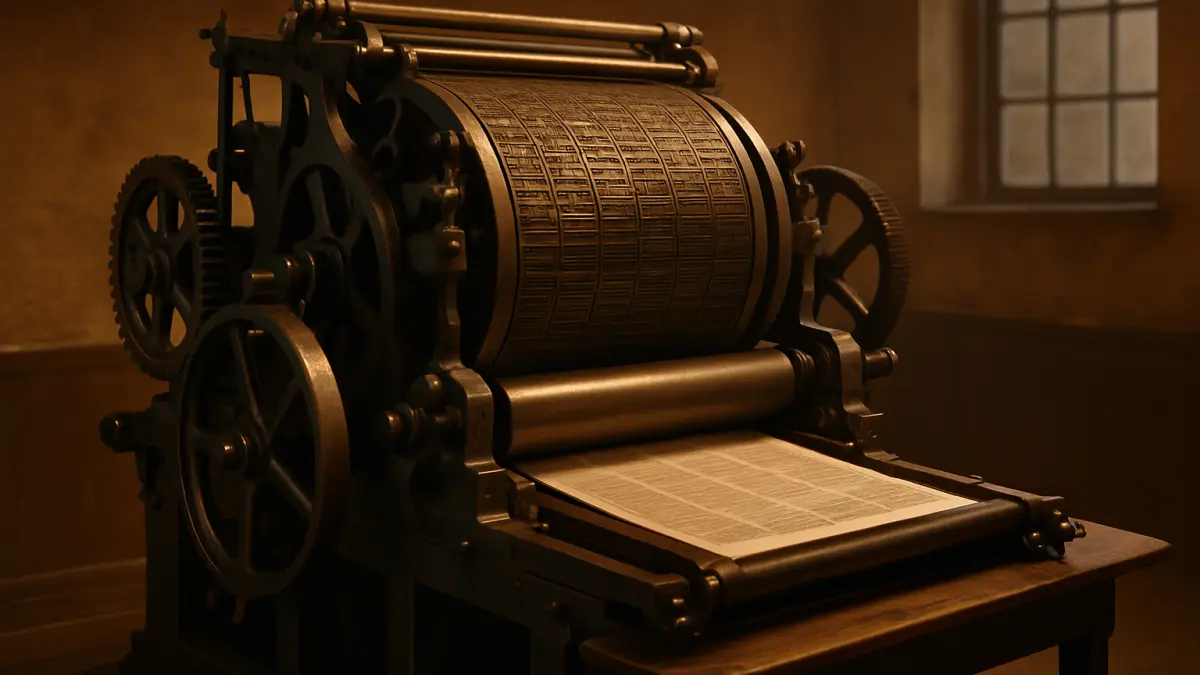

The hum of a printing press once marked the heartbeat of information flow. On July 24, 1847, American inventor Richard March Hoe was granted U.S. Patent 5,199 for his rotary-type printing press. This wasn’t just another machine; it was a fundamental rethinking of how printed material could be produced. By placing type on a revolving cylinder instead of a flatbed, Hoe’s “Hoe lightning press” shattered the limits of print speed and volume.
Before this, printing presses operated with flatbeds, a slow and stop-start process. Each sheet required careful placement and alignment, capping output and bottlenecking the spread of newspapers and books. Hoe’s rotary design introduced continuous motion, allowing the press to churn out up to 8,000 sheets per hour. This leap in efficiency wasn’t just about speed, it was about scale and accessibility.
At the time, the Industrial Revolution was reshaping society, and the demand for timely information was exploding. Newspapers were becoming the primary medium for news, politics, and culture, but their reach was constrained by printing technology. Hoe’s invention broke this barrier, enabling mass-circulation newspapers to flourish. Suddenly, information could be disseminated faster and to a broader audience than ever before.