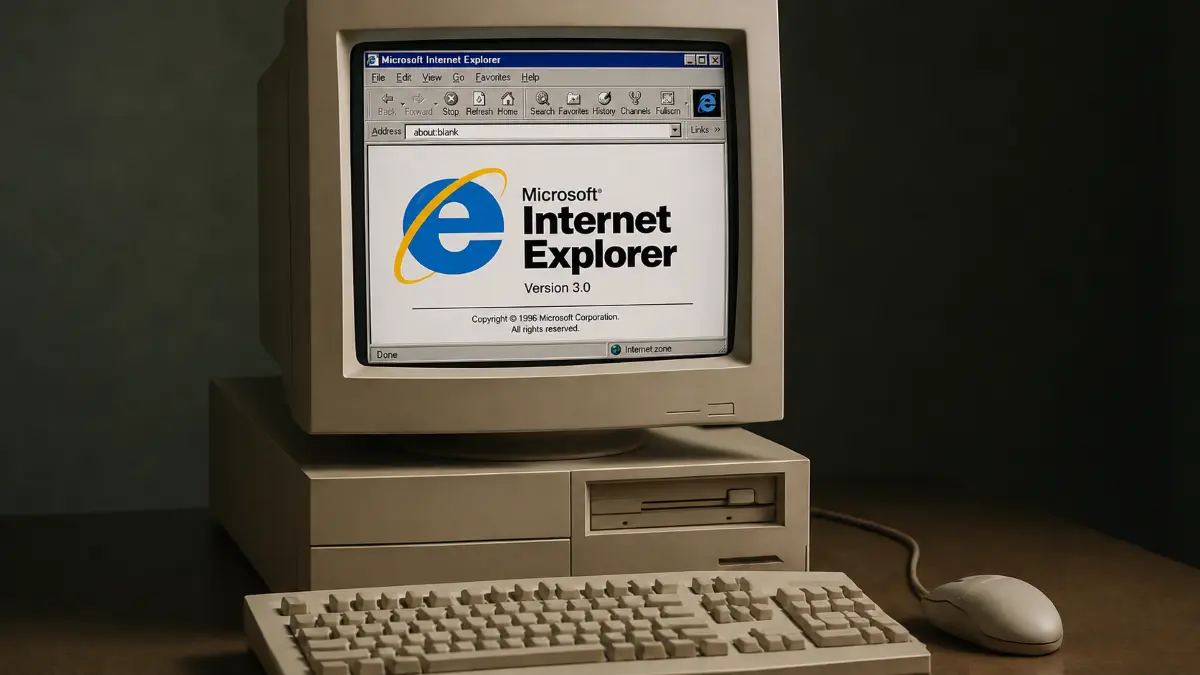

The web was a wild frontier in the mid-1990s, a digital landscape scrambling to define itself. On August 13, 1996, Internet Explorer 3.0 landed on Windows 95 and NT, not just as another browser update but as a strategic move that changed the dynamics of how we accessed the internet.
Internet Explorer 3.0 was Microsoft’s answer to Netscape Navigator’s early lead in the browser wars. This release wasn’t just about adding bells and whistles; it was about setting a new baseline for what browsers could do. By offering a free download, Microsoft directly challenged Netscape’s dominance, shifting the competitive landscape in a way that still echoes today.
At its core, Internet Explorer 3.0 introduced support for Cascading Style Sheets (CSS), Java applets, and ActiveX controls. These were not trivial features. CSS support meant web designers could finally separate content from presentation, allowing for more sophisticated and maintainable site layouts. Java applets brought interactive elements into the browser, moving beyond static pages to richer user experiences. ActiveX controls opened the door for deeper integration between web content and Windows applications, though this would later raise security debates.
Why did this matter then? Before IE 3.0, the web was fragmented. Netscape had a strong lead but was proprietary in many ways, making it difficult for developers to create consistent experiences across browsers. By embracing emerging web standards like CSS, Internet Explorer pushed the industry toward interoperability. This was a critical step in taming the chaos of early web development and enabling the rapid growth of the internet as a platform for business and entertainment.
The release also marked a turning point in browser distribution models. Microsoft’s decision to offer IE 3.0 as a free download was a tactical move that accelerated adoption. It set a precedent for browsers to be freely available, which helped lower barriers for users and developers alike. This shift contributed to the eventual dominance of Internet Explorer in the late 1990s and early 2000s, shaping how millions experienced the web.
What changed because of Internet Explorer 3.0? It pushed web standards into the spotlight. Its support for CSS encouraged widespread adoption, which remains the foundation of web design today. The integration of Java applets and ActiveX controls expanded what browsers could do, foreshadowing the rich web applications we now take for granted. Although ActiveX would later be criticized for security vulnerabilities, its introduction was a bold experiment in blending desktop and web functionalities.
The browser wars ignited by IE 3.0’s release also accelerated innovation. Competition forced rapid development cycles and feature rollouts, which helped the web evolve faster than it might have otherwise. This period laid the groundwork for the modern web ecosystem, where standards and cross-platform compatibility are key.
Why does Internet Explorer 3.0 still matter? It marked a shift from the web as a static information repository to a more interactive and visually dynamic environment. The technologies it introduced or popularized remain integral to web development. CSS is now a core technology alongside HTML and JavaScript. The concept of downloadable browser software being free and regularly updated is an expectation baked into the web experience.
Reflecting on this event reminds us that the web’s evolution has always been shaped by the interplay of technology, business strategy, and user needs. Internet Explorer 3.0 was more than a browser update; it was a catalyst that pushed the internet closer to the versatile platform it is today.