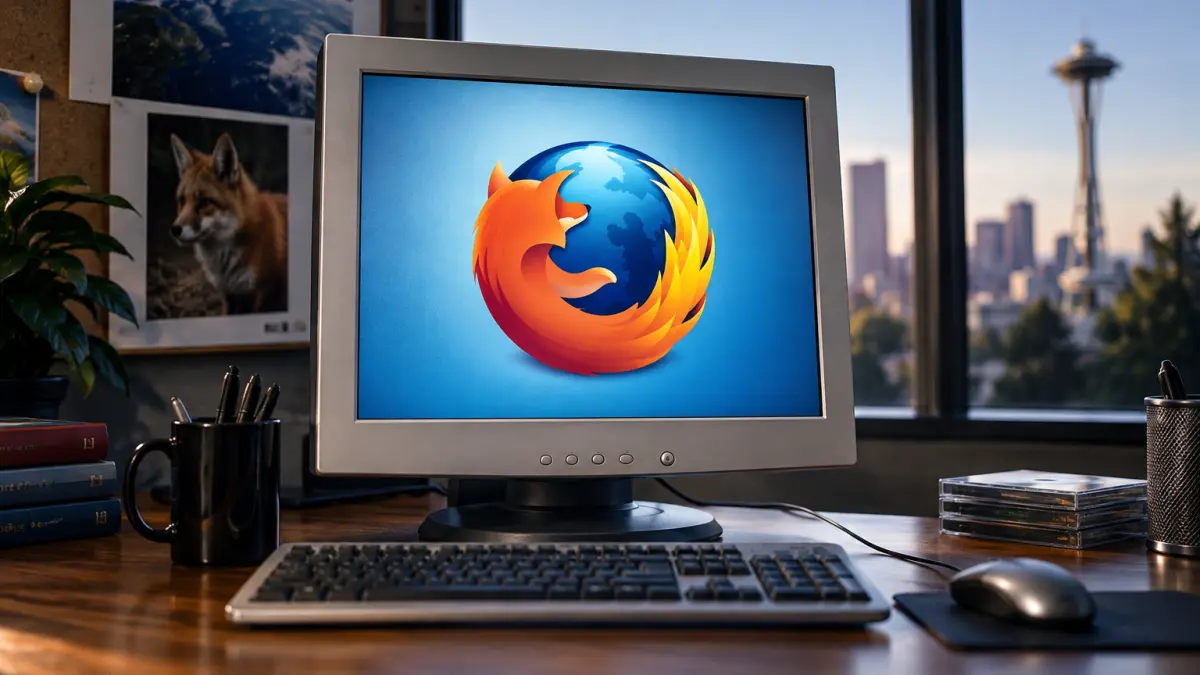

On November 9, 2004, the Mozilla Foundation released Firefox 1.0, introducing a web browser that would become one of the most influential alternatives to Microsoft’s Internet Explorer. At a time when Internet Explorer controlled more than 90% of the desktop browser market, Firefox offered a different vision for navigating the internet: an open-source browser built around speed, simplicity, security, and user control.
The release marked a significant moment in the evolution of the web. Internet Explorer had become deeply embedded in Windows, and Microsoft’s overwhelming market share left many users with limited incentives to explore competing browsers. Firefox challenged that environment by offering features that made everyday browsing more convenient, while supporting web standards and encouraging independent development.
Firefox did not immediately overturn Microsoft’s dominance. Instead, its growing popularity over the following years helped restore meaningful competition to a market that had become increasingly concentrated. The browser also demonstrated that a community-driven software project could compete with products backed by some of the world’s largest technology companies.
The Browser Market Before Firefox
The browser industry had already experienced intense competition during the 1990s. Netscape Navigator initially played a central role in popularizing the World Wide Web, but Microsoft’s decision to bundle Internet Explorer with Windows helped transform the competitive landscape. By the early 2000s, Internet Explorer had become the dominant browser on desktop computers, benefiting from its integration with the world’s most widely used personal computer operating system.
As Netscape’s market position declined, Internet Explorer became the default browsing environment for millions of people. Microsoft continued releasing updates, but the pace of major browser development slowed after Internet Explorer 6 arrived in 2001. Problems involving security vulnerabilities, inconsistent support for web standards, and limitations in everyday usability became increasingly visible as websites grew more sophisticated.
Competing browsers had not disappeared. Opera continued developing its own browser, while Apple introduced Safari in 2003. Mozilla also maintained the Mozilla Application Suite, which combined web browsing with email and other internet tools. However, none had substantially displaced Internet Explorer’s position in the Windows market.
Firefox emerged from this environment with a different strategy. Rather than attempting to reproduce an entire suite of internet applications, its developers concentrated on creating a streamlined, standalone web browser that could appeal to ordinary users as well as technically experienced enthusiasts.
From Netscape’s Legacy to Mozilla Firefox
Firefox’s origins can be traced to Netscape’s decision in 1998 to release the source code of its browser, establishing the Mozilla open-source project. This created an opportunity for developers outside a single corporation to contribute to browser technology, including rendering engines, security improvements, and new user-interface designs.
The project eventually produced the Mozilla Application Suite, but some developers believed that its combination of browser, email, and other tools had become too complex. Blake Ross and Dave Hyatt were among the developers who pursued a lighter browser focused primarily on the web browsing experience.
The project initially appeared under the name Phoenix in 2002, before being renamed Firebird and eventually Firefox in February 2004. The name changes reflected trademark concerns rather than major changes in the project’s underlying purpose. Throughout its development, the goal remained to provide a simpler, more responsive browser built on Mozilla technology.
Firefox used the Gecko rendering engine, which interpreted HTML, CSS, and other web technologies to display websites. Gecko’s emphasis on standards-based rendering helped distinguish Firefox from Internet Explorer, whose implementation of certain web technologies had contributed to compatibility problems for developers.
By the time Firefox 1.0 arrived, the Mozilla Foundation had developed a recognizable identity around open-source collaboration, independent browser development, and the idea that users should have greater control over their browsing experience.
The Features That Made Firefox Different
Firefox 1.0 brought together several capabilities that addressed common frustrations with early-2000s web browsing. Tabbed browsing allowed users to open multiple websites within a single browser window, reducing desktop clutter and making it easier to switch between pages. Although other browsers had introduced tabs earlier, Firefox helped popularize the feature among a wider audience.
The browser also included built-in pop-up blocking, an important improvement during an era when intrusive advertising windows frequently interrupted web browsing. Its integrated search functionality made finding information more convenient, while bookmark management and a relatively uncluttered interface helped simplify everyday navigation.
Customization was another defining feature. Firefox supported extensions and themes, allowing users to add functionality or change the browser’s appearance without replacing the underlying application. This encouraged independent developers to create tools that addressed specialized needs, helping establish an active ecosystem around the browser.
Security also played a major role in Firefox’s appeal. Internet Explorer’s close relationship with Windows technologies, including ActiveX controls, had created particular security concerns. Firefox avoided dependence on ActiveX and offered a different browser architecture, reducing exposure to some threats associated with Internet Explorer.
However, Firefox was not immune to vulnerabilities, and its security depended on continued updates and responsible user behavior. Its significance was not that it eliminated browser security risks, but that it provided users with a credible alternative and encouraged greater attention to browser security as a competitive feature.
Open Source and the Fight for Web Standards
One of Firefox’s most important contributions was its support for an open, interoperable web. During the early 2000s, developers frequently encountered differences between how browsers interpreted HTML, CSS, JavaScript, and other web technologies. Some websites were designed specifically for Internet Explorer, making them difficult to use in competing browsers.
This created a difficult cycle. Because Internet Explorer dominated the market, developers often optimized websites for Microsoft’s implementation. Those websites then reinforced Internet Explorer’s position by making alternative browsers appear less compatible, even when the underlying problems involved browser-specific code.
Firefox helped challenge this environment by emphasizing support for established web standards. Its Gecko rendering engine provided an alternative implementation that encouraged developers to test websites across different browsers rather than relying exclusively on Internet Explorer.
The browser’s open-source development model also allowed contributors to inspect code, identify problems, propose improvements, and participate in the software’s evolution. This did not guarantee better security or faster development in every situation, but it demonstrated how a distributed community could sustain a complex application used by millions of people.
The growing popularity of Firefox strengthened the argument that the web should remain accessible through competing browsers and operating systems. That principle would become increasingly important as web applications evolved from relatively simple pages into sophisticated software platforms.
How Firefox Helped Reignite Browser Competition
Firefox’s launch was supported by an unusually enthusiastic community. Mozilla organized a grassroots promotional campaign, and supporters raised money for a full-page advertisement in The New York Times celebrating the browser’s arrival. The campaign reflected the enthusiasm surrounding Firefox and helped turn a software release into a broader movement advocating browser choice.
The response was substantial. Firefox recorded millions of downloads during its first weeks, demonstrating that users were willing to install a browser independently rather than relying on the software bundled with their operating systems.
Its market impact developed gradually. Firefox gained a meaningful share of desktop browsing throughout the following years, particularly among users who valued customization, security features, and standards support. As its popularity increased, Microsoft faced greater competitive pressure to improve Internet Explorer.
Microsoft released Internet Explorer 7 in 2006, introducing features such as tabbed browsing and improved security controls. Firefox was not the only factor behind Microsoft’s development decisions, but its growing adoption contributed to a renewed competitive environment.
The browser market would change again in 2008 when Google introduced Chrome. Chrome eventually became the dominant browser, while Microsoft’s Internet Explorer declined and was ultimately replaced by Edge. Firefox’s role in this broader history remains significant because it helped demonstrate that users would adopt alternatives when those products offered compelling improvements.
Firefox’s Lasting Influence on Privacy and Browser Choice
More than two decades after Firefox 1.0, the browser’s legacy extends beyond its early features. Mozilla continued developing Firefox as a cross-platform browser while emphasizing privacy, user choice, and an open web. Features introduced in later versions included enhanced tracking protection, private browsing capabilities, and additional controls over how websites collect information.
Firefox also underwent major architectural changes. The Firefox Quantum initiative, introduced in 2017, incorporated performance improvements and components developed through Mozilla’s Servo research project. These efforts reflected the continuing challenge of maintaining a competitive browser as websites became more complex and demanding.
The modern browser landscape presents a different competitive challenge from the one Firefox faced in 2004. Google Chrome and other Chromium-based browsers share a common technological foundation, while Firefox continues to use Mozilla’s Gecko engine. Apple’s Safari relies on WebKit, providing another major rendering-engine family.
Maintaining different browser engines matters because it helps prevent web development from becoming dependent on a single implementation. Independent engines can identify compatibility problems, support alternative technical approaches, and provide additional opportunities for innovation.
Firefox’s continued existence therefore represents more than the survival of a familiar browser brand. It supports the broader principle that users and developers benefit when the web remains accessible through independently developed technologies.
The Browser That Helped Bring Competition Back
Looking back at November 9, 2004, Firefox 1.0 stands as an important milestone in the history of internet software. Its developers did not invent tabbed browsing, extensions, or open-source development, but they combined these ideas into a browser that challenged the expectations of an industry dominated by a single product.
Firefox’s success demonstrated that a compelling user experience, community participation, and a commitment to interoperability could create meaningful competition even when an established company controlled most of the market.
The browser also helped change what users expected from web software. Features once associated with specialized alternatives became common expectations, while browser security, performance, customization, and standards compliance gained greater importance.
On November 9, 2004, Firefox 1.0 did more than introduce another way to browse the internet. It helped revive competition, encouraged innovation, and reinforced the idea that the web should remain a platform where different technologies can compete on their merits. That legacy continues to matter in today’s increasingly concentrated browser ecosystem.