
Intel’s next-generation Nova Lake desktop platform is taking shape, with a new LGA 1954 socket, an expanded family of 900-series chipsets, and early motherboard designs revealing how the company plans to modernize its desktop ecosystem.
The transition is more than a routine processor upgrade. Nova Lake is expected to introduce new CPU architectures, higher core counts, and expanded high-speed connectivity. However, the move away from the existing LGA 1851 socket also means that current Intel desktop motherboards will not support the upcoming processors.
Although Intel has not finalized the full public specifications for Nova Lake-S, leaked chipset documentation and emerging motherboard listings are providing a clearer picture of what PC enthusiasts, system builders, and business users can expect.
A New Socket for Intel’s Next Desktop Generation
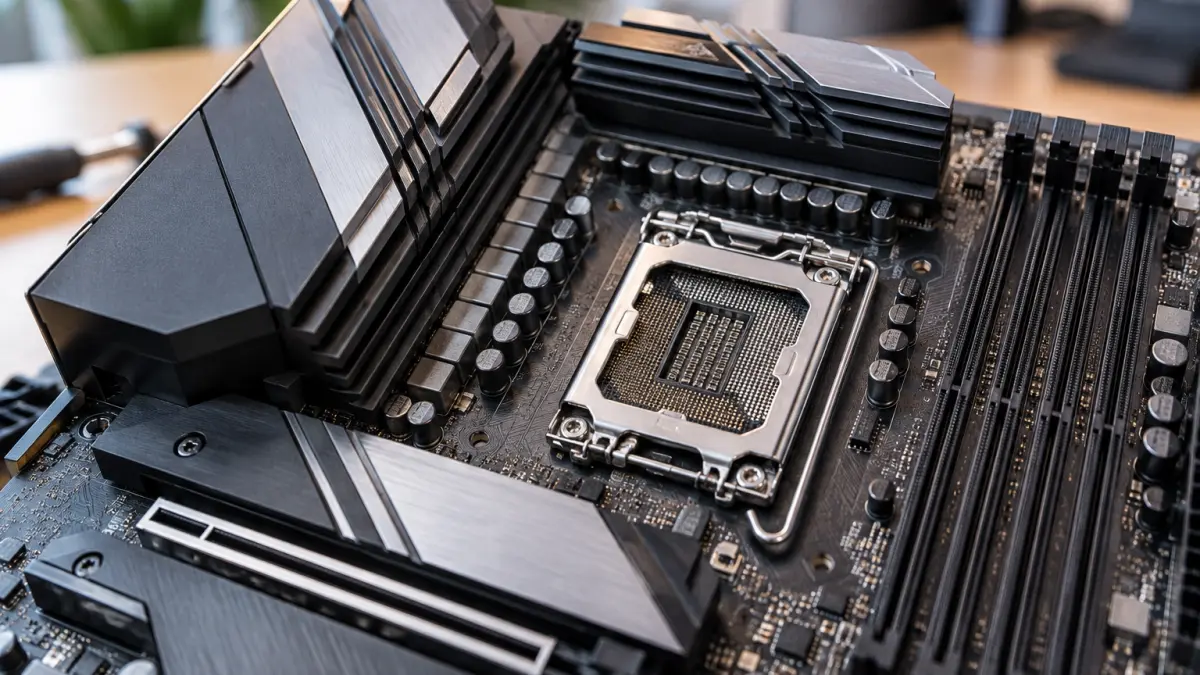
At the center of the platform is LGA 1954, replacing the LGA 1851 socket used by Intel’s Arrow Lake desktop processors.
The new socket accommodates a different processor package and electrical interface, making a motherboard replacement necessary for users upgrading from current-generation Intel desktop systems.
Nova Lake-S is rumored to offer configurations with as many as 52 CPU cores, combining up to 16 Coyote Cove performance cores, 32 Arctic Wolf efficiency cores, and four additional low-power cores.
Such a configuration could substantially increase parallel processing capacity, particularly for workloads involving rendering, software compilation, content creation, and heavy multitasking.
However, these core counts remain based on preliminary information. Final processor configurations, operating frequencies, power requirements, and performance characteristics have not yet been fully disclosed.
The processors are also expected to incorporate Xe3-based integrated graphics, extending Intel’s ongoing improvements to graphics and media capabilities.
Five Chipsets for Different Desktop Needs
Intel’s reported 900-series lineup includes five chipsets designed to address different performance, connectivity, and management requirements.
Z990: High-End Performance and Expansion
The flagship Z990 is expected to support both CPU multiplier and base-clock overclocking, making it the most flexible option for enthusiasts seeking maximum tuning control.
Leaked specifications indicate up to 48 total PCIe lanes, including 12 PCIe 5.0 lanes provided by the chipset, alongside two processor-supported Thunderbolt 4/USB4 ports.
The additional connectivity could benefit systems equipped with multiple high-speed SSDs, expansion cards, and demanding peripheral configurations.
Z970: Overclocking Without the Flagship Premium
Z970 introduces an interesting middle ground. Unlike Intel’s traditional mainstream chipsets, it is expected to support CPU multiplier overclocking while omitting base-clock tuning.
The reported configuration includes 34 total PCIe lanes, with 14 PCIe 4.0 lanes supplied by the chipset, plus one processor-supported Thunderbolt 4/USB4 port.
This could make Z970 attractive to gamers and enthusiasts who want access to CPU tuning without paying for a fully equipped flagship motherboard.
W980: Workstation-Oriented Reliability
W980 is designed for professional desktop systems, prioritizing connectivity, manageability, and reliability rather than processor overclocking.
Its reported specifications closely resemble those of Z990, including extensive PCIe connectivity, but with additional workstation-oriented features such as ECC memory support.
Q970: Business and Enterprise Systems
Q970 targets commercial desktops and managed business environments.
Its expected capabilities include Intel vPro-related management features, extensive connectivity, and support for enterprise deployment requirements.
Unlike the enthusiast-oriented Z-series chipsets, Q970 is not expected to support CPU or memory overclocking.
B960: Mainstream Desktop Builds
B960 is positioned as the more accessible option for everyday desktop systems.
Although it lacks CPU overclocking, it is expected to support memory tuning and provide sufficient connectivity for mainstream gaming, productivity, and general-purpose computing.
For many buyers, the practical differences between B960 and more expensive chipsets will depend on how many high-speed storage devices, expansion cards, and advanced connectivity options they actually need.
All five chipset configurations remain subject to Intel’s final specifications and motherboard manufacturers’ implementations.
Early Motherboards Reveal What Nova Lake Systems Could Look Like
The emerging motherboard ecosystem provides additional evidence that preparations for Nova Lake are progressing.
Chinese manufacturer Decenta has listed the M26-NVLS-ATX09, an industrial-oriented ATX motherboard offered in Q970 and B960 configurations.
The board features four DDR5 memory slots, with listed support for speeds up to 6400 MT/s, an 8+1+1 power delivery design, and multiple storage and connectivity options.
Its industrial focus is particularly interesting. Rather than targeting high-end gaming enthusiasts, the board emphasizes practical expansion capabilities, including networking interfaces and support for legacy hardware.
The Q970 configuration offers more extensive PCIe connectivity than its B960 counterpart, illustrating how the chipset selection can affect expansion flexibility even when the underlying motherboard design is similar.
Additional signs of development have emerged from established motherboard manufacturers. ASRock Z970 models have appeared in shipping records, while previously reported Z990 listings suggest that vendors are preparing products across multiple price segments.
These developments indicate ongoing platform validation and manufacturing preparations, although they do not establish final retail availability or pricing.
What PCIe 5.0 and USB4 Mean for Everyday Users
One of the more important aspects of the 900-series platform is its approach to high-speed connectivity.
PCIe 5.0 provides twice the theoretical bandwidth per lane of PCIe 4.0, making it particularly useful for demanding storage and expansion workloads.
For example, a PCIe 5.0 x4 connection offers approximately 15.8 GB/s of theoretical bandwidth in each direction before protocol overhead.
That additional capacity can benefit high-performance NVMe storage, but it does not automatically translate into faster gaming or everyday application performance.
Similarly, Thunderbolt 4 and USB4 can support fast external storage, docking stations, and high-bandwidth peripherals. The actual number of available ports will depend on the motherboard design, even when the processor and chipset support additional connections.
Buyers should therefore evaluate individual motherboard specifications rather than assuming every 900-series model will expose the platform’s maximum capabilities.
The Upgrade Cost Goes Beyond the Processor
For existing Intel desktop owners, Nova Lake introduces an important purchasing consideration.
Because LGA 1954 is not compatible with LGA 1851 motherboards, upgrading will require at least a new processor and motherboard.
DDR5 memory may remain reusable depending on the selected motherboard and supported memory configuration. Some existing CPU coolers may also remain compatible, although buyers should verify mounting support and thermal requirements with the manufacturer.
Higher-end Nova Lake configurations could introduce additional power delivery and cooling considerations, particularly if the rumored high core counts translate into elevated power consumption under sustained workloads.
For users satisfied with their current systems, the practical benefit of upgrading will depend on independent performance testing rather than core counts or connectivity specifications alone.
When Will Intel Nova Lake Arrive?
Intel’s Nova Lake desktop rollout has been associated with a late-2026 development window, while more recent industry reporting points toward a broader platform introduction in early 2027.
Motherboard shipping records and early product listings suggest that manufacturers are preparing for the transition, but they should not be interpreted as confirmation that processors or retail motherboards are immediately available.
Final pricing, launch schedules, individual processor models, and detailed platform specifications remain important unanswered questions.
A Significant Reset for Intel’s Desktop Platform
Nova Lake represents an important architectural and platform transition for Intel, combining a new processor socket with a broader range of motherboard configurations.
The introduction of Z970 could make CPU overclocking more accessible, while Z990 and W980 appear designed to accommodate users requiring extensive connectivity and expansion capabilities. Meanwhile, B960 and Q970 address mainstream and business requirements.
The trade-off is a new motherboard generation, with associated upgrade costs and compatibility considerations.
For PC builders, the real significance of Nova Lake will not be determined by the number of cores or PCIe lanes alone. It will depend on whether Intel can translate these architectural and platform changes into meaningful performance, efficiency, and long-term value.