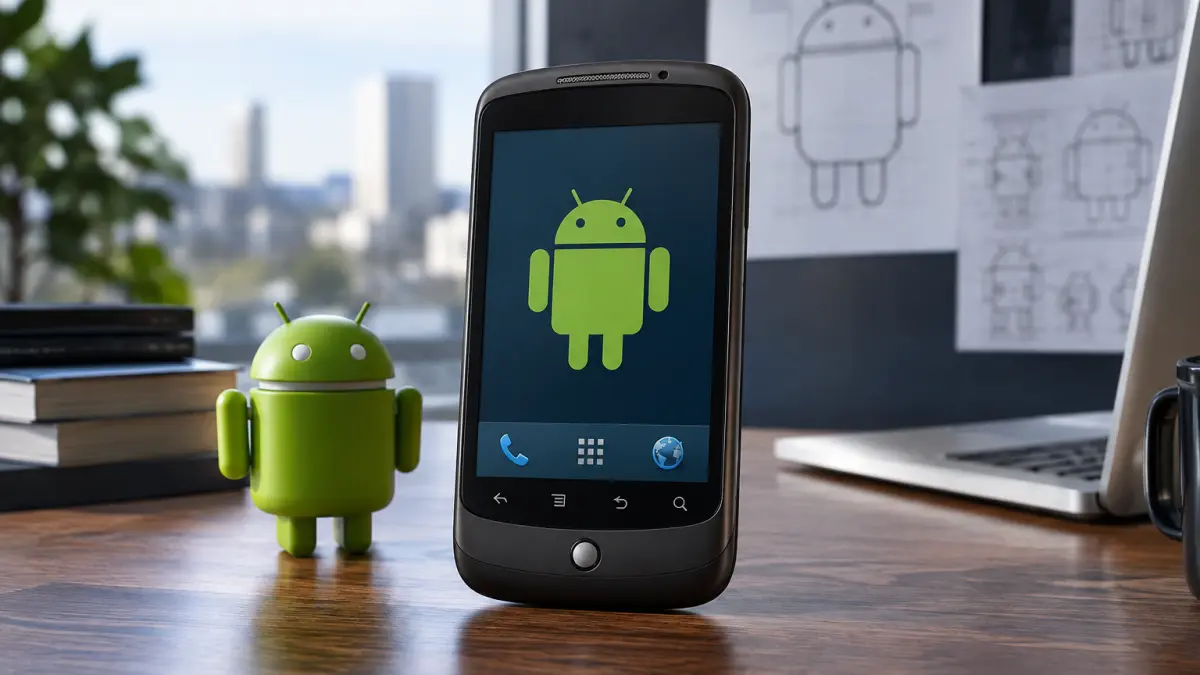

On November 5, 2007, Google announced Android, an ambitious new mobile software platform that would fundamentally reshape the smartphone industry. Developed in collaboration with the newly established Open Handset Alliance, Android promised an open, Linux-based foundation that smartphone manufacturers, wireless carriers, and software developers could use to build a new generation of connected mobile devices.
The announcement came at a pivotal moment in mobile computing. Apple had introduced the original iPhone earlier that year, BlackBerry dominated corporate messaging, and Nokia remained a major force in mobile phones. Rather than competing through a single Google-branded handset, Google proposed something broader: a common software platform that could support devices from numerous manufacturers.
That strategy would eventually help Android become one of the world’s most widely adopted operating systems. But on November 5, 2007, there was no Android smartphone available to purchase. Google was announcing the foundation of an ecosystem that would take shape over the following year and transform the mobile industry for decades.
Why Google Entered the Smartphone Market
Before Android, the mobile software landscape was divided among several competing platforms. Nokia’s Symbian operating system powered many smartphones, Microsoft’s Windows Mobile targeted business users and handheld devices, and Research In Motion’s BlackBerry platform offered tightly integrated messaging and enterprise services. Apple, meanwhile, had introduced a different approach with the iPhone, combining a large touchscreen, sophisticated software, and close integration between hardware and operating system.
For manufacturers and developers, this fragmentation created practical difficulties. Applications often had to be adapted to different operating systems, hardware capabilities varied considerably, and access to certain platform features depended on individual manufacturers or carriers. Developing an entirely new smartphone operating system also required substantial engineering resources.
Google saw an opportunity to address these challenges through a shared platform. In 2005, the company had acquired Android Inc., a startup co-founded by Andy Rubin, Rich Miner, Nick Sears, and Chris White. The acquisition provided Google with a team focused on developing mobile software, eventually forming the basis of its Android strategy.
The goal was not simply to create another operating system. Google wanted to encourage broader access to mobile computing and internet services while reducing some of the technical and commercial barriers that made developing smartphones expensive and complicated.
The Open Handset Alliance: A Different Approach
The November 5 announcement introduced the Open Handset Alliance, a coalition of 34 technology and telecommunications companies working together to develop Android and encourage its adoption. Founding participants included Google, HTC, T-Mobile, Motorola, Qualcomm, and other organizations representing different parts of the mobile industry.
The alliance brought together companies that ordinarily occupied separate positions in the technology supply chain. Chip manufacturers could contribute hardware expertise, handset makers could develop new devices, wireless operators could provide network services, and software developers could create applications for a shared platform.
This collaborative structure was central to Android’s appeal. Instead of requiring every manufacturer to develop or license an entirely separate operating system, Android offered a common foundation that could be adapted to different products. Manufacturers could differentiate their devices through hardware features, software customization, and design while maintaining access to a broader application ecosystem.
The announcement also challenged the assumption that the future of smartphones would necessarily depend on tightly controlled, manufacturer-specific software platforms. Android proposed an alternative in which a shared technological foundation could support competition among many hardware companies.
How Android’s Linux-Based Architecture Worked
Android was designed as a complete mobile software stack rather than merely a user interface or a collection of applications. Its architecture combined a Linux kernel with system libraries, an application framework, runtime components, and software designed to support the essential functions of a smartphone.
The Linux kernel provided foundational operating-system capabilities, including process management, memory management, security mechanisms, and hardware interaction through device drivers. Above that foundation, Android introduced software components intended to simplify the development of mobile applications and support different hardware configurations.
This layered design was important because smartphones depended on a complicated combination of processors, displays, wireless radios, cameras, sensors, and storage systems. A common software architecture could reduce the amount of work required to bring new devices to market while giving developers a more consistent environment for building applications.
Android’s early application model also helped distinguish it from some competing mobile platforms. Developers would receive tools and programming interfaces for creating software that could interact with supported device capabilities. The intention was to encourage third-party innovation rather than restrict the platform to applications supplied by the handset manufacturer.
However, Android’s openness required an important distinction. Although Google announced its intention to make Android available as open-source software in 2007, the full source code was not publicly released that day. The Android Open Source Project became publicly available on October 21, 2008, shortly before the first commercial Android smartphone reached consumers.
From the 2007 Announcement to the First Android Phone
Following the initial announcement, Google and its partners spent much of 2008 preparing Android for commercial deployment. Developers received early software development kits, while manufacturers worked to integrate the platform with real smartphone hardware.
The first major commercial result was the HTC Dream, marketed in the United States as the T-Mobile G1. Announced in September 2008 and released on October 22, the device introduced Android to consumers with a touchscreen, a slide-out physical keyboard, and integrated Google services.
The G1 included access to Gmail, Google Maps, Google Search, and YouTube, demonstrating how mobile applications and internet services could operate within a connected software environment. It also introduced Android Market, the application distribution platform that would later evolve into Google Play.
The hardware looked very different from today’s smartphones. Its physical keyboard, trackball, and relatively small touchscreen reflected a transitional period when manufacturers were still experimenting with how people should interact with increasingly capable mobile devices.
Nevertheless, the G1 established Android as a functioning commercial platform. Its arrival demonstrated that the software announced in November 2007 could support a real product, opening the door for other manufacturers to introduce Android-powered devices.
How Android Changed Smartphone Competition
Android’s most significant long-term contribution was its ability to support a diverse hardware ecosystem. Manufacturers could adopt the platform without creating an operating system entirely from scratch, enabling companies to compete across different prices, designs, and performance categories.
As Android matured, manufacturers including Samsung, HTC, Motorola, LG, and Sony introduced smartphones built around the platform. This competition helped accelerate improvements in displays, cameras, processors, connectivity, and battery technology while expanding the availability of smartphones across international markets.
The platform also transformed mobile software development. A growing application ecosystem gave developers access to users across multiple manufacturers and devices, helping mobile applications become an important part of everyday computing. Services that previously depended on desktop computers increasingly became accessible through smartphones.
Android’s rise contributed to a broader restructuring of the mobile industry. Earlier platforms such as Symbian, BlackBerry OS, and Windows Mobile gradually lost ground as Android and Apple’s iOS became the two dominant smartphone operating-system ecosystems.
The result was not a completely open or unrestricted market. Android manufacturers still faced compatibility requirements, intellectual property considerations, commercial licensing arrangements, and dependencies on Google services. The open-source core of Android also remained distinct from proprietary applications and services commonly included on commercial Android devices.
Even with those limitations, Android’s adaptable architecture helped create a level of hardware diversity that would have been difficult to achieve through a single-manufacturer platform.
Android’s Legacy in the Modern Mobile Ecosystem
Nearly two decades after its announcement, Android’s influence extends far beyond the first generation of smartphones. The platform has evolved to support increasingly sophisticated mobile computing experiences, including advanced photography, biometric authentication, artificial intelligence features, and integration with connected devices.
Android-derived software has also appeared in tablets, televisions, automotive systems, and specialized electronics, demonstrating the flexibility of its underlying architecture. The broader Android ecosystem has encouraged manufacturers and developers to experiment with different device categories while maintaining access to established development tools and software components.
At the same time, Android’s success has introduced challenges involving security updates, operating-system fragmentation, privacy, and the relationship between open-source software and proprietary commercial services. The diversity that helped Android expand also means that software updates and device support can vary substantially between manufacturers.
These tradeoffs remain central to Android’s development. Maintaining a flexible platform across a vast range of devices requires balancing manufacturer customization, developer compatibility, security, and consistent user experiences.
The platform’s continued evolution illustrates how the decisions made in 2007 shaped not only the smartphone market but also the broader relationship between software platforms, hardware manufacturers, and digital services.
The Announcement That Helped Redefine Mobile Computing
Looking back at November 5, 2007, Google’s Android announcement stands as one of the defining moments in the history of mobile technology. Rather than introducing a finished smartphone, Google and the Open Handset Alliance presented a new model for developing mobile devices around a shared software platform.
The strategy challenged established industry structures by allowing multiple manufacturers to participate in an expanding ecosystem. It also gave software developers a broader market for their applications and helped accelerate the transition from traditional mobile phones to powerful, internet-connected computing devices.
Android did not eliminate proprietary technologies or solve every problem associated with mobile platform fragmentation. Its achievement was establishing a flexible foundation that numerous manufacturers could adopt, customize, and develop into commercially successful products.
On November 5, 2007, Google did not simply announce another mobile operating system. It introduced the foundation of an ecosystem that would change how smartphones were built, how applications were distributed, and how billions of people would eventually interact with digital technology.