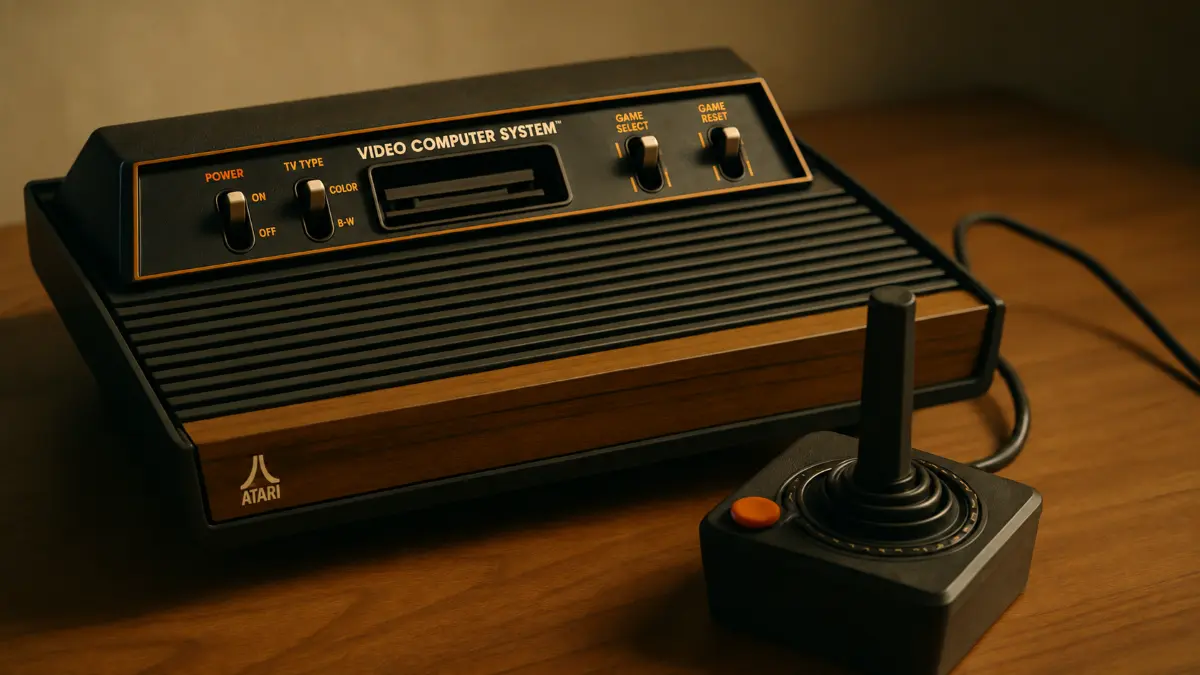

The moment Atari released their Video Computer System on September 11, 1977, marked a turning point in how we interact with digital entertainment. The Atari VCS, later known as the Atari 2600, didn’t just introduce a new console; it laid the foundation for home video gaming as a cultural and technological force.
Atari’s VCS launch was not an overnight success. It took two years for the console to gain real traction, but by 1979 it was the best-selling gift of the Christmas season. This slow build-up underscores a key aspect of technology adoption: innovation often requires patience and a market ready to embrace it. The VCS’s eventual success was no accident. It combined accessible hardware, interchangeable game cartridges, and a user-friendly interface, making video games a household activity rather than a niche hobby.
What made the Atari VCS stand out was its cartridge-based system. Before this, most gaming devices were limited to built-in games. Atari’s approach solved a fundamental problem: how to keep a gaming platform relevant and engaging without forcing consumers to buy entirely new hardware for each game. This modular design sparked a new economic model for gaming, where software sales could thrive independently of hardware sales. It also allowed developers to innovate and expand the gaming library rapidly, fueling a growing ecosystem.
The VCS’s impact on the market was seismic. It transformed video games from arcade curiosities into a staple of home entertainment. This shift had broader implications for technology and culture. The console helped normalize the idea that digital interaction could be a form of leisure, creativity, and social connection. It also pushed forward the development of more sophisticated graphics, sound, and gameplay mechanics, setting a trajectory that would lead to today’s immersive gaming experiences.
Looking back, the Atari VCS’s influence is still palpable. It established the cartridge-based console as the dominant format for decades. More importantly, it proved that video games could be a mainstream cultural product, opening doors for the multi-billion-dollar industry we see today. The VCS also laid groundwork for the relationship between hardware manufacturers, game developers, and players, a dynamic that continues to evolve with new platforms and technologies.
The Atari VCS’s story is a reminder that technological breakthroughs often hinge on solving practical problems, like software distribution and user engagement. It also shows how a product’s cultural resonance can outlast its initial hype. Even as gaming technology has advanced far beyond the VCS’s capabilities, the principles it introduced remain relevant. The console’s legacy is not just in nostalgia but in its role as a blueprint for how gaming became a universal pastime.
September 11, 1977, was more than a product launch. It was a step toward embedding digital play into everyday life, shaping how we entertain ourselves, connect with others, and even how technology companies approach innovation. The Atari VCS is a chapter in tech history that continues to inform the gaming world and beyond.