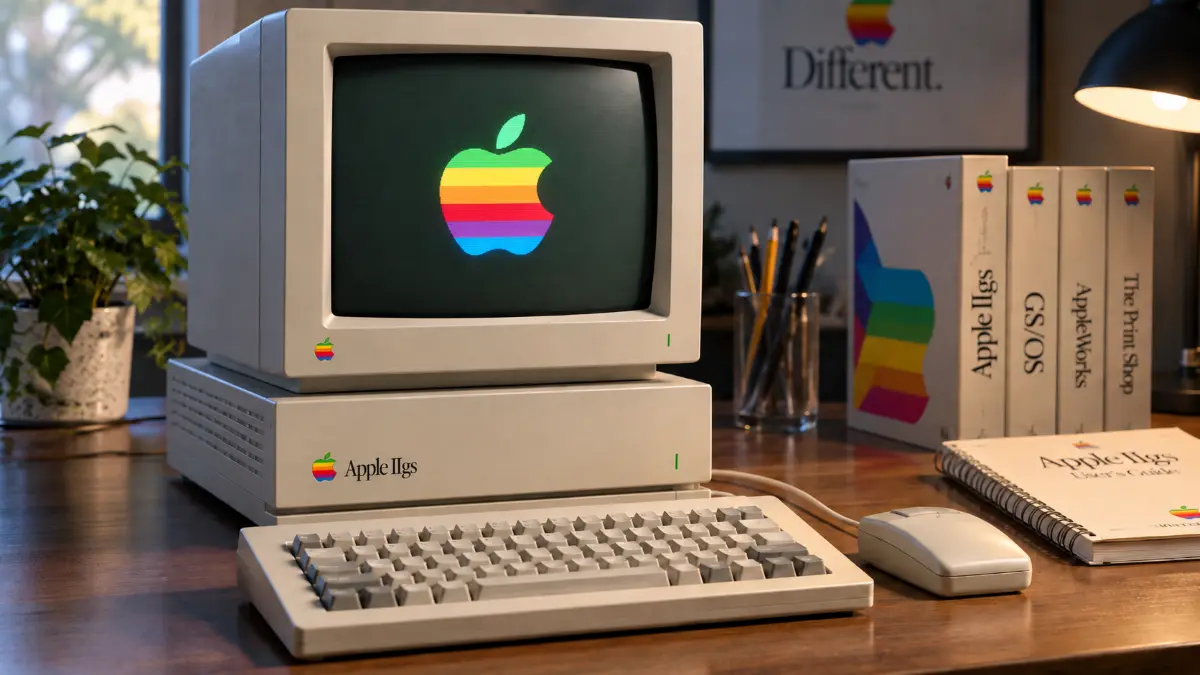

September 15, 1986, marked a moment where Apple took a bold step in personal computing by introducing the Apple IIgs. This wasn’t just another iteration in the Apple II series; it was a hybrid that merged the familiar Apple II architecture with the more modern design philosophies of the Macintosh line. The Apple IIgs’s standout feature was its advanced graphics and sound capabilities, which were ahead of many contemporaries, including the Macintosh and IBM PC at the time.
The Apple II series had already established itself as a household name in personal computing, but by the mid-1980s, the landscape was shifting. Apple faced the challenge of evolving its product line to keep pace with technological advancements without alienating its existing user base. The IIgs (short for graphics and sound) was Apple’s answer to this dilemma. It offered backward compatibility with Apple II software while introducing a more sophisticated graphical interface and richer audio output, bridging the gap between the old and the new.
At the time, this was a significant technical achievement. The Apple IIgs featured a 16-bit microprocessor, a substantial upgrade over its predecessors’ 8-bit CPUs. This allowed for more complex and colorful graphics, smoother animations, and enhanced sound quality that could support multiple audio channels. These improvements made the IIgs particularly attractive for educational software, gaming, and creative applications, sectors where multimedia capabilities were becoming increasingly important.
Despite these advances, Apple’s strategic focus was shifting toward the Macintosh line. The Macintosh was gaining traction with its graphical user interface and expanding software ecosystem. This strategic pivot meant that while the Apple IIgs was technologically impressive, it didn’t receive the long-term support and marketing push that might have secured its place as a dominant force in personal computing.
The Apple IIgs’s production continued until December 1992, marking the end of the Apple II series. Its legacy, however, lies in what it demonstrated about the possibilities of personal computing hardware at the time. The integration of advanced graphics and sound in a machine compatible with an older software base showed a pathway for gradual technological evolution rather than abrupt shifts. This approach influenced how future systems balanced innovation with backward compatibility.
Today, the Apple IIgs still matters because it highlights a critical phase in computing history where multimedia capabilities began to take center stage. It anticipated the growing importance of graphics and sound in user experience, a trend that would become fundamental in the decades that followed. The IIgs’s design philosophy, combining legacy support with new features, remains relevant as modern platforms strive to maintain compatibility while pushing technological boundaries.
Reflecting on the Apple IIgs’s release offers a reminder that technological progress is often about blending the old with the new. It’s not just about what a device can do on day one but how it sets the stage for future innovation. The Apple IIgs was a quiet but powerful statement about the evolving role of personal computers in entertainment, education, and creativity.