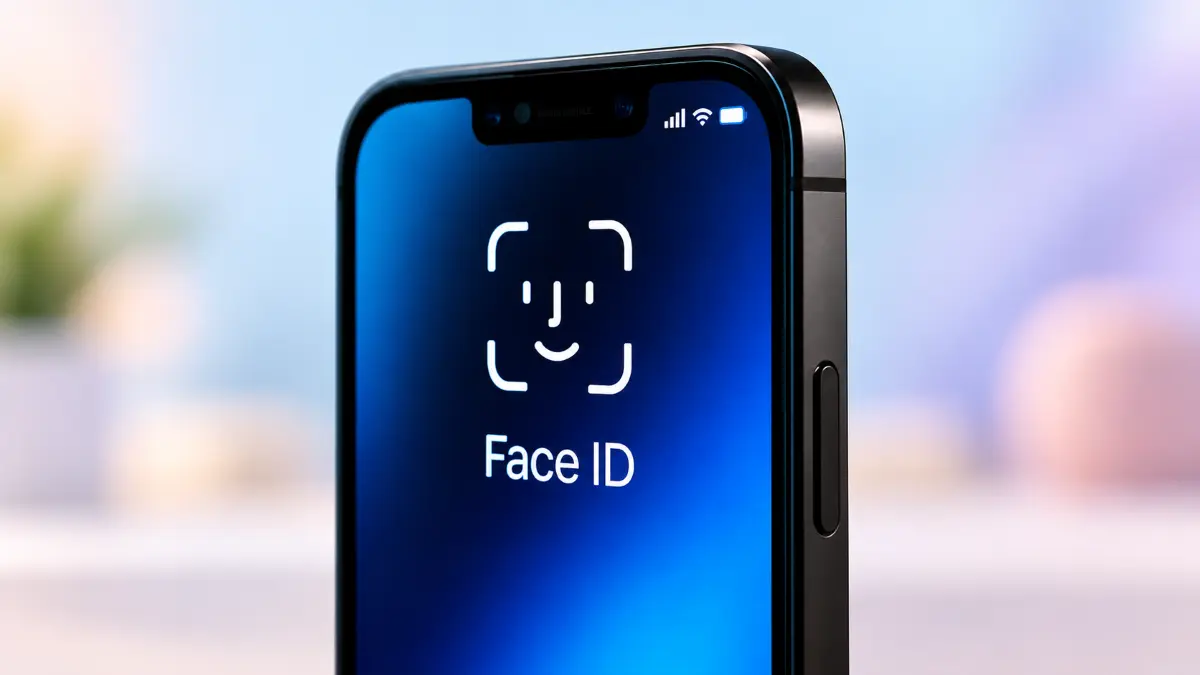

Apple has introduced a notable enhancement to Face ID authentication on the iPhone 18 Pro, incorporating supplemental image data processed within a secure enclave. This addition aims to accelerate the biometric verification process while maintaining robust security standards.
The iPhone 18 Pro’s Face ID system now leverages extra image data beyond the standard infrared depth map and visible light capture. This supplemental data is securely handled within the device’s enclave, a dedicated hardware-based security module designed to protect sensitive biometric information from external access or tampering.
What Changed with Face ID on iPhone 18 Pro
Traditionally, Face ID on iPhones relies on a combination of infrared dot projection and infrared imaging to create a detailed depth map of the user’s face. This data is then matched against stored facial templates within the secure enclave to authenticate the user. The iPhone 18 Pro adds a new layer by incorporating supplemental image data into this process.
This supplemental data is additional visual information captured during the authentication attempt, which the system uses to refine and speed up the matching process. By integrating this data within the secure enclave, Apple ensures that the biometric data remains isolated and protected from the rest of the system and any potential software vulnerabilities.
How Supplemental Image Data Enhances Authentication
The supplemental image data acts as an auxiliary input that complements the existing depth and infrared data. This richer dataset allows the Face ID algorithm to perform a more nuanced comparison, potentially reducing false negatives and accelerating recognition times.
The secure enclave plays a critical role here. It is a dedicated coprocessor embedded in Apple’s custom silicon, designed to handle sensitive operations like biometric processing and encryption. By confining the supplemental image data processing to this enclave, Apple maintains a high security threshold, preventing unauthorized access to biometric data even if the main operating system is compromised.
Practical Effects for Users and Developers
For users, the primary benefit is a faster and potentially more reliable Face ID experience. This means quicker device unlocking, smoother authentication for apps requiring biometric verification, and improved performance in challenging lighting conditions or when the user’s appearance changes slightly.
Developers benefit indirectly from this enhancement as well. Apps that rely on Face ID for authentication or authorization can expect more consistent biometric verification results, reducing friction in user experience. However, the underlying APIs and developer interfaces for Face ID remain unchanged, preserving compatibility and security boundaries.
What Remains Unchanged in Face ID Functionality
Despite the new supplemental image data layer, the fundamental security model of Face ID remains intact. Apple continues to rely on the secure enclave as the sole repository and processor of biometric templates. No biometric data leaves the device, and third-party apps cannot access raw facial data.
Additionally, the overall user privacy protections remain the same. Face ID data is never uploaded to iCloud or shared with Apple servers, and the system continues to require user consent for biometric authentication.
Broader Context in Apple’s Biometric Security
This development fits into Apple’s ongoing efforts to refine biometric security while balancing speed and user convenience. The iPhone 18 Pro’s enhanced Face ID reflects a trend toward leveraging more sophisticated sensor data and on-device processing to improve authentication without compromising privacy.
Apple’s secure enclave architecture remains a cornerstone of this strategy, ensuring that even as biometric data complexity grows, user security and privacy are not sacrificed.
What to Watch Next
As Apple rolls out this supplemental image data feature in Face ID, it will be important to monitor how it performs in real-world usage across diverse lighting and environmental conditions. Future iPhone models may further expand on this approach, potentially integrating additional sensor modalities or machine learning enhancements.
Developers and security researchers will also be keen to see if this new data layer introduces any unforeseen vulnerabilities or if it sets a new benchmark for biometric authentication speed and reliability.
Apple’s incremental but precise improvements to Face ID underscore its focus on seamless, secure user experiences in its flagship devices.