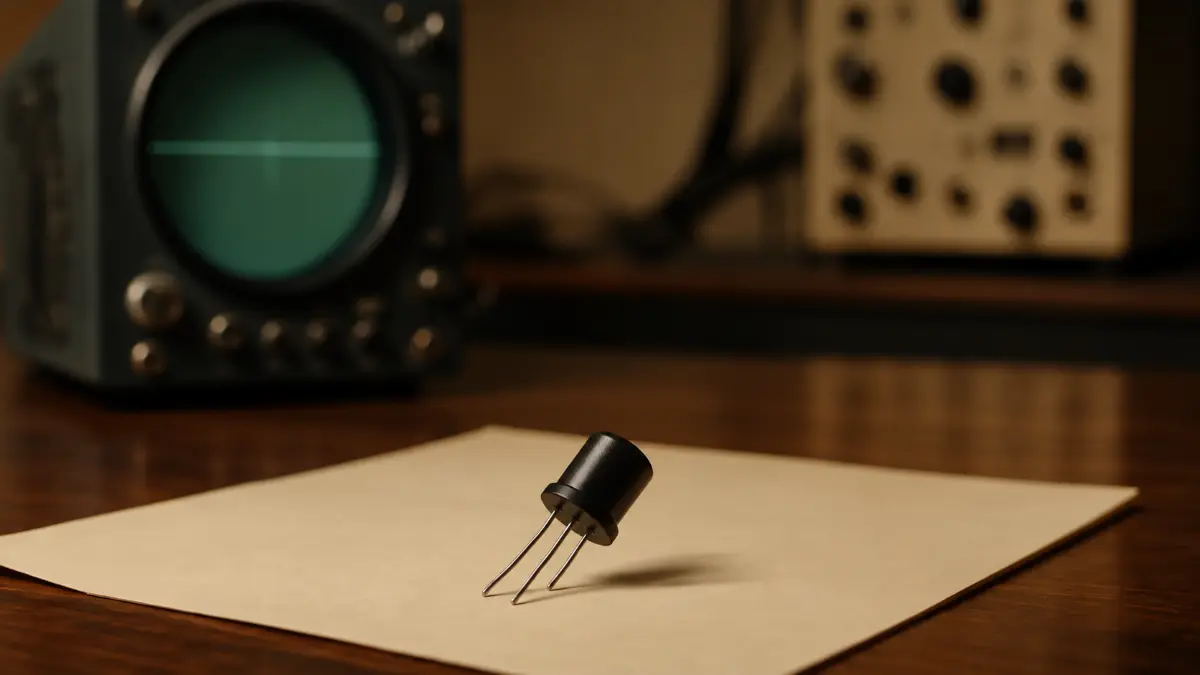

The transistor patent filed on October 3, 1950, marked a turning point in the architecture of modern electronics. This was not just a legal milestone; it was a technical breakthrough that set the stage for the digital age. The patent, granted to John Bardeen, Walter Brattain, and William Shockley of AT&T Bell Laboratories, formalized the invention that had already been demonstrated two years earlier.
At the time, electronics relied heavily on vacuum tubes, bulky, fragile, and power-hungry components. The transistor introduced a fundamentally different approach: a solid-state device capable of amplifying and switching electrical signals with unprecedented efficiency and reliability. This shift solved critical problems in size, energy consumption, and durability that had long constrained electronic design.
The impact of the transistor patent was immediate and far-reaching. It unlocked the door to miniaturization, enabling engineers to build smaller and more complex circuits. This innovation was the backbone of the first generation of computers, radios, and other electronic devices that could be mass-produced and deployed widely. The transistor’s solid-state nature meant devices could operate longer and with greater stability, which was essential for the emerging field of computing and telecommunications.
Beyond the initial wave of applications, the patent’s significance lies in what it enabled next. The transistor became the fundamental building block of integrated circuits, which packed millions, then billions, of transistors into tiny chips. This exponential growth in transistor density fueled Moore’s Law and drove the relentless increase in computing power that defines modern technology. Without the transistor patent, the digital devices we take for granted today, smartphones, laptops, cloud servers, would look very different, if they existed at all.
Today, the transistor remains at the heart of every electronic device. While the original patent is long expired, the principles it protected continue to guide semiconductor research and development. Advances in materials science, fabrication techniques, and design architectures all build on the transistor’s foundational concept. The patent’s legacy is not just historical; it is a living framework that underpins the ongoing evolution of technology.
Reflecting on the event, the transistor patent is a reminder that transformative technology often begins with a clear solution to practical engineering challenges. By replacing vacuum tubes with a compact, reliable alternative, Bardeen, Brattain, and Shockley didn’t merely create a new component, they unlocked a new realm of possibility for electronic innovation. Their work continues to ripple through every chip and circuit today.