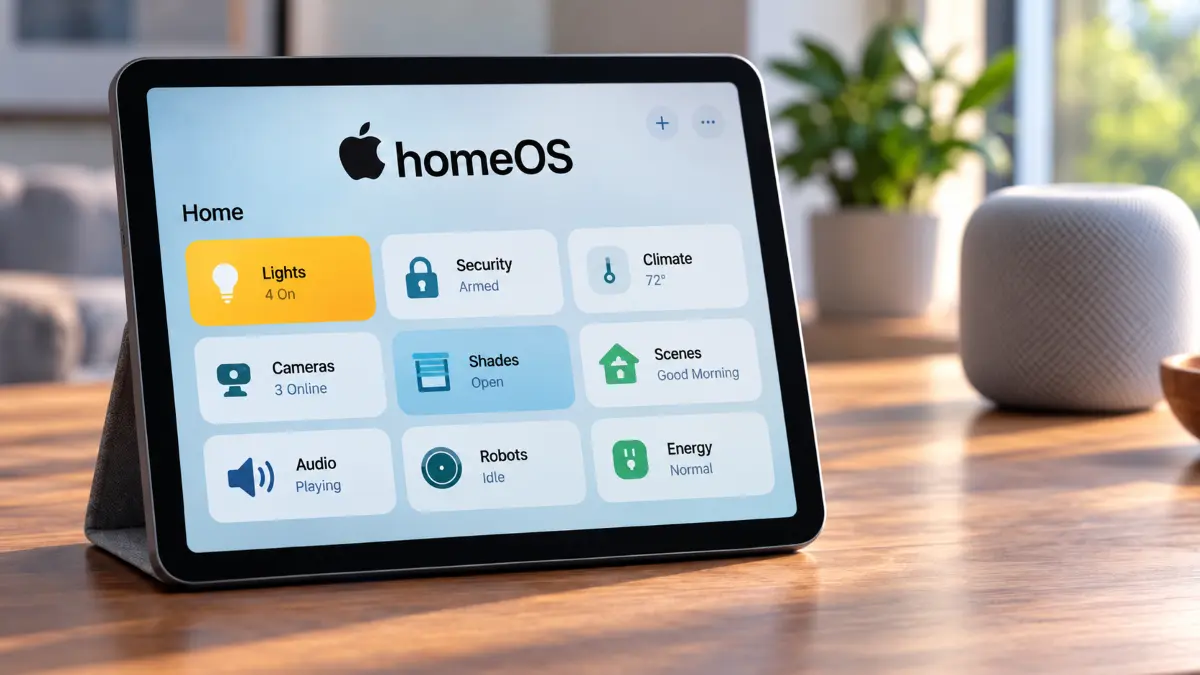

Apple is launching a new operating system called homeOS this month, signaling a major step in its smart home strategy. The new OS aims to unify and enhance the smart home experience across Apple devices, coinciding with the release of new Home products. This move represents Apple’s effort to create a more cohesive and powerful ecosystem for home automation.
homeOS is designed to serve as the central software platform for Apple’s expanding lineup of smart home devices. By consolidating control and management of connected home products under a dedicated operating system, Apple seeks to streamline user interactions and improve device interoperability. This approach reflects Apple’s broader strategy of deepening integration within its ecosystem to offer seamless experiences.
What homeOS Brings to Apple’s Smart Home Ecosystem
homeOS is not just a rebranding of existing HomeKit features; it is a distinct operating system tailored specifically for smart home devices. It will power new Home hardware, likely including updated versions of Apple TV, HomePod, and potentially other yet-to-be-announced devices. This specialization allows Apple to optimize performance, security, and user interface specifically for home automation tasks.
The OS will centralize control of smart home accessories, enabling users to manage lighting, climate, security, and entertainment systems from a unified interface. This consolidation is expected to improve responsiveness and reliability, addressing some of the fragmentation issues users face when juggling multiple apps and platforms.
How homeOS Works Within Apple’s Ecosystem
homeOS integrates tightly with Apple’s existing ecosystem, including iOS, iPadOS, and macOS, allowing users to control their smart home environment from any Apple device. It leverages Apple’s secure HomeKit framework to ensure privacy and security while enabling advanced automation and remote access.
The OS will likely support enhanced Siri capabilities for voice control, improved automation routines, and deeper integration with Apple’s Continuity features. This means users can expect smoother transitions between devices and more intelligent, context-aware home automation scenarios.
Why Apple’s Dedicated Smart Home OS Matters
By launching homeOS, Apple is addressing a key challenge in the smart home market: fragmentation. Many users struggle with disparate devices and apps that do not communicate well with each other. homeOS aims to create a seamless, consistent experience that leverages Apple’s strengths in hardware-software integration.
For developers, homeOS presents new opportunities to build specialized apps and accessories that tap into the OS’s capabilities. It also signals Apple’s commitment to expanding its footprint in the smart home sector, an area with growing consumer interest and potential for innovation.
What Remains Unchanged and What to Expect
While homeOS introduces a new platform, it does not replace iOS or macOS but complements them by focusing on home automation. Existing HomeKit accessories will continue to work, but users may see improved functionality and new features as manufacturers update their products to leverage homeOS.
Apple’s approach maintains its emphasis on privacy and security, ensuring that home automation data remains protected. The rollout of homeOS will be gradual, with initial availability tied to new hardware releases and software updates.
Strategic Positioning of homeOS in Apple’s Product Lineup
homeOS reflects Apple’s broader strategy to create specialized operating systems for different device categories, similar to watchOS and tvOS. This specialization allows for tailored user experiences and technical optimizations that general-purpose OSes cannot provide.
By launching homeOS alongside new Home products, Apple is positioning itself as a central player in the smart home market, aiming to unify hardware, software, and services under one cohesive platform. This could accelerate adoption of Apple’s smart home ecosystem and challenge competitors relying on more fragmented solutions.
What to Watch Next
The launch of homeOS will be closely watched for how well it integrates with existing Apple devices and third-party accessories. Developers will be eager to explore new APIs and features to create innovative home automation experiences. Consumers will look for tangible improvements in ease of use, reliability, and security.
As Apple rolls out homeOS, the smart home landscape may shift, with increased focus on seamless integration and privacy-centric design. The success of homeOS could influence how other tech companies approach smart home ecosystems in the future.