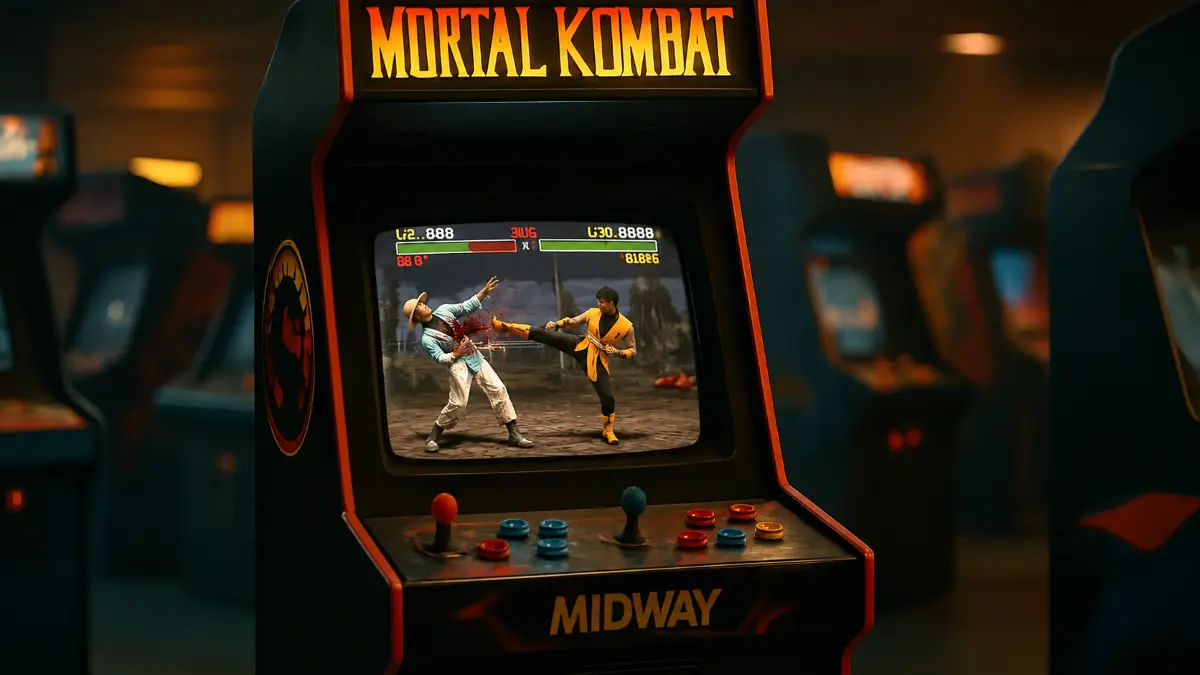

October 8, 1992, marked a turning point in arcade gaming with the release of Mortal Kombat. This wasn’t just another fighting game hitting the arcades; it was a bold leap in how digital violence and realism were portrayed on screen. The Mortal Kombat arcade release introduced a level of graphic detail and visceral finishing moves that challenged the boundaries of video game content and technology.
At the time, Mortal Kombat stood out for its use of digitized actors rather than traditional hand-drawn sprites. This technique gave the characters a lifelike appearance that was rare in early 90s gaming. The game’s signature “fatalities” – brutal finishing moves that graphically displayed blood and violence – pushed arcade hardware to render more detailed animations and effects. This technical approach created a more immersive and intense player experience, setting Mortal Kombat apart from competitors relying on simpler graphics and mechanics.
The controversy sparked by Mortal Kombat’s graphic content was a double-edged sword. While it drew criticism and calls for regulation, it also fueled the game’s popularity. This tension highlighted a growing challenge in gaming technology: how to balance creative freedom and realism with social responsibility and content standards. The public debate around Mortal Kombat’s violence eventually contributed to the creation of the Entertainment Software Rating Board (ESRB), a standardized rating system that still guides game content classification today.
Beyond controversy, Mortal Kombat’s release changed the fighting game genre’s technology landscape. Its use of digitized actors influenced how developers approached character design and animation. The game’s combo system and responsive controls became a blueprint for competitive fighting games, pushing hardware and software to support faster input processing and more complex move sets. This technical evolution helped establish fighting games as a serious competitive genre, laying groundwork for the esports scene decades later.
The Mortal Kombat arcade release also demonstrated the power of technology to create cultural phenomena. Its distinct style and mechanics inspired countless sequels, spin-offs, and adaptations across media. The game’s success proved that pushing graphical and gameplay boundaries could capture and sustain player interest, encouraging developers to innovate boldly rather than play it safe.
Today, the impact of Mortal Kombat’s 1992 arcade release remains visible. Modern fighting games still build on its technical foundations, digitized realism, fluid animation, and intricate combat mechanics. The ESRB rating system it helped inspire continues to shape how games are developed and marketed worldwide. Moreover, the game’s legacy reminds us that technology in gaming isn’t just about visuals or speed; it’s about how those elements influence culture, regulation, and player engagement.
Looking back, Mortal Kombat’s debut was more than a game launch. It was a moment when technology, art, and social conversation collided in the arcade. The game’s bold use of emerging tech set a precedent for how video games could challenge norms and expand what interactive entertainment could be. That legacy still echoes in every fight scene and pixelated punch today.