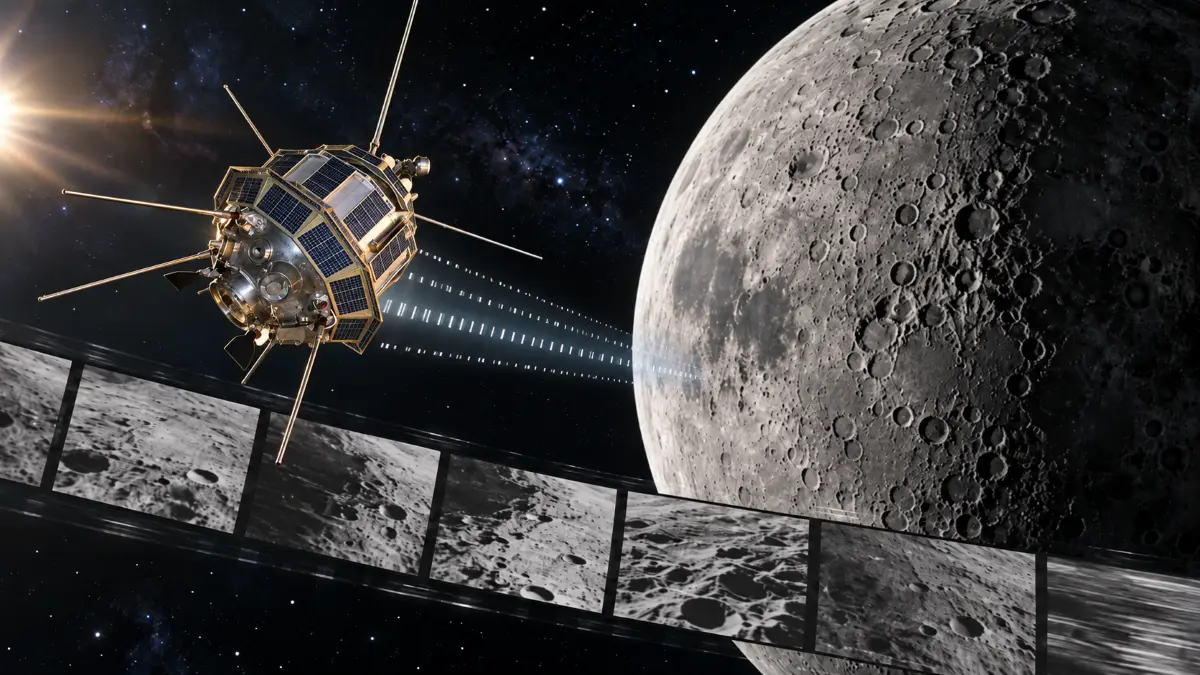

The first photos of the Moon’s far side arrived like a cosmic reveal. On October 7, 1959, the Soviet probe Luna 3 transmitted the first-ever photographs of the far side of the Moon, a region forever hidden from Earth’s view. This wasn’t just a space race headline, it was a technical breakthrough that cracked open a new chapter in lunar exploration and remote sensing technology.
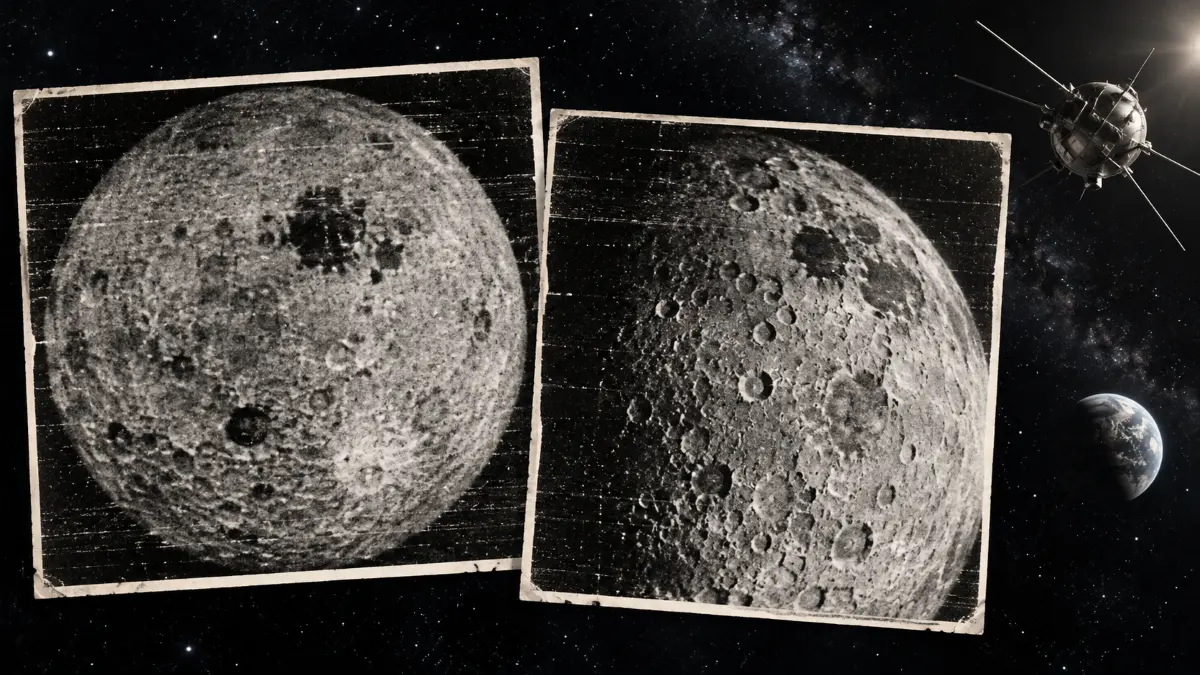
Before Luna 3, the Moon’s far side was a complete mystery. We knew it existed, but no human or machine had glimpsed it. The challenge was immense: how do you send a spacecraft around the Moon, photograph a surface no telescope can see, and then beam those images back to Earth across tens of thousands of kilometers? Luna 3 solved this by combining innovative imaging technology with pioneering data transmission methods.
At the time, this achievement mattered because it pushed the limits of what space probes could do. The photos revealed a dramatically different lunar landscape, an area heavily cratered and rougher than the near side. This challenged existing assumptions about the Moon’s geology and forced scientists to rethink theories about its formation and evolution. Luna 3’s success also demonstrated the feasibility of automated deep-space reconnaissance, setting a precedent for future robotic missions.
The impact of Luna 3’s images extended beyond science. Technologically, the mission proved that spacecraft could operate autonomously in hostile environments and send complex data back to Earth. This laid groundwork for the development of more sophisticated lunar orbiters, landers, and eventually crewed missions. The probe’s imaging and transmission techniques informed the design of later satellites and interplanetary explorers, influencing how data is collected and shared across vast distances.
Today, the legacy of Luna 3’s first photos of the Moon’s far side still resonates. Modern lunar missions, including orbiters and landers exploring the far side, rely on the concept that remote sensing can unlock hidden worlds. The far side has become a hotspot for radio astronomy and scientific research precisely because it is shielded from Earth’s radio noise, a possibility first imagined after Luna 3’s revelations. The mission’s success also underscores the importance of autonomous spacecraft operations, a principle central to current and future deep-space exploration.
Reflecting on this event reveals how a single set of images can shift our understanding and capabilities. Luna 3 didn’t just photograph the Moon’s far side; it expanded the horizon of what technology could achieve in space. It reminds us that exploration is as much about overcoming technical challenges as it is about discovery. The far side of the Moon remains a symbol of the unknown, but thanks to Luna 3, it is a known unknown, waiting for the next chapter.