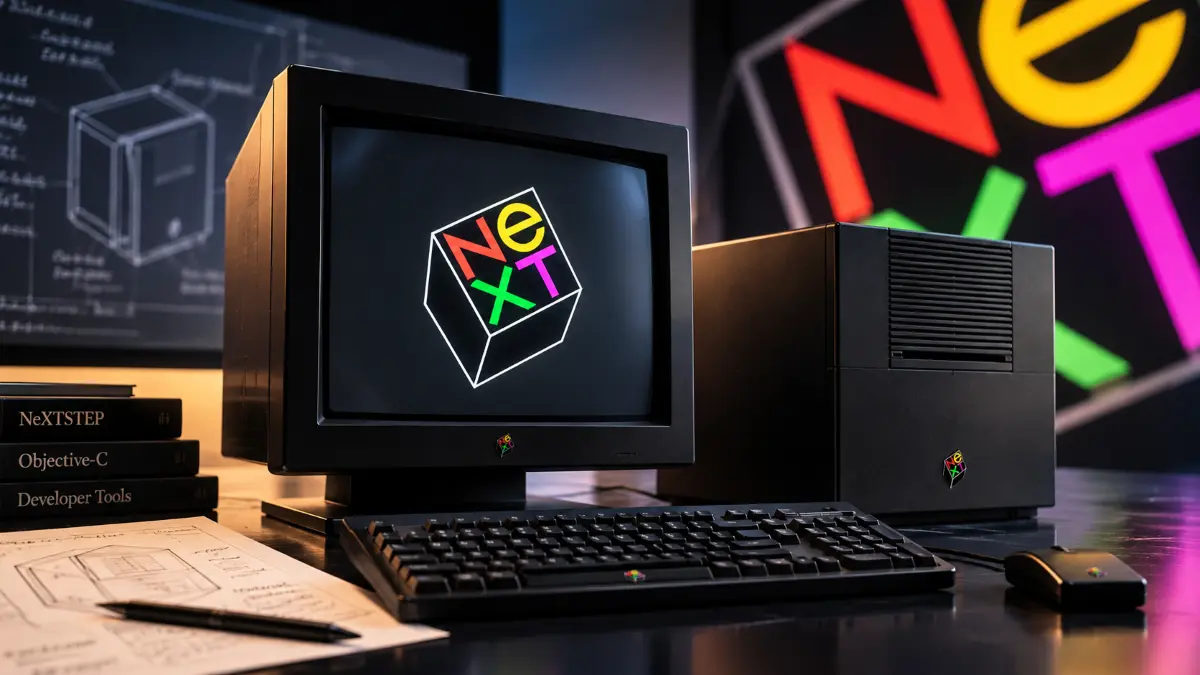

Imagine a time when personal computers were boxes of plastic and blinking lights, mostly stuck in predictable designs and limited capabilities. Then came October 12, 1988. On this day, NeXT, Inc. introduced the NeXT Computer, a device Steve Jobs famously called “five years ahead of its time.” This wasn’t just hype. The NeXT Computer, often dubbed “The Cube” because of its distinctive cube-shaped case, packed a set of features that challenged the very notion of what a personal computer could be.
The NeXT Computer arrived with several groundbreaking technologies. It was among the first personal computers to include an optical storage disk drive, a technology that promised vastly more storage capacity and durability compared to floppy disks. This alone set a new standard for data storage and software distribution. But the innovations didn’t stop there. The machine also featured a built-in digital signal processor specifically designed for voice recognition, an ambitious step toward natural user interfaces long before voice assistants became mainstream.
Perhaps the most transformative aspect was the NeXT Computer’s software environment. It introduced an object-oriented development environment that was truly ahead of its time. This approach to programming allowed developers to build complex applications more efficiently and with greater modularity. The NeXTSTEP operating system, built around this environment, laid the foundation for future software design paradigms and influenced many modern development tools.
At the time, the NeXT Computer was more than just a high-end personal computer. It was a statement about the future direction of computing. It tackled several key problems: the limitations of storage media, the inefficiencies in software development, and the user interface bottlenecks that slowed adoption of more intuitive computing. By integrating hardware and software innovation, NeXT pushed the industry to rethink both the form and function of personal computers.
The NeXT Computer’s impact rippled far beyond its initial market performance. While it wasn’t a commercial blockbuster, its technologies became the backbone of many later advancements. The object-oriented development environment influenced software engineering practices, making modular, reusable code a norm. The optical disk drive foreshadowed the shift to optical media for software and multimedia content. And the voice recognition hardware hinted at the possibilities of natural language interfaces that have since become standard.
Today, the NeXT Computer’s legacy is visible in the DNA of modern operating systems and development tools. The object-oriented principles it championed remain fundamental to software engineering. Its early adoption of optical media presaged the multimedia-rich computing environments we now take for granted. Even the emphasis on voice recognition anticipated the rise of AI-powered assistants. The NeXT Computer was a blueprint for a more integrated, forward-thinking approach to personal computing.
Looking back, the NeXT Computer wasn’t just a cool cube on a desk. It was a bold experiment in pushing the boundaries of what personal computing could achieve. Its innovations solved real problems that had held back progress and set a course for the future. That’s why, even decades later, the NeXT Computer still matters, not just as a piece of tech history, but as a reminder of how daring design and engineering can shape the tools we rely on every day.