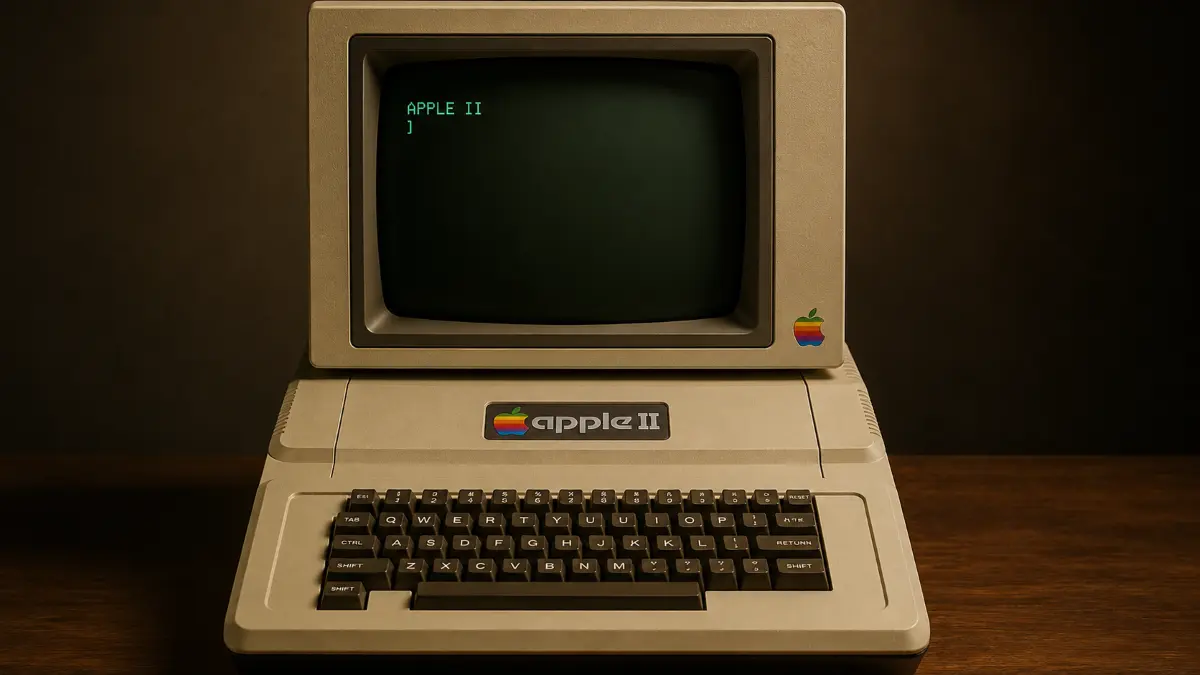

June 5, 1977, marked a defining moment in the evolution of personal computing with the launch of the Apple II computer. This wasn’t just another gadget hitting the shelves. The Apple II computer was a carefully engineered system that brought together multiple innovations into a single, cohesive unit, setting a new standard for what a personal computer could be.
The Apple II featured a 1MHz MOS 6502 processor, an integrated keyboard, and a built-in BASIC programming environment. It came with expandable memory starting at 4K, extendable up to 48K, a color-capable monitor, a sound card, and eight expansion slots. This combination of features in one discrete unit was groundbreaking. Before this, computers were often bulky, fragmented, or required significant technical know-how to assemble and operate. The Apple II computer made personal computing accessible to a broader audience by packaging these capabilities into a user-friendly product.
What made the Apple II computer especially notable was its dual appeal. It was available as a fully assembled unit for everyday users, but also as a circuit-board-only version without a keyboard, power supply, or case. This design choice respected the hacker ethos of the time, allowing tech enthusiasts to customize and expand the machine according to their needs. This flexibility fostered a vibrant community of users who pushed the boundaries of what the Apple II computer could do.
At the time, the Apple II computer solved a pressing problem: how to create a practical, versatile personal computer that could serve both home users and businesses. Its integrated design eliminated many barriers that had previously kept computers confined to labs and large corporations. The Apple II computer’s color graphics and sound capabilities were particularly advanced for the era, enabling new types of applications and user experiences.
The release of the Apple II computer also set the stage for the first “killer app” in business computing: the VisiCalc spreadsheet program. This software transformed the Apple II computer from a hobbyist’s toy into an indispensable business tool. Suddenly, personal computers were not just for enthusiasts but became essential for financial modeling and decision-making in offices. This shift caught established technology companies off guard and triggered a scramble, notably from IBM, to develop their own personal computers.
The ripple effects of the Apple II computer’s launch are still felt today. It demonstrated the power of integrating hardware and software into a single, accessible platform. The idea of expandable memory and modular components influenced future computer designs, encouraging innovation and customization. Moreover, the Apple II computer helped lay the foundation for the personal computing industry, proving that computers could be useful, affordable, and approachable for everyday users.
In a modern context, the Apple II computer’s legacy reminds us why user-centric design and openness to customization remain critical in technology development. It wasn’t just about raw processing power but about creating a platform that invited exploration and practical use. The Apple II computer’s success story is a testament to the importance of balancing innovation with accessibility.
Looking back, the Apple II computer’s launch on June 5, 1977, was more than a product release. It was a shift in how technology was conceived and delivered to the public. Its influence continues to echo in today’s devices, shaping how we interact with technology and how it integrates into our daily lives.