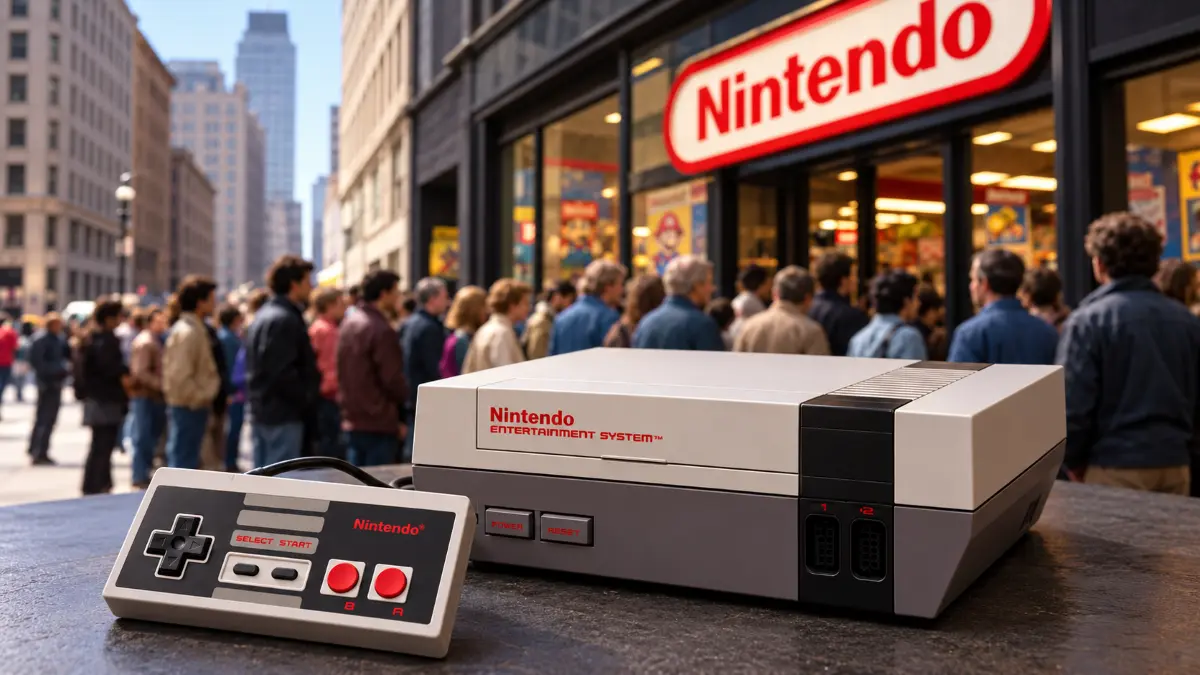

The gaming world changed course on October 18, 1985, when Nintendo released the Nintendo Entertainment System (NES) in New York and select North American markets. This launch wasn’t just about a new console hitting shelves; it was a calculated move that addressed the video game crash of the early 1980s and set a new standard for home entertainment.
Nintendo’s NES arrived with eighteen games, including now-iconic titles like Super Mario Bros., Duck Hunt, and Excitebike. These weren’t just games; they were carefully crafted experiences designed to showcase the console’s capabilities and appeal to a broad audience. The release in limited markets allowed Nintendo to test the waters before the nationwide rollout in February 1986, a strategy that helped build anticipation and ensure quality control.
At the time, the NES solved a critical problem: restoring consumer confidence in home video games. The market had been flooded with low-quality products, leading to a crash that nearly wiped out the industry. Nintendo’s approach was different. They introduced a lockout chip to prevent unlicensed games, ensuring a controlled ecosystem of quality titles. This not only protected consumers but also developers, fostering a sustainable gaming environment.
The NES’s hardware design was another game-changer. Its cartridge-based system was reliable and easy to use, and the controller’s simple yet effective layout became a blueprint for future gamepads. The console’s ability to deliver colorful graphics and engaging gameplay on affordable hardware made it accessible to millions.
What changed because of the NES launch was more than just market recovery. It established Nintendo as a dominant force in gaming and set the stage for decades of innovation. The NES library introduced genres and gameplay mechanics that remain foundational today. Super Mario Bros., for instance, defined platform gaming with tight controls and level design that balanced challenge and fun.
The NES also pioneered the concept of a gaming console as a multimedia hub. With peripherals like the Zapper light gun and the Power Pad, it expanded what players could do beyond traditional controller inputs. This broadened the appeal of video games and hinted at the interactive experiences that would follow in later generations.
Today, the NES still matters because it represents a turning point in how technology and entertainment intersect. Its influence is visible in modern game design, hardware development, and even digital distribution models. The NES showed that a well-engineered platform combined with a strong software lineup could create a lasting cultural phenomenon.
Reflecting on the NES launch reminds us that innovation isn’t just about new technology; it’s about solving real problems in ways that resonate with users. Nintendo’s strategy in 1985 was a masterclass in rebuilding trust and setting new standards. That legacy continues to inform how we think about gaming and technology today.