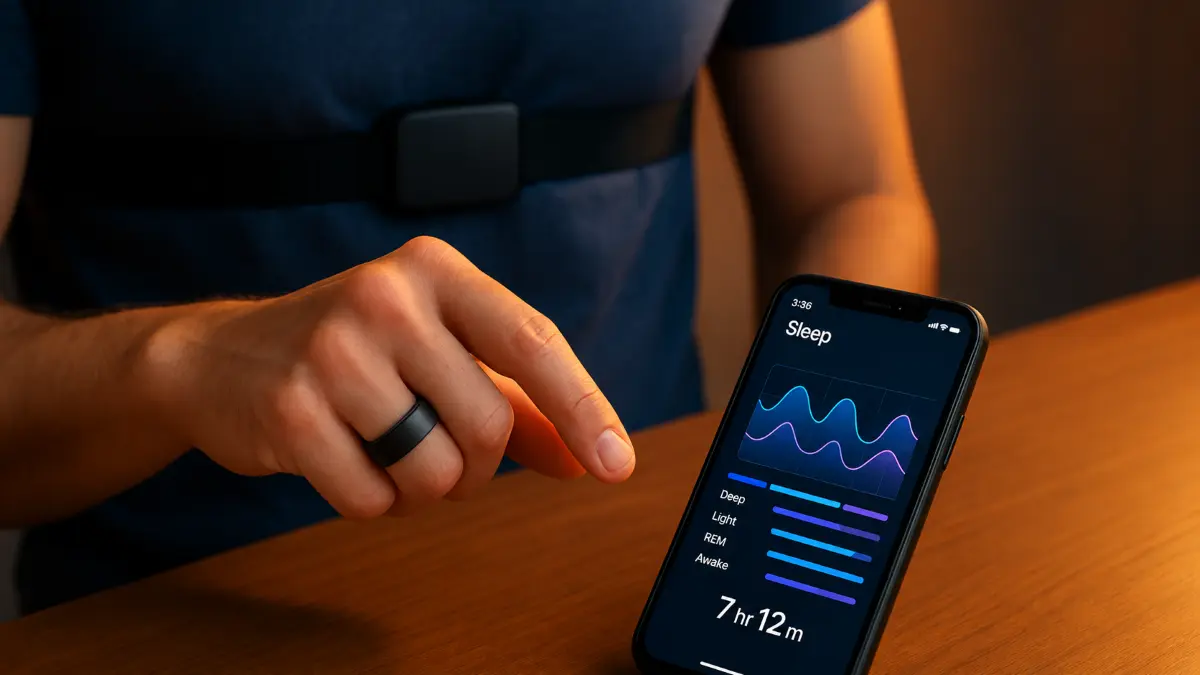

Smart rings have gained popularity as a convenient way to monitor sleep patterns. They typically use sensors to track motion and heart rate, offering users insights into sleep duration and quality. However, the claim that smart rings can accurately track sleep stages only when combined with other wearable sensors like chest straps deserves closer examination.
Claim: Smart rings track sleep stages accurately only when combined with other wearable sensors like chest straps.
Quick answer: Smart rings deliver useful sleep insights but tracking sleep stages accurately often requires additional wearable sensors.
Verdict: Mixed
Smart rings do provide useful sleep data, but their accuracy in distinguishing detailed sleep stages is limited compared to setups that include multiple sensors. Chest straps and similar devices measure physiological signals such as respiratory rate and more precise heart rate variability, which enhance sleep stage detection.
How Smart Rings Track Sleep
Most smart rings rely on accelerometers to detect movement and photoplethysmography (PPG) sensors to monitor heart rate. These data points allow the device to infer when a user is awake, in light sleep, deep sleep, or REM sleep. While these inferences can be reasonably accurate for general sleep trends, they do not capture the full range of physiological markers used in clinical-grade sleep studies.
Benefits and Limitations
Smart rings excel at providing a convenient, non-intrusive way to collect sleep data over long periods. They are well-suited for users interested in tracking patterns and overall sleep health. However, their limited sensor array means the accuracy of sleep stage classification can be inconsistent, especially when compared to devices that incorporate chest straps or other sensors that measure breathing and more detailed cardiac signals.
When Additional Sensors Help
Combining a smart ring with other wearable sensors, such as chest straps, can improve the accuracy of sleep stage tracking by providing complementary physiological data. This multi-sensor approach is closer to the methodology used in clinical sleep studies and can be valuable for users who require detailed and precise sleep analysis.
Practical Takeaway
If you use a smart ring for sleep tracking, it can offer meaningful insights into your sleep patterns and trends. However, if you need highly accurate sleep stage data, for example, to diagnose sleep disorders or optimize detailed sleep cycles, consider using additional sensors or devices designed for comprehensive sleep monitoring. Understanding these limitations helps users make informed decisions about when to trust smart ring data and when to seek more advanced monitoring solutions.